

Pedro Calles Encinas was born on January 29, 1914, in San Pedro de la Cueva, Sonora. His father was one of Pancho Villa’s victims in the mass slaughter of December, 1915, and Calles grew up fatherless in a village of fatherless children.
As a child, he enjoyed modeling scorpions and centipedes of wax and placing them on the floor of the church where people would see them and try to kill them. He also made animals from the clay in the bed of the Río Moctezuma and drew sketches. He grew to be a deeply religious, unassuming man with a strong work ethic and an active sense of humor.
In 1940 he married María Luisa Gonzáles Fimbres, principal of the local primary school. In 1943 he created his first major statue, a life-sized image of St. Francis Xavier, for the church at his wife’s home town of Ures. He continued creating and teaching art until the 1950s, when he attended the prestigious Academía de San Carlos in Mexico City. There he worked under the well-known Mexican sculptor Ignacio Asúnsolo.
People are also reading…
Returning to Sonora, he moved to Hermosillo in 1956. There he devoted himself to creating and restoring religious sculptures, essentially dropping off the fine arts radar screen. He also did portrait commissions and made elaborate gilded baroque furniture. His statue of Father Andrés Avelino Flores stands in the plaza of San Pedro de la Cueva, and was illustrated in an earlier blog. Pedro Calles died in 1994.
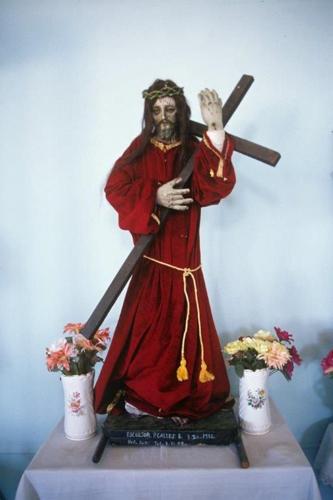
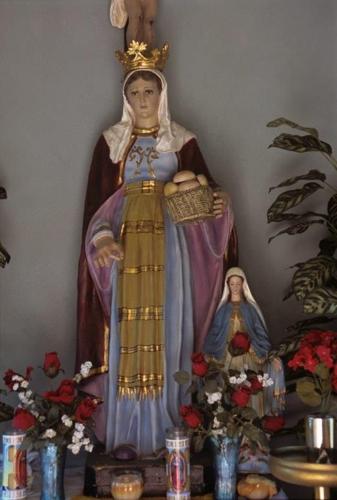
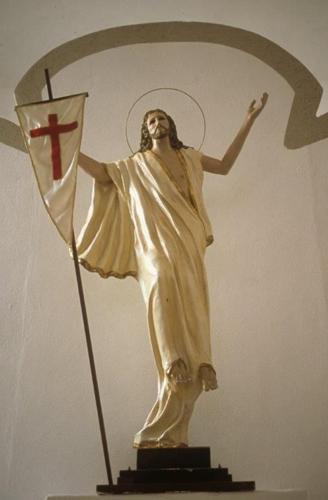
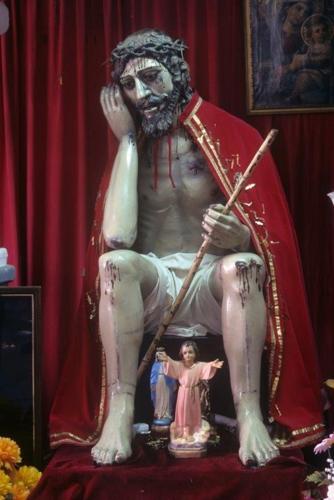
His work can be found in virtually every church within a hundred mile radius of Hermosillo. Many of his statues are life-sized or larger, and all are solid, competent works of sculpture. A few are truly powerful, among them two of the ones shown here. Not all are signed or dated. Assembling a catalogue of his work would be an exacting task, but it should really be done, for this man has truly affected the religious arts landscape of his region.


