

What’s the one extra thing you can do to help your vegetable plants and fruit trees withstand the withering summer heat?
Hint: Watering is essential, so that doesn’t count.
But you’re close: Mulching.
So grab your gardening gloves and get ready — now is a great time to mulch veggies, flowers, shrubs and trees, before the mercury hits 100-plus degrees every day.
Now some old-school desert diggers don’t bother with mulch and even recommend against it. The main reason is that if it comes in contact with tree trunks or plant stems, it can cause them to rot.
So if you do mulch, be sure to leave a gap of a few inches around the trunks or stems.
Others say mulch can harbor pests, but many gardening experts believe the benefits far outweigh any drawbacks.
People are also reading…
Here's what you need to know.
Brandon Merchant of Southwest Victory Gardens is a longtime organic gardener who favors using mulch to mimic the natural process of organic matter breaking down and enriching soil in gardens and yards.
He and his wife, Amber Merchant, established a home-based business over a year ago to design and install vegetable gardens and chicken coops. (More about Southwest Victory Gardens.)
Mulch saves water, prevents weeds and harbors good soil microbes and fungi. Plus it decays over time, adding nutrients to the soil.
But he admits there is one potential drawback: It might harbor pests like bugs or scorpions. But the benefits outweigh that by far, Merchant says.
“It’s an important part of organic gardening.”
Merchant likes to use alfalfa hay because it breaks down completely over the summer. Alfalfa also promotes good bacteria in the soil.
But don’t use straw, he says.
“They build houses out of straw bale for a reason,” he says.
Good point: It doesn’t break down quickly and when it eventually does, it pulls a lot of nitrogen out of the soil.
Some gardening experts recommend raking the straw out of the garden and throwing it into the compost pile. You can compensate for the loss of nitrogen by adding extra manure.
If you can find moldy “cow hay,” that’s a good option and cheaper than alfalfa, Merchant says.
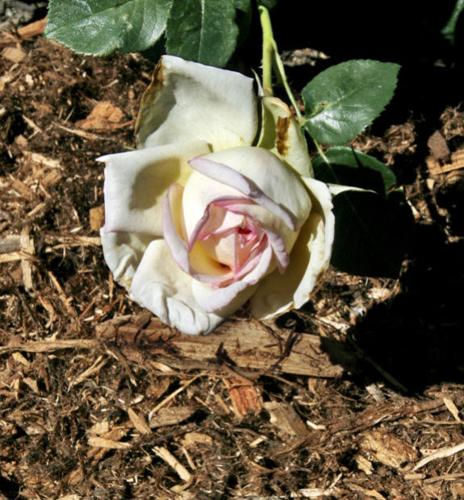
For trees and shrubs, he recommends a wood-based mulch such as wood chips. The trees prefer mulch with fungi in it.
Emily Rockey of Tank’s Green Stuff also is a big proponent of mulch. Rockey, the director of sales and marketing at Tank's, has a degree from the University of Arizona in plant science.
And she knows her mulch.
“Plants die and fall over, then lose their leaves and where does it go?” Right onto the ground. As in nature, it should be left there to decay, but Tucsonans like to keep their yards tidy.
“We want to rake it up and take it to the dump.”
So use what's in your yard. Or, she says, “I would suggest using something local,” rather than getting mulch that has been trucked in from other states.
Her top recommendation? Use fine wood chips, which won’t blow away but also aren't so large that they'll damage tender plant stems.
Straw works well for delicate vegetable plants, she says, and native leaves are fine, too.
Tips for trees:
- Don't let the mulch touch the trunk — keep it back several inches. And be sure to mulch over the entire root system. If watering causes the mulch to float up against the trunk, rake it back when dry.
- Try using small stones to hold the mulch back a few inches.
- Using rock or gravel is OK, but it’s better to use organic plant material, Rockey says.
Tips for gardens:
- If you want to improve soil composition for established beds, add a layer of compost or composted manure first, then top it with a couple of inches of mulch.
- Two inches of mulch is a good rule of thumb, Rockey and Merchant say.
- Don’t use Bermuda hay or fresh cut grass, which will harbor weed seeds.
- Be careful if you use wood chips in the garden. They can easily get mixed in with your plants — especially leafy greens — and can drain into the garbage disposal when you rinse veggies in the sink.


