Some of them stink.
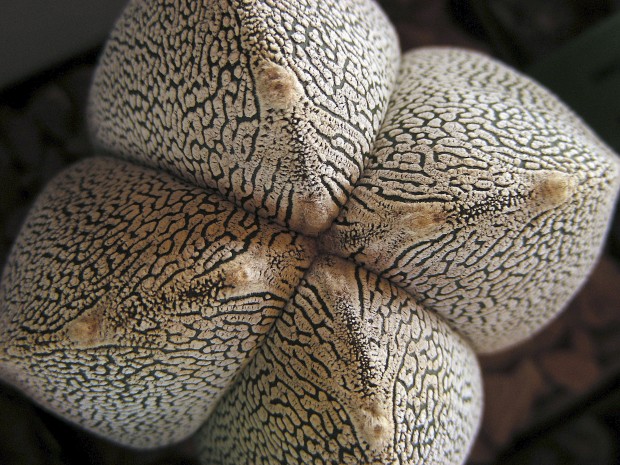
One appears to be masquerading as a baseball.
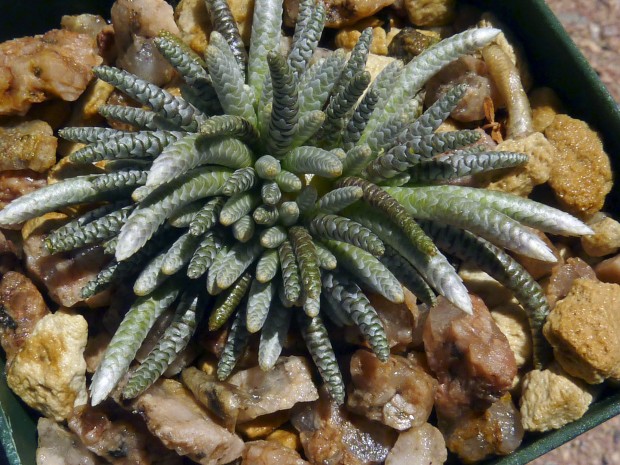
Others look more like rocks than living things.
We're talking weird plants - and they're the stars of an upcoming Weird Plant Sale at the Tucson Botanical Gardens.
The Saturday event will feature a diverse selection of not-so-common and just-plain-bizarre plants offered by 14 or more vendors.
"Our environment is particularly subject to weird plants," said Jocelyn Robertson, spokeswoman for the Botanical Gardens, in midtown at 2150 N. Alvernon Way. "They are plants that have come up with some very interesting ways to survive and thrive in arid lands and harsh deserts."
WHY THEY'RE WEIRD
Plants sometimes take strange shapes and living strategies because those adaptations help them survive in extreme environments and circumstances, said Michael Chamberland, curator of horticulture at the gardens.
People are also reading…
Plants can exhibit weirdness in several ways:
• Growing in assorted geometric forms - from spheres to bottle shapes and spiky cactus limbs.
• Mimicking non-living objects - from rocks to bird droppings - as a protective strategy.
• Developing an unusual appearance as a result of grafting - the practice of uniting two plants surgically.
BIZARRE BOTANY
Chamberland offered this sampler of weird plants:
• The baseball plant - a peculiar, ball-shaped succulent with a skin reminiscent of a well-worn baseball. "They're like a totally spineless cactus," Chamberland said. "They're very common in cultivation and fairly easy to grow."
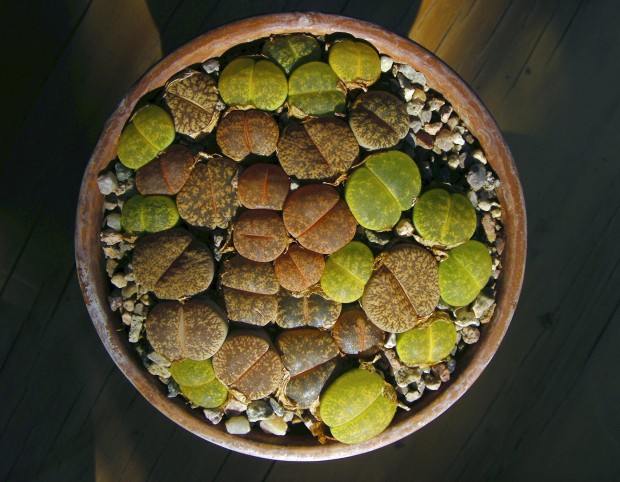
• "Living stones," or Lithops - plants that mimic the shape of rocks. "There are over 100 different kinds that differ in their pebbly textures," Chamberland said. "In the wild, they're nestled down among stones. Animals don't see them and so don't eat them."
• Stinkers - including plants such as the starfish flower. "It produces a big brown flower that stinks," Chamberland said. "The stinky flowers attract flies, and the flies pollinate the flowers."
• Grafted cacti - often resulting in plants with hues of bright yellow or red. "The brightly colored parts lack green pigment and would not survive on their own," Chamberland said. "Grafting the brightly colored plant onto a green plant works because the green plant takes in the needed sunlight."
• Avonia plants - which can resemble bird droppings. One imagines this is off-putting to some of the critters that might otherwise dine on the plants.
PRICES
Plants will be priced based on size, appearance and availability.
Little baseball plants, for example, might cost $3, and larger ones would sell for about $10.
"The general price range would be about $5 to $10" for plants at the sale, Chamberland said. "Some plants might be up to $100. The higher prices are generally for the bigger plants."
IF YOU GO
• What: Weird Plant Sale.
• Where: Tucson Botanical Gardens, 2150 N. Alvernon Way.
• When: 8 a.m. to 1 p.m. Saturday.
• Admission: Free for both the sale and the gardens.
• Information: Go online to www.tucsonbotanical.org and click on "Events."
Contact reporter Doug Kreutz at dkreutz@azstarnet.com or at 573-4192.

 Historic bank vault now new Tucson speakeasy