

ALBANY – National Grid revealed this week that its four substations that shut down during the historic blizzard that paralyzed Western New York in December, causing thousands to lose power, were designed to hold up against the worst of summer weather, but not unprecedented and extreme cold weather conditions.
The information was included in a report this week that is part of a state Public Service Commission review of the utility's performance during the blizzard. In it, National Grid stated that the substations shutting down was, in a sense, “as designed."
The report, which includes other recommendations for how National Grid might better respond to a winter weather emergency, broadly detailed the utility's response to the Christmas blizzard in which 47 people died in Erie County, including 12 in homes without power or heat. A broader loss of power for more than 108,000 customers in Western New York resulted both from downed power lines and the four substations.
People are also reading…
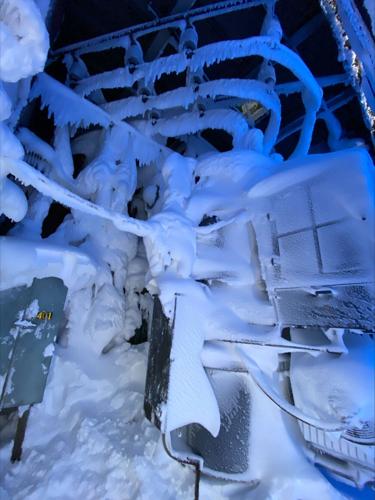
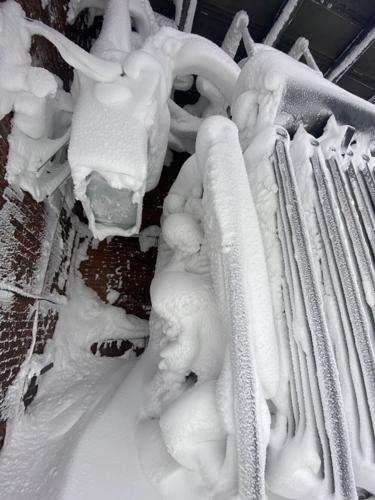
Although much of the equipment at substations is fully enclosed, some equipment, such as transformers, is only partially enclosed for "cooling purposes,” the report states, primarily to prevent their overheating during the hottest days of summer. But the company did not foresee the problems that having partially exposed substations would create during extreme winter weather in December.
When wind-driven snow and ice accumulated on and around the stations' externally exposed electrical equipment, the substations tripped, or shut off “to avoid more significant damage to the system.”
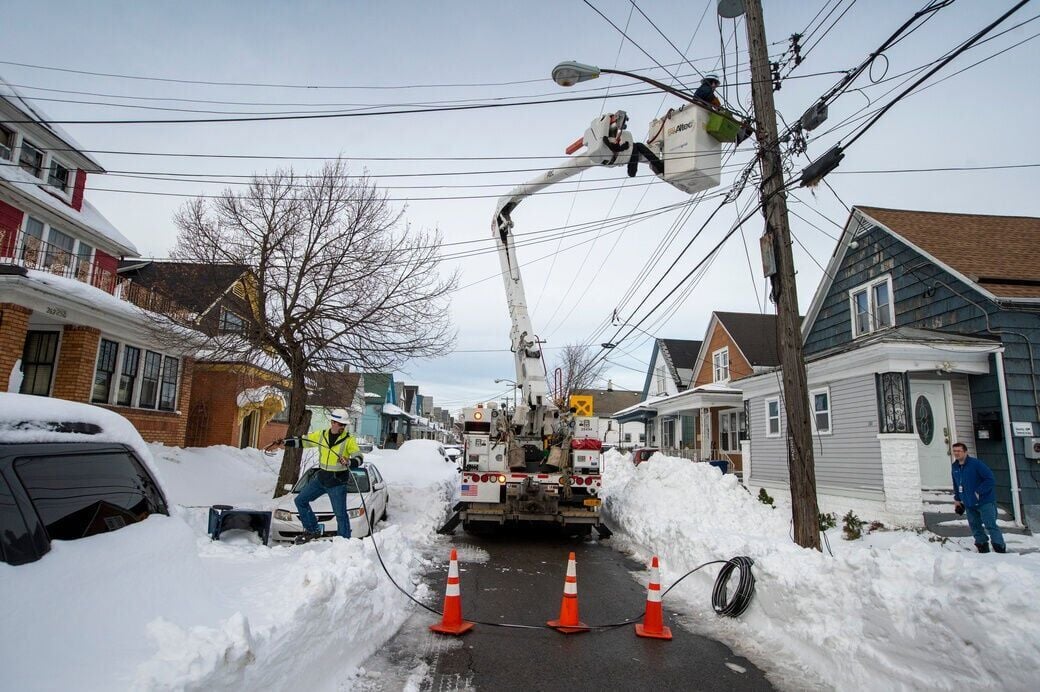
"We’ve never had this. Even though we get snow in Buffalo, from November to March, we’ve never had it blow to the degree it did," said Kenneth Kujawa, National Grid regional director for Western New York.
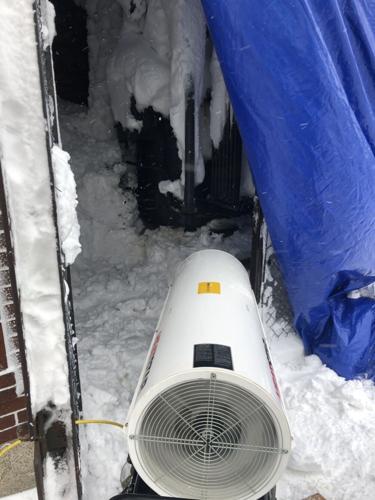
"Three substations had substantial accumulation of snow and ice and tripped entirely off-line to protect the equipment," a National Grid spokesman, David Bertola, told The News. "Those substations required the use of the tarps and heaters to remove the snow and ice to enable reenergization. A fourth substation was partially affected, and dropped part of its load. The fourth station required attention due to the snow, but not to the level that the other three had received."
The report states that National Grid is now looking into whether “strategic placement of substation de-icing kits is warranted” at various substations.
Bertola said that in the short-term, the company has provided substations with tarp coverings that can be used to prevent such icing during a future severe winter storm.
In the longer-term, the company is exploring solutions such as putting devices akin to a "rolling garage door" or "giant window shade" that can be pulled over substations as a means of preventing the type of shutdown that occurred in December.
In the storm's immediate aftermath, National Grid had said that five substations in the city were flat, after the heavy wet snow effectively short-circuited the equipment, triggering shutdowns. (The report, however, clarifies that only four stations shut down.) The outages affected large swaths of neighborhoods from North Buffalo and the Elmwood Village to the Old First Ward and the East Side.
National Grid has 43 indoor substations that are part of highly interconnected underground cable electrical network serving customers in Buffalo, and according to the report, the indoor substations are among the “longest serving assets in the company’s system.”
As part of a long-term refurbishment program for these facilities, 30 of the substations have been rebuilt so far, with the remaining 13 included in future capital investment plans.
National Grid says there is no correlation between whether a substation faltered during the blizzard and whether it had been refurbished.
“The substations impacted by Winter Storm Elliott included already rebuilt facilities, as well as facilities that have not yet been rebuilt,” the report stated.
At the conclusion of its 58-page report, the utility included a brief summary of future steps it is exploring to prevent problems that occurred during the historic storm.

While there is scant data available, the historic storm appears to have had a particularly devastating impact on Black people in the city.
Another problem that emerged in December was that Erie County and Buffalo faced long delays in plowing the deep snow that accumulated over 37 consecutive hours of blizzard conditions.
That meant National Grid’s trucks and crews faced lengthy delays in getting to paralyzed substations in the city.
In a section of the National Grid report entitled “Improved State–County–City Coordination,” National Grid wrote that the storm brought to light instances “when the utility needs to take the lead and provide direction to (Erie) County around what roads to clear.” In its plowing requests in December, the company’s top priority was specific streets and locations on Buffalo's East Side that needed to be plowed to enable it to restore service to customers.
"We provided regular updates to the snowplow coordination team that was based at the Erie County Emergency Operations Center," Bertola said. "In the future, if we have a major outage event where access is a problem due to snow, the framework is in place for us to work cooperatively."
National Grid also is exploring obtaining “specialty equipment” that would improve the utility’s access and mobility when roads are impassable due to snow. The company says it plans to complete a review of whether to purchase such equipment by July 31, 2023.

Looking back at weather bulletins, meteorological data, briefings from local officials and firsthand accounts, here's how the Buffalo Blizzard of 2022 unfolded.
In its recommendations, the company additionally cited the need for coordination with the state Thruway Authority and wrote that National Grid has “identified key contacts at NYS Thruway Authority who have pledged to work with us on a process for emergency travel on the Thruway when it is safe to access, but closed.”
Bertola said that a few days into the storm, National Grid had wanted to bring in crews to Buffalo from the southwest portion of New York where restoration efforts had been completed. But with the I-90 and Route 219 closed, the company had to consider alternate routes, he said.
The company also outlined steps to better support National Grid employees when they are stranded on company property for an extended period, as occurred in December, including ensuring that “proper sleeping, hygiene, and nutritional products” are available.


