

Now, our 13 seconds begin.
As every Buffalo Bills fan knows, that’s how long it takes for euphoria to morph into regret as promise and possibility slowly become a huge missed opportunity.
Granted, the elation is palpable this week after the state, county, team and National Football League all approved the deal to build a new Orchard Park stadium. Risking permanent shoulder injury, Gov. Kathy Hochul and County Executive Mark Poloncarz are reaching as far around as possible to pat themselves on the back.
The deal is supposed to keep the team in Western New York at an $850 million public cost that is less than the $1 billion that had been projected. And every new announcement of step-by-step progress on the new facility – and there will be many, including approvals by state and county lawmakers – will be designed to maintain enthusiasm and sell this white elephant to a public that was given no choice but to buy.
People are also reading…
But as the process unfolds, the reality of what might have been – a downtown stadium that could have done much more than simply host football games – will begin to sink in.
As it does, the exaltation will slowly turn to regret – just as it did watching each play of the final 13 seconds and overtime of January’s agonizing playoff loss to the Kansas City Chiefs.
Though a study commissioned by the team itself pointed to downtown as the best option, team owner Pegula Sports & Entertainment was hellbent on building next to the existing facility in Orchard Park. And politicians handing over the lion’s share of the $1.4 billion cost acquiesced as meekly as the Bills defense.
Now, like shellshocked fans trying to salvage something from the ashes of a victory gone up in smoke, the best we can do is to put lipstick on this pig.
The Buffalo NAACP’s last-minute appeal to reconsider the idea of having the public foot the entire cost – but only for a stadium at the South Park site near downtown – had no impact on Hochul or Poloncarz.
Sports journalist and downtown stadium proponent Patrick Freeman’s appeal to the state attorney general, citing potential violations of a required stadium review process, has gotten only a pro forma reply.
And last-ditch efforts by the Bills in Buffalo group to get legislators to keep open the site question even while approving funding is not likely to fare much better.
“It’s not a strong chance,” the group’s Ryan Miller said of its appeal to state lawmakers. “But it’s definitely the right thing to do.”
All that’s left now is a community benefits agreement to try to force the team to give something back in exchange for the taxpayer subsidies being handed out.
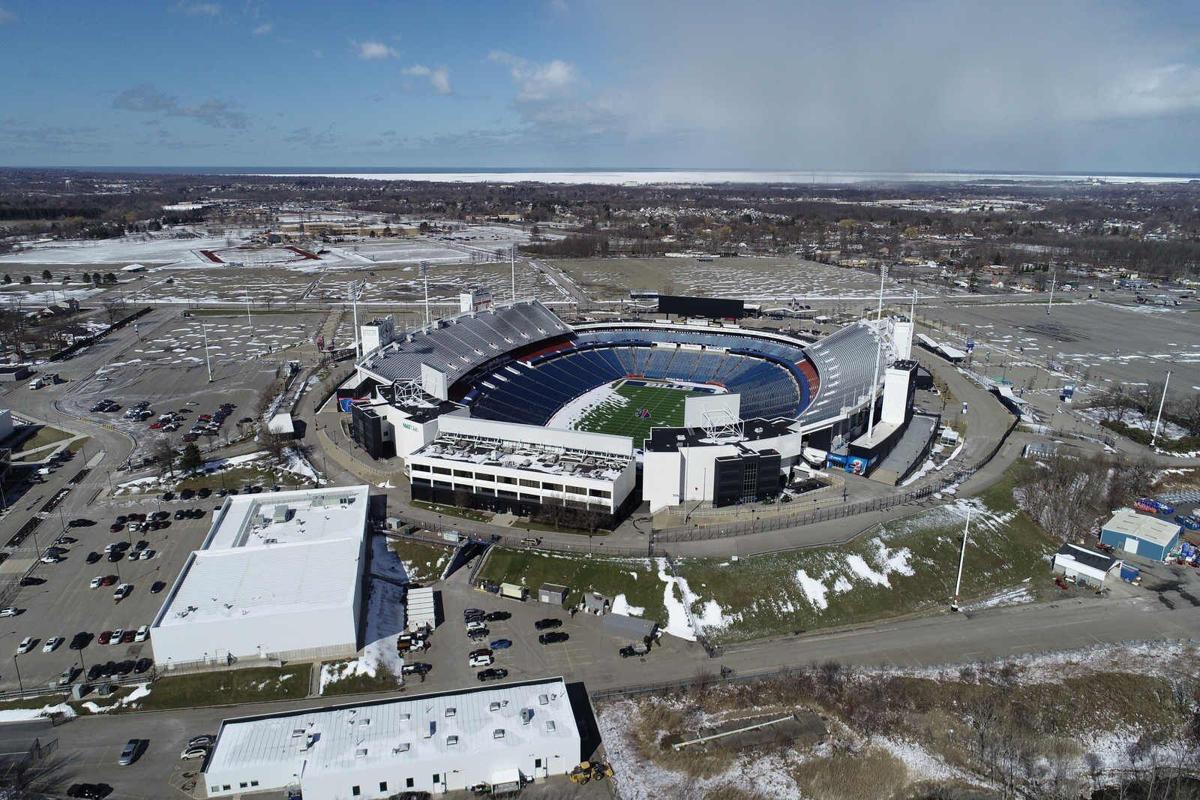
Mindful of the economic wasteland around Highmark Stadium – Exhibit A in the argument that sports facilities don’t spur economic development in and of themselves – Orchard Park officials already are arguing for concerted efforts to get something tangible out of the new facility, as they should.
But census data says the median household income in Orchard Park is $88,868. In Buffalo, it is less than half – $39,677. If there are going to be “benefits” from this infusion of public dollars to help a private team owner, which community needs them most?
Maybe that’s why County Legislature Chairwoman April Baskin has been pushing hard to make sure a CBA also helps the Buffalo community snubbed by the Bills, the state and the county. Beyond just having minorities and women participate in stadium construction and operation, she has proposed ideas like reserving a stadium suite for low-income families and youth engagement efforts such as a sports career internship program to steer kids away from violence.
But instead of being worked out up front, the CBA will be drafted as the stadium is being built. That leaves skeptics like me to wonder how much leverage proponents actually will have once the major paperwork has been signed and the project is off and running.
Baskin says the fact that the project’s Memorandum of Understanding includes a CBA to be worked out by a separate committee – as well as the fact that the stadium will require future approvals for bonds, land transfers and the like – will give proponents “a lot” of leverage in shaping the agreement.
“These benefits need to impact the community” over the 30-year life of the lease, she said.
Maybe she’s right that it will pan out. And if it comes to pass, that will be good.
But it will still be like enduring overtime while knowing you’ve already blown your best chance for victory.
The best “community benefits agreement” would have been a deal that put the stadium at the South Park site. According to the Bills’ own study, that location would have created the most benefit.
It could have generated more revenue from this huge public investment, and would have – along with the hockey arena, baseball stadium and other existing attractions – created a vibrant entertainment district that would have been the envy of most cities and would have redefined Buffalo.
Linked with light rail expansions outlined by the Bills in Buffalo group, a South Park stadium also would have created spinoff economic opportunities and jobs in some of the region’s poorest neighborhoods. There would have been no need for a side agreement because the deal itself would have been a CBA.
All of that has been lost, and no amount of news releases or ceremonial groundbreakings will make up for this missed opportunity to reshape Western New York.
All that such hollow celebrations will do, like the phrase “13 seconds,” is remind us of what might have been.
But this time, we can’t curse spoilers from some other city who snatched opportunity from our grasp and turned significant achievement into a loss that will linger forever.
This time, we did it to ourselves.


