

"A woman is only a woman, but a good cigar is a smoke."
Rudyard Kipling may have written that line with tongue in cheek back in 1886, but in those days a good cigar was unquestionably a valuable commodity.
Cigars were smoked by cowboys and capitalists, socialites and soldiers, shopkeepers and sodbusters.
The cigar was among the first products to be mass-produced, elaborately packaged and marketed to virtually everyone in America.
One estimate said four of every five American men smoked cigars at the beginning of the 20th century, when some 20,000 U.S. companies turned out more than 7 billion cigars a year.
To sustain that kind of business, cigar manufacturers employed the latest printing technology to make their cigar boxes as eye-catching as possible.
People are also reading…
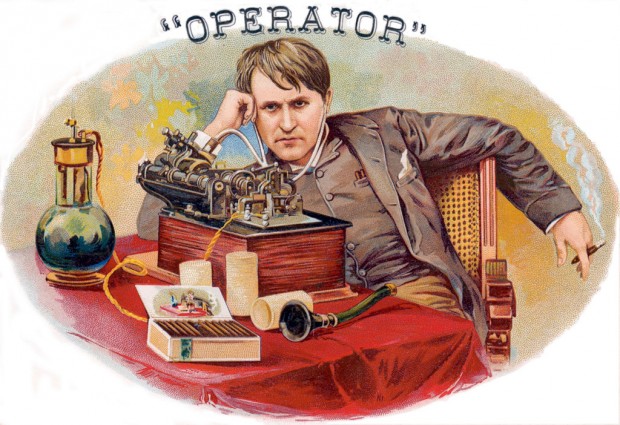
Creative printers turned the cigar box into one of America's first full-color promotional packaging devices and, in the process, left an amazing chronicle of life in Victorian and Edwardian America.
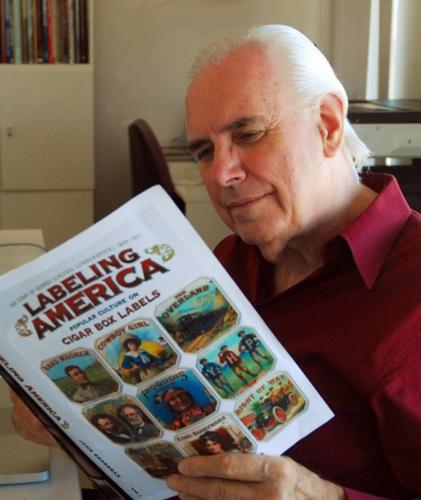
Tucson resident John Grossman has just published a book depicting the rich history of cigar-box art through the work of one company, George Schlegel Lithographers, whose family-owned New York City business passed from father to son through four generations from 1849 to 1971.
Grossman obtained important documentary material for his book from Peter Schlegel, the oldest son of the fourth and last lithographing George Schlegel and a longtime Tucsonan.
Titled "Labeling America: Popular Culture on Cigar Box Labels," Grossman's book is filled with color reproductions of the artwork that graced cigar boxes from the mid-19th century to the mid-20th century.
The artwork portrays many of the notables of the age: actress Ethel Barrymore, baseball star Honus Wagner, author Mark Twain, Queen Victoria, Abraham Lincoln and Thomas Alva Edison.
The dominant themes of the day show up on the boxes, too: patriotism and the Spanish-American War; American Indians depicted as noble savages; the early days of the automobile; the rising opulence of the Industrial Age; and the growing reverence for America's colonial roots.
Grossman chronicles the growth of cigar smoking from a novelty in the 18th century to full acceptance during and after the Civil War.
Fortunately for cigar makers, the popularity of their product grew along with the development of "chromolithography," the color printing process that employed art drawn on and printed from heavy limestone slabs that made it possible to mass-produce images in full color.
The book could never have been published if not for the passion Grossman and his wife Carolyn have for collecting ephemera - typically printed material such as posters, postcards and greeting cards meant to last only a short time.
Their collection is housed in the Winterthur Museum Library near Wilmington, Del., and contains some 250,000 printed images.
Grossman and his wife live in Academy Village, an active-adult community off Old Spanish Trail.
About the book
"Labeling America: Popular Culture on Cigar Box Labels," 320 pages. Hardcover. Cover price: $39.95. Available at a discount at Barnes and Noble ($26.11) and Amazon.com ($29.16).
Mike Maharry is a retired newspaper editor who lives in Academy Village.


