

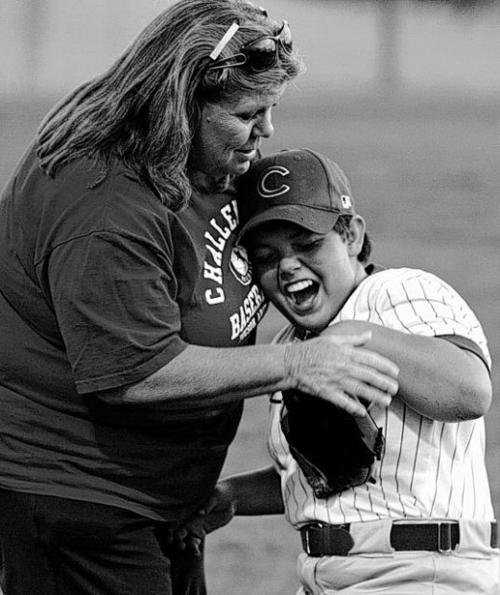
Every spring, Challenger Little League enables kids with varying physical and mental disabilities to take a swing at the great American pastime — baseball.
"What we get from a lot of parents is 'Oh, I don't think my son or daughter can do that,' " said Gary Nash, whose family has been involved in Challenger for 16 years.
"But you really don't know unless you let your kid get out here and do it. We have kids out here with walkers and wheelchairs and they play the game just fine. You just got to give them a chance."
Challenger is in its 17th season in Tucson and this year includes 160 players.
Nash's daughter, Kimberly, is a Challenger veteran and now plays on a Special Olympics softball team and is an announcer at the Challenger games.
A current player for the Pirates, in Challenger's Majors division, is Ariel Magda, who plays second base.
People are also reading…
"Challenger helps us feel good about ourselves," said Magda, who has a learning disability. "It's good to know you're out doing something, rather than sitting at home."
The Majors division is for kids and young adults from 14 to 22.
For Magda, only one thing overshadows the excitement of being on the field: "The socializing. It's the best part."
For many, Challenger is their only chance to play baseball, said Sam Wesch, the league's vice president.
"No disability prevents anybody from playing out here," said Wesch, 48. "Everybody gets to play out on the field and everybody gets to hit the ball. And by giving each of these kids the same opportunity, it's improving their quality of life."
Eric Hall, a first baseman for the Indians in the Majors division, said he has gained confidence by playing in a Challenger team. Hall has a learning disability.
"When the crowd cheers for me, it makes me feel great," said Hall, 14. "It makes me feel important."
Challenger has a six-team Minors division for players ages 5 to 13. Its Majors division is made up of eight teams.
For players who want to continue playing baseball after they're done in the Majors, Challenger organizes a softball program through the Special Olympics, Wesch said.
In Challenger, parents or other family and community members use a buddy system to help new players learn how to play by going out on the field with the players during the game.
Once players have become familiar enough with the game, they play on their own.
And here's the cool part: Every player on every team gets a turn at bat, every game.
Challenger also provides a support group for parents and guardians, Nash said.
"It's good for the kids to come out here and just be around their peers, but it's also good for the parents to be around each other too."
South Side
"We have kids out here with walkers and wheelchairs and they play the game just fine. You just got to give them a chance."
Gary Nash

 Historic bank vault now new Tucson speakeasy


