The Delta variant continues to fuel rising Covid-19 case numbers across the Northeast, including Western New York. But the biochemist who leads efforts to track variants of concern in the region expects Omicron will arrive in force during the coming weeks.
“I believe it's here,” University at Buffalo biochemist Jennifer Surtees said Saturday, “and we just need to get the sequence data to back up that suspicion. We are anticipating another wave, this time with Omicron."
The state reported 192 confirmed cases of Omicron across New York as of Friday, with 117 of them discovered in Tompkins County, an outbreak traced to Cornell University in Ithaca, according to news reports.
People are also reading…
Experts say this statewide total is certainly a vast undercount of Omicron, which appears to spread more easily than previous virus variants.
Scientists still are studying how likely Omicron is to lead to serious illness and death. But doctors say the best things people can do to prevent the spread of this newest variant are the measures they've recommended all along: Wear a face mask, practice social distancing and, most importantly, get vaccinated and boosted.

The temporary vaccination sites offered locally were among more than 40 across the state announced Saturday morning by Gov. Kathy Hochul scheduled to begin right away and operate in the weeks to come.
"We do have some control over this, but do we have the social will, the political will, to do it?" asked Dr. Thomas Russo, chief of infectious diseases at UB's Jacobs School of Medicine and Biomedical Sciences.
Since the pandemic began, more than 3 million New Yorkers have tested positive for the virus that causes Covid-19, with the highest single-day number for the state, 21,908, coming Friday. About 60,000 have died, including seven on Friday in Erie County, the most reported in any county statewide.
While state positive test totals are soaring, driven by a surge in cases downstate, case totals and the share of tests coming back positive have declined in this region in recent days.
An average of 9.2% of tests performed in Western New York were positive for Covid-19 for the week ending Thursday, a decline from an average of 11.2% for the week ending Dec. 5. Per capita cases also fell, from an average of 88.6 per 100,000 residents for the week ending Dec. 5 to 59.7 per 100,000 for the week ending Thursday.
The statewide figure for the seven days ending Thursday was 67.8 per 100,000.
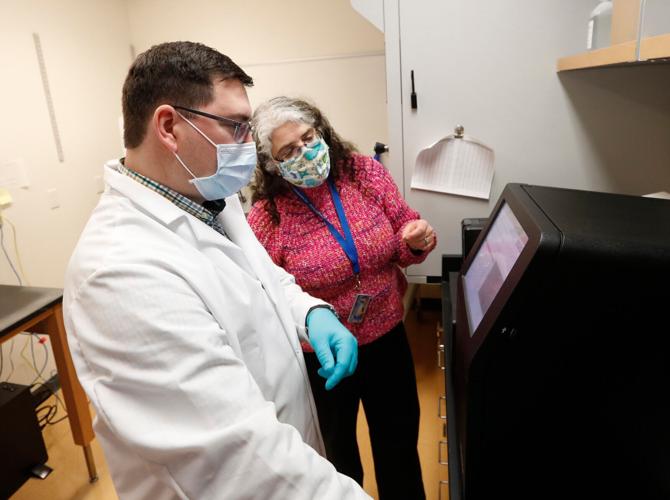
Surtees tracks Covid-19 variants of concern in the region as co-director of the UB Genome, Environment and Microbiome Community of Excellence, or GEM.
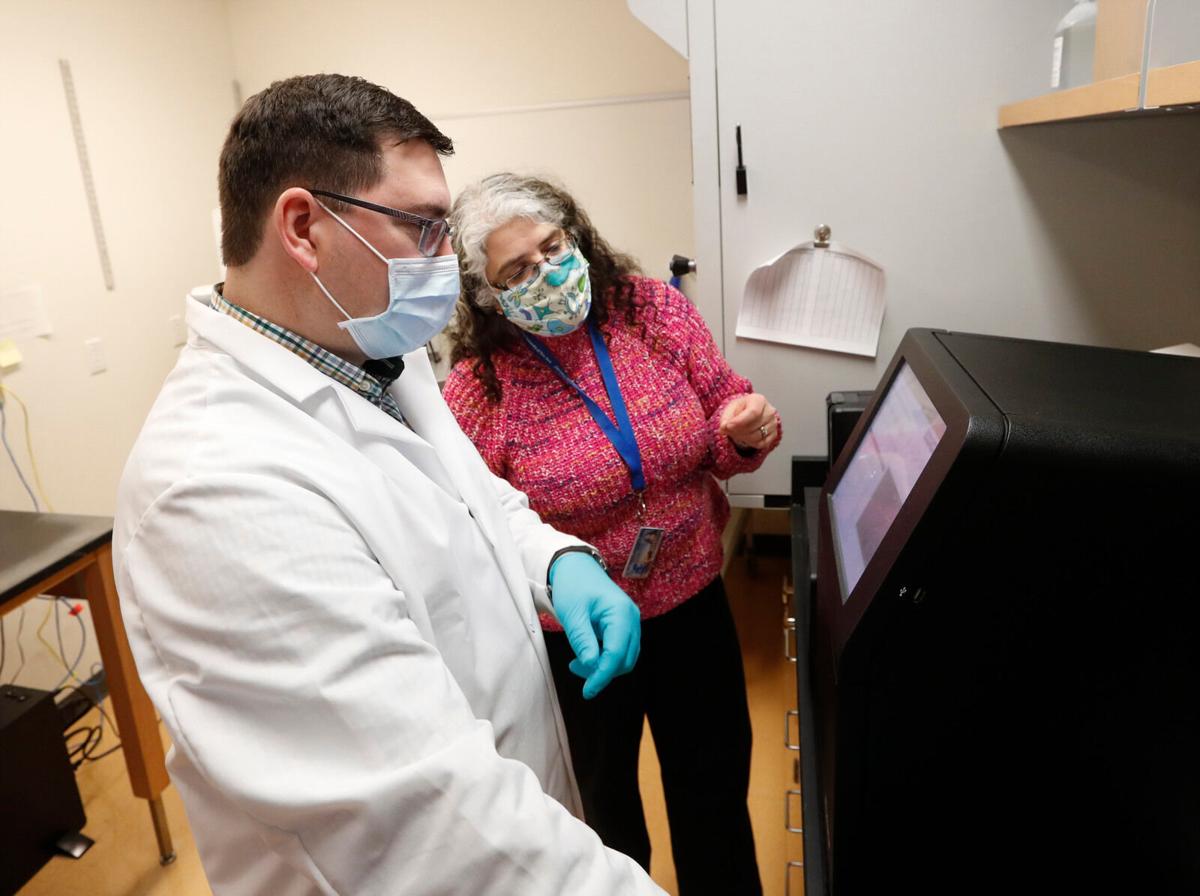
A related lab is one of four across the state designed to sequence Covid-19 test data to build a better understanding of how different variants spread and impact virus-related illness, treatments and vaccines.

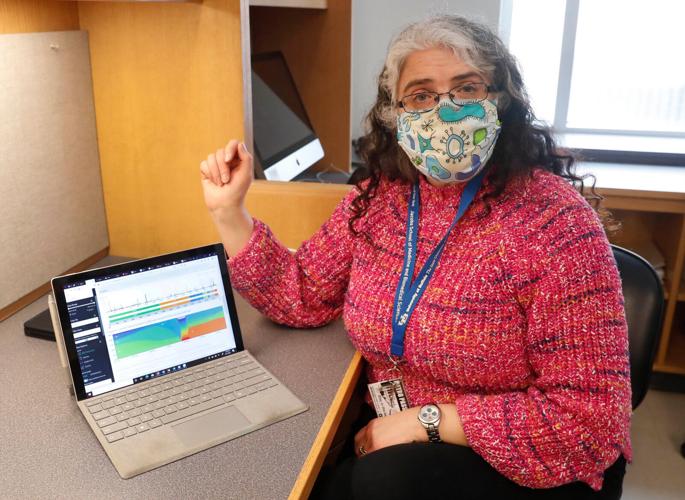
Jennifer Surtees, associate professor of microbiology at the Jacobs School of Medicine, has a graph showing the evolution of mutations of the SARS-CoV-2 virus since last March in New York State, with specifics to Erie County.
It began closely examining positive test samples in April 2020.
“We don't have an Omicron sequence yet, but I expect to see it in samples we get data for next week,” she told The Buffalo News on Saturday.
The most recent samples come from tests taken from late November through early this past week.
The lab expects to have results as soon as Monday from 600 samples sequenced this past week, including nearly 200 on Friday that researchers believe may contain the first Omicron variants.
Nearly 600 more tests received during that time will be sequenced this coming week, including a dozen samples that were part of tests conducted in the region by KSL Diagnostics and include a glitch in positive virus test results common with only the Alpha and Omicron variants.
“Since Alpha is pretty much wiped out at this point, chances are it is Omicron,” Surtees said. Travel patterns of those in the region also suggest the variant is here, she said.
Covid-19: Developments in Buffalo and Western New York
A growing body of early data suggests the Omicron variant replicates more quickly and sheds more efficiently than the highly transmissible Delta variant. It also seems better at evading the human immune system.
Russo said preliminary research shows, for example, that someone with three shots of the Pfizer vaccine, including a booster, is about 75% protected against the Omicron variant, a lower level of defense than the 95% or so provided against the Delta variant.
"That level of protection is eroded," he said.
Even if Omicron isn't as deadly as Delta, the fact that it appears to spread more easily is problematic because it has many more potential hosts to infect, Russo said.
"It's a numbers game," he said.
The problem, too, is that Delta initially arrived in the summer, a period when more socializing was conducted outdoors and hospitals had plenty of available capacity. That's not the case now, Russo said, and holiday gatherings make it that much easier for Omicron to spread.
"Let's face it, our behavior has been pre- or post-pandemic since July," he said, adding, "This is not the time to give up."
The Alpha variant, which originated in Great Britain, accounted for 95% of variants in this region as recently as May, Surtees said
That variant and the Epsilon variant – which emerged in Peru in late 2020 and spread first to California in the U.S. – were the most common among the few samples available in June, when case numbers in the region were low.
Delta began to arrive in July, became the dominant strain within a few weeks and remains that way, not only in the region but across New York and the nation. The federal Centers for Disease Control and Prevention report 97% of confirmed Covid-19 cases nationwide are from the Delta variant, with the Omicron variant accounting for just under 3%.
However, the CDC estimates the Omicron variant now makes up 13% of the virus circulating in a region that includes New York, New Jersey, Puerto Rico and the Virgin Islands.
This the highest percentage in the U.S. and is expected to grow during the holidays, based on the torrid pace with which the highly contagious variant has proliferated across southern Africa – where it was discovered last month – and parts of Europe.
“It's just a matter of time to see it in more widespread regions of the state,” Surtees said.

“This is a crisis. This is a health care crisis and people are going to die. If people had gotten vaccinated when we asked them to, and got the booster shots, I wouldn’t have had to put in place a mask mandate," Hochul said.
UB GEM researchers could sequence about 1% of test results in the region for more than a year. Those tests were gathered mostly in Erie and Niagara counties. Capacity has grown to 5% since summer and now includes samples from more hospitals, labs and drive-through testing sites across the region, better representing what is going on throughout Western New York.
Surtees expressed concerns about the breathtaking speed with which the Omicron variant is spreading, as well as its ability to overcome at least some of the immune response built up by those who have been vaccinated against or infected with the SARS-CoV-2 virus.
Early indications are that immunity has waned for many of those vaccinated more than five months ago, she said, and that only one monoclonal antibody treatment on the market – sotrovimab – has so far been shown to diminish its infectious power for those who get troubling Covid-19 symptoms. The treatments were paused to U.S. states after Thanksgiving and stockpiled amid concerns about Omicron spread.
“If you're going to be getting together with friends and family, you should get a rapid test immediately before, because you can go from asymptomatic to symptomatic and from negative to positive relatively quickly," Surtees said, a stance echoed by the state Health Department. "And you don't want to bring the virus into other people. So get vaccinated and boosted, wear masks and get tested before you go to any kind of indoor gathering with other people. And ask other people to do the same.”