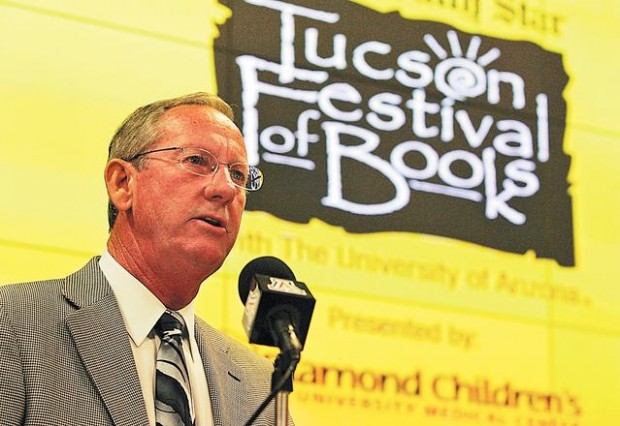
The Star-sponsored Tucson Festival of Books is turning the page on its inaugural year and looking ahead to the next chapter.
Next year's fest will take place March 13-14 on the University of Arizona campus, Tucson Festival of Books representatives announced at a news conference Wednesday.
The inaugural festival, which featured more than 400 authors, including J.A. Jance, Elmore Leonard and Neal Shusterman, also took place in mid-March. It drew more than 50,000 attendees, according to festival organizers, who derived the crowd estimate by surveying the university police and people running booths at the festival, according to Frank Farias, director of UA Bookstores and vice president of the Tucson Festival of Books Committee.
Farias said attendance fell short of the goal of 75,000. Committee Co-chair Bill Viner expects more people to attend next year.
People are also reading…
"I think word of mouth spread fairly quickly about the festival, and we're anticipating we'll have a little broader reach over the coming years," he said.
The festival pledged to donate $200,000 to local literacy charities, splitting the money among the Literacy for Life Coalition, which formulates plans to improve literacy and distributes funds to organizations that support its goals; Reading Seed, which helps children learn to read; and UA Bookstores, which will distribute the funds to entities that support literacy, including the English department and the University of Arizona Press.
At the news conference, the committee presented representatives from the three organizations with a jumbo-sized check for $200,000, but that was just for show. Viner said the foundation will pay each organization about $66,666 by the end of October.
The festival has been a boon to Tucson's literary world, said Martha Gilliland, executive director of the Literacy for Life Coalition.
"I do think the Festival of Books is a brilliant concept in that it brings people together to celebrate literature and books, from the high end to children's, and all genres," she said. "In turn, it generates resources from improving literacy in those who need it the most and will be a part of Tucson's future."
For more


 Analysis: These 9 TUSD schools are at highest risk of merging or closing