When Robert Roa left work one day at a Tucson call center, a few well-dressed men were standing by his car.
He knew who they were and what they wanted. He thought they were more powerful than any police force, or even the president of the United States.
The men in suits were church deacons from Golden Dawn Tabernacle, the church on Tucson’s far south side that Roa had fled a week before, he said. They wanted to bring him back.
“The first two times, I tried to deal with them,” he said. He didn't realize “they don’t have power like this. No one actually has this power to stop you from living your life.”

Robert Roa left Golden Dawn Tabernacle when he was 19 because church members ostracized him after discovering he had watched a movie in 1996. Movies, internet, TVs and smartphones are banned in the strict, pseudo-Christian church. Roa now calls Golden Dawn a “cult.” Here, Roa is pictured outside his home in Grand Rapids, Mich., on May 23, 2024.
Roa, then 19, had spent the previous seven formative years in the strict congregation he now calls a cult, as do 19 other former members interviewed for this project.
People are also reading…
In 1989, when he was 12, his family moved from Indianapolis to Tucson. They moved to flee problems at home and join Golden Dawn, a congregation that relatives already belonged to.
“The church was really militaristic," Roa said. "They had rules and regulations for everything. I think it brought a lot of comfort.”
It meant abandoning his parents’ careers, the family’s home and friends, but his mother was sure it would save their souls, Roa said.
Thus began the relatively short chapter of Roa’s life that has taken him more than two decades to outgrow.
Adapting to a closed society
Moving to Tucson was a culture shock for Roa, who now lives in Grand Rapids, Mich. His family didn't know the Tucson relatives well because members of Golden Dawn didn’t associate with people outside the church. They didn’t watch TV or listen to secular music either.
“I go from pretty much being a total product of the 80s and watching TV and listening to music, to none of that stuff is good now. It’s all evil,” Roa said.
Since Roa’s family were newcomers, they had to quickly adapt to a closed society where Pastor Isaac Noriega made the rules and those born in the church were “like royalty” because they hadn't been polluted by the outside world, he said.
“I threw myself at it," Roa said. "I really did the work. I was constantly praying or reading the Bible and really involved in a lot of things. I was in the choir. I was in the band."
A prophet named Branham
Immersing yourself in Golden Dawn’s culture meant submitting to the strict teachings of Noriega, who founded the church as Tabernáculo Emanuel, a formal name the church still retains, in 1973.

Isaac Noriega
Noriega demanded attendance at three services per week — two on Sunday and one on Wednesday — as well as conservative clothing for men and women, Roa said.
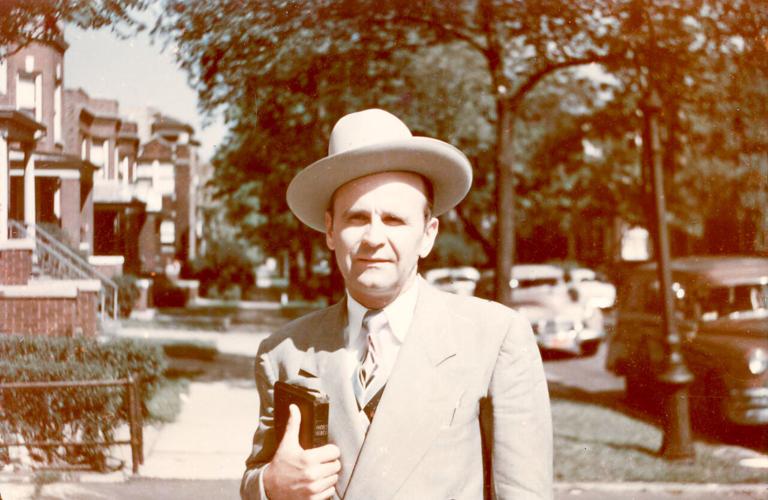
Noriega, in turn, followed the man they all considered a prophet – William Branham. The 20th-century preacher from Indiana was a leading faith healer in the 1950s who developed a doctrine known as The Message, or The Message of the Hour.
Branham lived in Tucson from 1963 until he died in December 1965, and about nine local congregations that follow his teaching operate here.
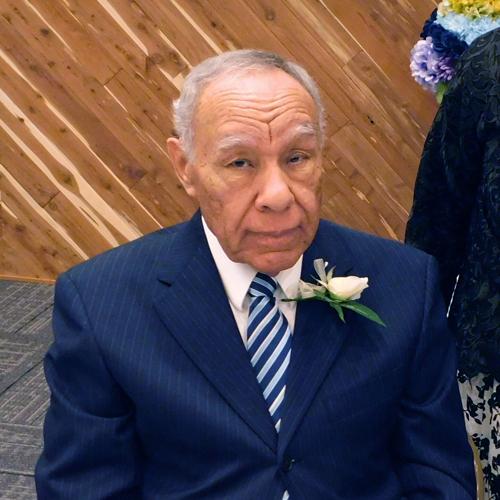
“My mother, my aunts, my uncles and everybody else in that church believed that he (Noriega) was something special. If he was not as holy as William Branham or as holy as God, his word was absolute,” Roa said.
“I saw William Branham as the authority," he added. "I believed that he was Elijah."

Rev. William Branham
Temptation on the screen
Roa started working outside the church when he was 16 — first at a McDonald’s on West Valencia Road, and later at the Teletech call center near Tucson International Airport. Coworkers at Teletech viewed him as a bit of a young oddball.
“Robert was always dressed up in a suit,” said former coworker Bronson Smith. “Everybody was wondering why.”

Robert Roa left Golden Dawn Tabernacle when he was 19 because church members ostracized him after discovering he had watched a movie in 1996. Movies, internet, TVs and smartphones are banned in the strict, pseudo-Christian church. Roa now calls Golden Dawn a “cult.” Here, Roa is pictured in his home in Grand Rapids, Mich., on May 23, 2024.
Smith, who now works as a barber and runs the Popoverz food truck in Tucson, would come to play a key role in Roa’s escape.
At Teletech, Roa recalled, “there was a breakroom that had a TV in it. If I went in there and no one else was in there, I would turn it off. But if someone else was watching it, I wouldn’t turn it off.”
One day in 1996, he was in the break room with a coworker and saw a preview for the movie Independence Day.
“They showed that scene where they blow up the White House, and I said, ‘Oh my God!’” Roa recalled. “The person there heard my gasp and said, ‘What’s going on?’”
“‘What do you mean? They just blew up the White House,” Roa recalls saying.
The coworker explained it was just a movie — Roa had missed the latest in computer-generated imagery. He decided then to break church rules and go see the movie.
Everything centered on fear
“When I went to watch it, I was blown away," he said. "It was the best thing ever.”
That would have been the end of it, Roa said, but his mother found the ticket stub in his pocket and called the pastor and a deacon. They told him watching the movie was sinful.

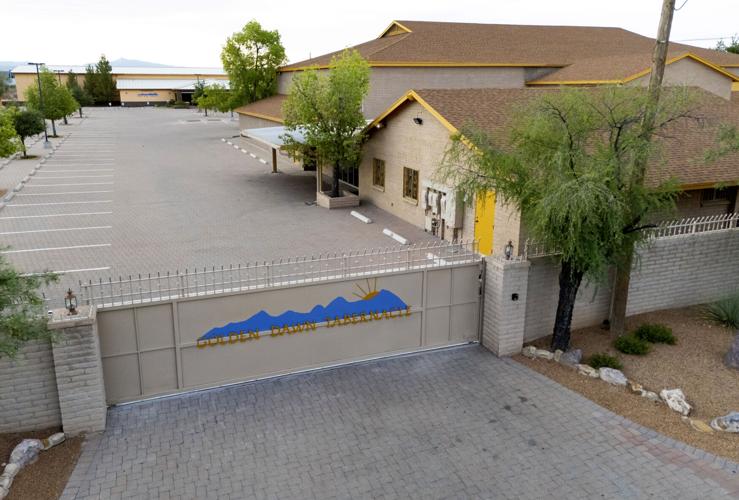
Golden Dawn Tabernacle at 301 E. Los Reales Rd. is pictured on Sunday, June 30, 2024. Twenty former members have described the church as a "cult."
“That’s where the cognitive dissonance started for me, knowing that in the real world, watching a movie isn’t a bad thing,” he said.
He started hearing rumors about himself, that he was possessed by demons, Roa said. People stopped shaking his hand, lest he pass on the demon spirit. That got him thinking.
“Everything is centered around fear,” Roa said. “Rather than saying, ‘Hey, you made a mistake, let’s help you and make sure you don’t do this again,’ it’s like, ‘No you made a mistake, and now you’re going to hell unless you repent.’”
Losing my community
It turned out his coworker Smith lived nearby. Soon after the movie, he broke another rule and stayed over at Smith's house, skipping Sunday morning service..
Instead of listening to Noriega talk for hours, he watched football with the family and had a good time.
“There weren’t any rules, but everyone seemed to know what respect was,” he said.
The next day, he told his parents what happened, and he was removed from musical duties at the church.
"Nobody was going to come to my defense or rescue," he said.
One night when his family left for church, he grabbed his clothes, a tenor saxophone and a guitar, put them in his pickup and drove to the McDonalds on Valencia Road.
“I put the car in park, sat there a second, and was so overwhelmed with all the emotions I was experiencing,” he said. "I cried so hard I threw up a couple of times.”
“Once I had that cry, I was like, ‘Alright, what’s next?’”

Robert Roa left Golden Dawn Tabernacle when he was 19 because church members ostracized him after discovering he had watched a movie in 1996. Movies, internet, TVs and smartphones are banned in the strict, pseudo-Christian church. Roa now calls Golden Dawn a “cult.” Here, Roa is pictured outside his home in Grand Rapids, Mich., on May 23.
Breaking through deacons
In following days, the deacons started going to his work, Roa said.
“Every day after I would get out of work, I would have deacons waiting for me, trying to talk with me.”
Roa had no interest in going back and told them so, he said. After a few days, his coworker Smith noticed the men and brought it up.
For the next couple of days, Roa’s coworkers improvised, he said. A group of them would form a circle around him and walk him through the deacons to his car.
After leaving, what saved Roa, he said, “was the kindness of strangers, not the kindness of the people in the church.”
For months, he lived in his truck and took showers at truck stops. Finally, he moved into a room at the home of a co-worker's boyfriend.
“That first night, sleeping on that floor on that carpet, I never felt safer.”
The church inside
He was only in the church for seven years, but the influence penetrated Roa to his core, he found. Deprogramming from cult-like groups wasn’t as common then as it is now, he said.

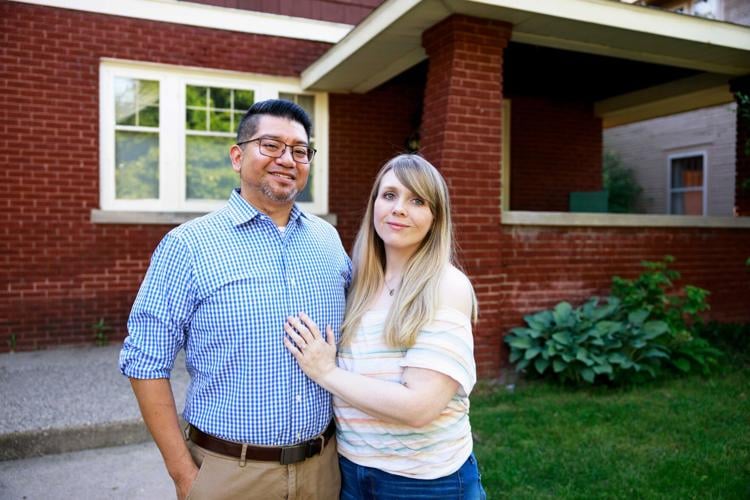
Robert Roa left Golden Dawn Tabernacle when he was 19 because church members ostracized him after discovering he had watched a movie in 1996. Movies, internet, TVs and smartphones are banned in the strict, pseudo-Christian church. Roa now calls Golden Dawn a “cult.” Here, Roa is pictured with his fiancee, Jamie Rozema, in their home in Grand Rapids, Mich., on May 23, 2024.
“The first 10 years was just unpacking, but without therapy, so not very good,” he said.
Later he got therapy and had more success moving on from the church. Still, once in a while, he finds the Golden Dawn's beliefs rising in him, like the anti-witchcraft beliefs Noriega taught.
“My fiancee brought some crystals in, and it triggered me so deeply,” Roa said. “I was like, ‘Why would you bring that into the house?’ It took me a day or two to realize that isn’t even what I believed.”
Decades after Roa’s painful break from the church he calls a cult, he still found traces of it inside himself.

Robert Roa left Golden Dawn Tabernacle when he was 19 because church members ostracized him after discovering he had watched a movie in 1996. Movies, internet, TVs and smartphones are banned in the strict, pseudo-Christian church. Roa now calls Golden Dawn a “cult.” Here, Roa is pictured with his fiancée, Jamie Rozema, in their home in Grand Rapids, Mich., on May 23.
Contact columnist Tim Steller at tsteller@tucson.com or 520-807-7789. On Twitter: @timothysteller
In this Series
Twisted Message: A prophet’s unchecked global sect

Tim Steller
Columnist

 Tucson police probe alleged child sex abuse, coverup at church