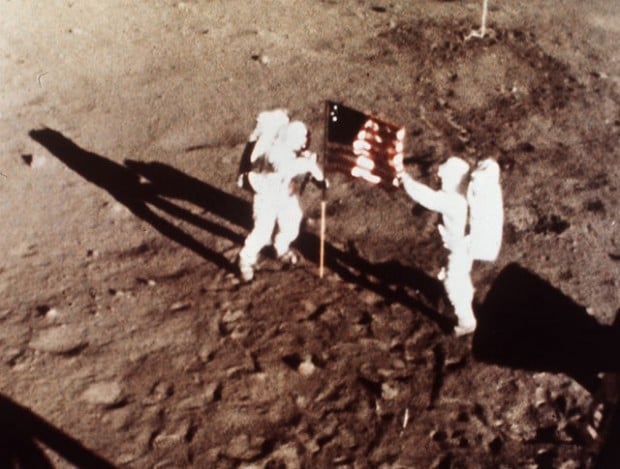
On that date I was a single mom (age 28) with a seven year old and a four year old, sunning on Utulei Beach in Pago Pago, American Samoa. Several of us expatriates kept an eye on our children while glued to a portable radio of the moon landing. The ABC TV station in Honolulu routinely shipped two-inch videotapes of its nightly news program to American Samoa, so it ran on roughly a one-week delay. it wasn't until my return to the United States years later that I saw a more complete coverage.
The Apollo program lasted from 1969-1972, all during my tenure as Director of Medical Records at the LBJ Medical Center in Pago Pago. The Apollo 10 mission was considered the test run for the moon landing. The crew included astronaut, Eugene Cernan. In preparation for the astronauts to be brought to the Pago Pago airport following splashdown nearby in the South Pacific, there was much discussion as to just which VIPs would be on the "red carpet" (probably a woven pandanus mat) on the tarmac.
People are also reading…
There was no such thing as tight security in May 1969. When the astronauts deplaned and walked down the red carpet, one seven-year-old stuck out his hand for a handshake: my son. I watched from a distance.
A young girl from the FAA housing area was in tears, because she did not have an autograph. She had a piece of paper; I took it and signed "Eugene Cernan." I'm not certain why I forged Cernan's name, but the child went away skipping and happy.
During the Apollo four years, a rescue plane with U.S. Air Force crew was routinely on standby in Pago Pago, in case there was splashdown close by.
Camille Gannon


 For sale: Tucson's Park Place mall