
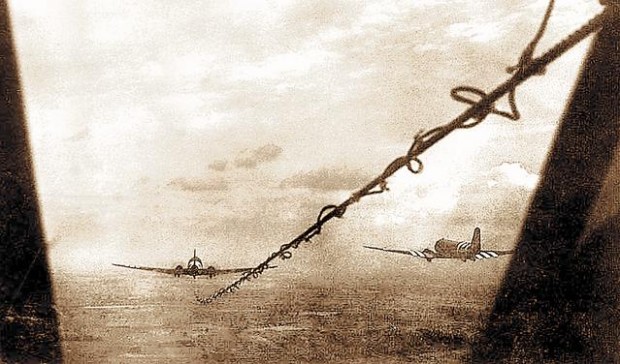
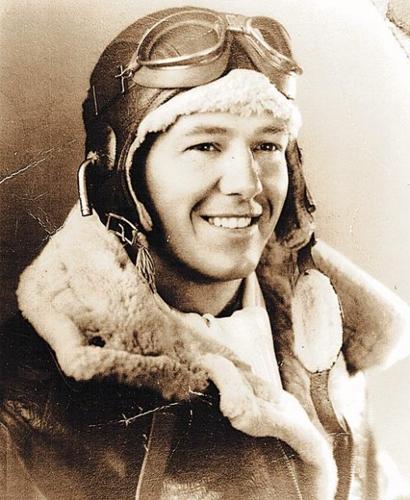
Each time Noel Addy flew his World War II glider over Europe, commanders predicted he'd live only 18 more seconds.
Towed behind a transport plane, Addy's armorless and gunless glider floated between German flak and machine-gun fire en route to landings behind enemy lines. On some missions, fewer than half of the gliders landed safely.
And the perilous flights completed by Addy, a Tucsonan, and 6,000 other glider pilots were only half the battle.
"After we hit the ground, we were part of the ground forces," Addy said.
After the gliders landed and unloaded paratroopers and equipment, the pilots traded their flight sticks for guns, helping take enemy positions and holding important checkpoints for the impending invasion.
Despite their clandestine missions and use of the latest combat technology, glider pilots weren't considered elite.
People are also reading…
Made up of people who failed to qualify for pilot training or were too old for standard flight school, the group was seen by commanders as inferior, glider pilots say.
Yet they still had to possess immense skill, setting down troops and sometimes thousands of pounds of equipment in fields in the middle of the night amid a barrage of enemy fire.
Now the remaining glider pilots are fighting for acknowledgement, as many have died and few people know about their somewhat obscure roles.
"I don't expect thanks or recognition or anything, but we haven't been given proper credit," said Don Manke, one of a handful of former glider pilots living in Tucson. "We had a lot of our glider pilots who acted in a singularly heroic manner."
Addy, now 88, didn't join the Army to become a pilot. He was just looking for a way to escape the Phoenix heat.
After graduating from Chandler High School in 1940, he joined the Arizona National Guard infantry after hearing the group got to train near Flagstaff during the summer.
His unit was called to duty just months before Pearl Harbor. After the attack, he knew he was in for the long haul.
After hearing about the glider program, which was modeled after Adolf Hitler's successful use of the aircraft during his blitzkrieg across Europe, Addy volunteered to be a pilot.
But nobody in the Army knew how to fly a transport glider — or train glider pilots.
At first, Addy was taught on regular aircraft. The instructor would bring the plane up several thousand feet and cut the engine, forcing the trainee to land as if he were flying a glider.
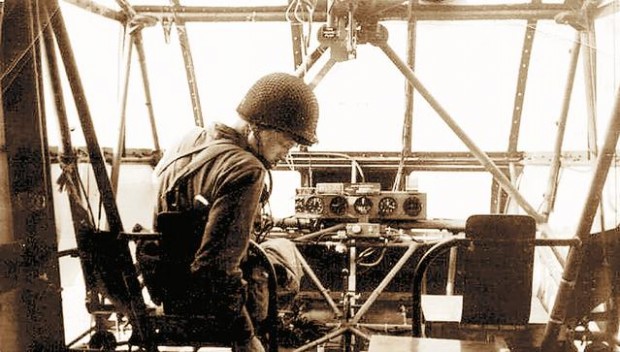
Later, the Army took the engines out of small planes and replaced them with pilot seats.
Missions seen as suicidal
Much like the training courses, the gliders eventually piloted into Europe had to be pulled together on the fly, with manufacturers such as Ford Motor Co. combining to build the Waco CG4A, a transport glider capable of carrying up to 13 paratroopers and equipment.
While Addy and others quickly learned how to operate the Waco and began instructing their comrades, other pilots and senior commanders weren't impressed, said George Theis, a former glider pilot who is the national treasurer for the WWII Glider Pilots Association.
The new program quickly developed a reputation for being a suicide mission, so the Army lowered the standards for pilots and upped the age limit to draw in people.
"We were a bunch of misfits," Theis said. "We weren't considered the cream of the crop."
Because of the lowered standards, regular pilots didn't like the glider pilots. The problem was compounded when transport pilots learned they would be towing the Wacos, making the cargo planes slower and more vulnerable to ground fire.
"It was a bastard outfit in the Air Corps," Manke added. "We were looked down on."
But the glider pilots never got to fly out of danger.
Trained in infantry tactics, the glider pilots were expected to fight alongside paratroopers and hold positions critical in the invasions of France, the Netherlands and Germany.
When Addy landed in Germany as part of Operation Varsity, he found himself in a field surrounded by Germans. They were based at a nearby farmhouse, and Addy knew they posed an immediate threat.
"There wasn't anything else to do but try and get them," he said. "We were going to have to capture that farmhouse."
He crawled toward the house, hoping to throw a grenade in an open window. But once he got close, he realized his grenades had fallen off his belt. Addy yelled at the Germans to surrender and fired a burst from his submachine gun into the door. The 16 Germans gave up without firing a shot.
Persistent obscurity
Despite the varied and complex role the glider pilots played in the war, many people still don't know they existed, Theis said.
Part of that may be because the gliders played a small role in the overall war effort, flying only a handful of missions in the European theater. Also, little of individual glider pilots' missions was well-documented.
In the absence of formal recognition, former glider pilots worked to found a national organization and hold reunions. The group also helped create a museum for gliders.
Others helped in other ways.
Addy wrote about his experiences and paired his writings with photos, sending the piece to the Library of Congress.
Locally, former pilots such as Manke and Chuck Foreman created an exhibit on the gliders at the Pima Air & Space Museum featuring a Waco glider cockpit and a restored training glider.
The goal of it all is to educate people about the pilots and ensure they're not forgotten.
"We weren't well-publicized, but we're trying to keep that story alive as long as we're alive," Theis said.
On StarNet: Go to azstarnet.com/slideshows to hear Noel Addy talk about his service flying unarmed gliders.


 Northwest Tucson's Uptown project lands 2 restaurants, tasting room