In the Fruit Belt, talk of a "food desert" sparks instinctive recoil.
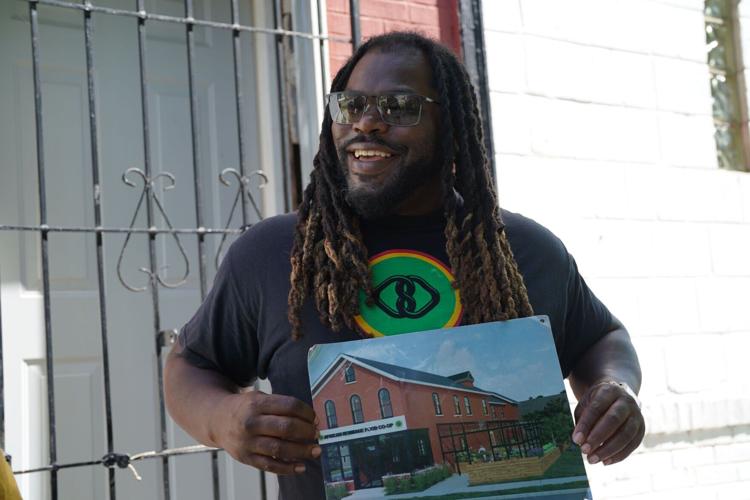
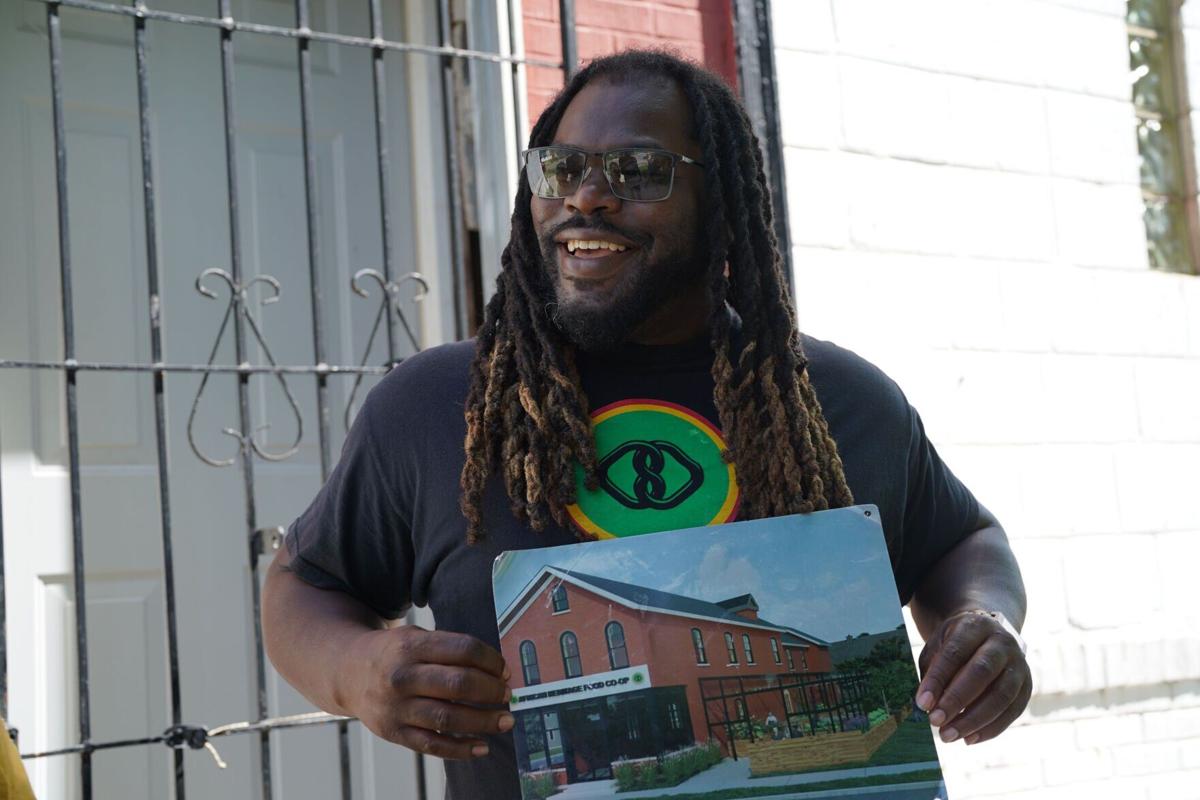
"This is not a food desert. This is food apartheid," Alex Wright, the founder of African Heritage Food Co-op, said during a news conference Tuesday. He then delved into the history that led to four neighborhoods becoming reliant on the Tops Markets on Jefferson Avenue, the site of the racially motivated mass shooting May 14 that killed 10.

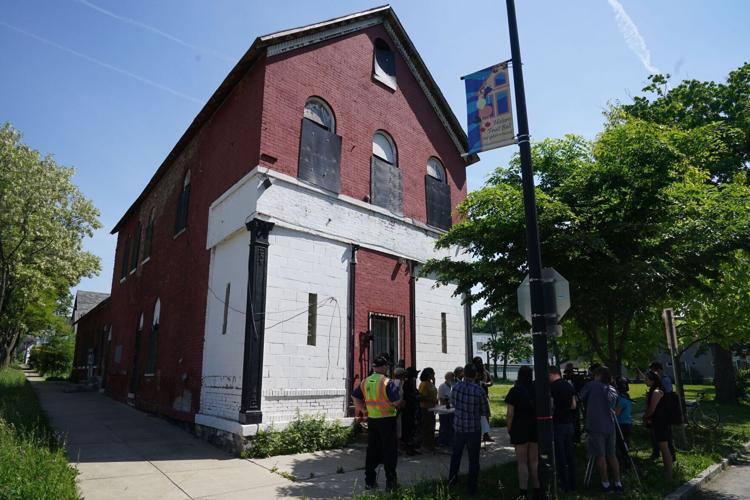
Oganizers hold a press conference at the proposed site of the African Heritage Food Co-op on Carlton Street to call for investment in the proposed store – which has been unable to raise the investment needed to move forward – on Tuesday, May 31, 2022.
Given a building at 238 Carlton St. in 2018 by an anonymous donor, Wright was optimistic then that he could serve the community with affordable, culturally appropriate, locally sourced produce and other foods. With recent headlines of food insecurity in East Side neighborhoods stemming from the mass shooting – in which the accused gunman was able to easily pinpoint the largest grocery store in a Black neighborhood due to its dearth of options – Wright was frustrated he hadn't been able to make a difference already.
People are also reading…

"To tell the full story, we need to understand what is absent here, but also what's been accumulating elsewhere," said Samina Raja, director of UB's Food Systems Planning and Healthy Communities Lab.
"We have a building, we have the drive, we have the architect, we have the environmental studies, we have the renderings," Wright told media in front of the Carlton Street building in which he plans to open. "The only thing we don't have is the funding. Help us do something that's in the community, for the community."
Wright said the project needs $3 million – about $2 million for construction and another million to pay employees a livable wage and to get the business off the ground. He said the project has raised $75,000 in the last couple of weeks.
The roots of the African Heritage Food Co-op began with monthly food pickups in East Side neighborhoods in 2016, before blossoming into small locations in Niagara Falls and the Clinton-Bailey Food Terminal, as well as co-op gardens on Edison Street in Buffalo and in Niagara Falls. The Carlton Street location would be his flagship store.

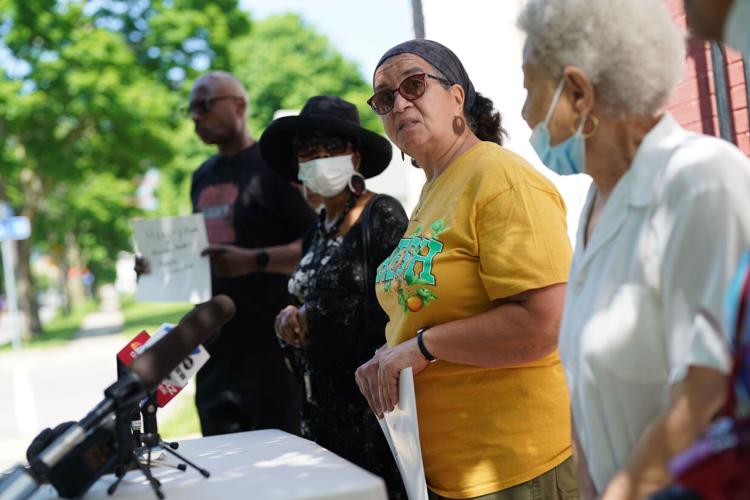
Fruit Belt Advisory Council President Dennice Barr talks about the need for a food store like the African Heritage Food Co-op during a press conference to call for investment in the proposed store – which has been unable to raise the investment needed to move forward – on Tuesday, May 31, 2022.

In the wake of the May 14 mass killing at Tops, Erie County legislators want more accountability and more permanent mental health resources to remain when the current community spotlight and assistance fades away.
Dennice Barr, part of Fruit Belt leadership and a neighborhood resident, described a community yearning for such a fresh-food resource. She cited the "Grandma Patrol," a group of five grandmothers from surrounding streets who collectively kept an eye on the building to report any damage or mischief. Barr said the Fruit Belt mostly comprises Black seniors who have lived in their homes for their entire lives.
"If I can come down the street and get what I need rather than travel on the bus an hour and a half to get to the store and an hour and a half back, then that's a blessing," Barr said.
The News has reported that three full-service markets exist within four ZIP codes that cover a large section of central Buffalo and the East Side, where about 50,000 people live and 72% of the residents are Black: the Tops on Jefferson and Save A Lot and Super Price Choppers on Genesee Street.
Tuesday, Barr said she was speaking specifically of the need for a grocery store for the Fruit Belt and not for other East Side communities. She declined to respond to a question about the future of the Tops on Jefferson.

Some believe it would be impossible to reopen a store in the same location without once again traumatizing employees and customers. But others say renovating would be the quickest and least expensive way to return a much-needed supermarket to the neighborhood.
"There are other communities I can't speak for because I don't live there, I don't work there," she said. "As a person of color, that doesn't give me the right to push my thoughts and opinions about what they need. We know what we need, we have been very intentional in talking about we needed for years."
During a brief tour of the empty space, Wright's eyes lit up when he described his vision. He gestured to the front of the building, where he envisions "elders just kickin' it with a coffee" and a middle section with affordable produce – not like the corner stores where you have to pay "a dollar for a banana and a dollar for an orange," he said.
Like Wright, Barr sees the African Heritage Food Co-op as more than a grab-and-go market – it is a long-term investment to sustain a neighborhood that she said has experienced "intentional disinvestment."
"We don't have a community center," she said. "This could be our cultural center."
The sense of ownership and well-rounded purpose are what Wright and Barr think can make the co-op a Fruit Belt fulcrum.
"You have that whole feeling, that community is something you can't buy and can't fabricate, man. It's real. It's like the FUBU of produce," Wright said, citing the sportswear brand abbreviated from "For us, by us."
Ben Tsujimoto can be reached at btsujimoto@buffnews.com, at (716) 849-6927 or on Twitter at @Tsuj10.
In this Series
Complete coverage: 10 killed, 3 wounded in mass shooting at Buffalo supermarket
-
Updated
Hochul pledges pursuit of justice after shooting, calls on sites to crack down on white supremacist content
-
Updated
Sean Kirst: In Buffalo, hearing the song of a grieving child who 'could not weep anymore'
-
Updated
Recently retired police officer, mother of former fire commissioner both killed in Tops shooting
- 307 updates