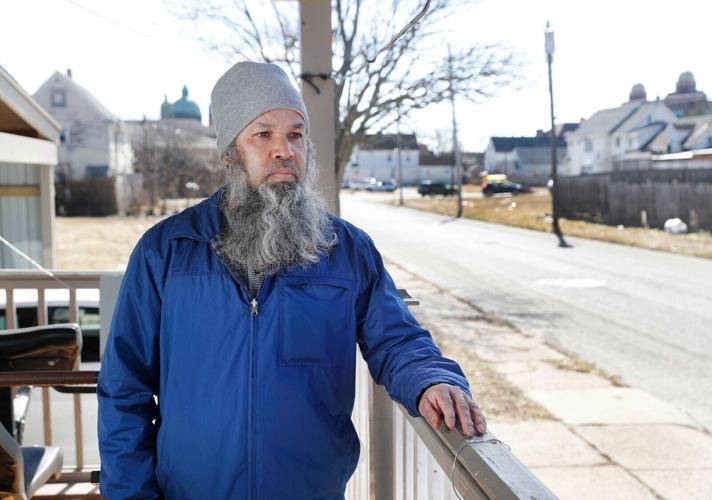
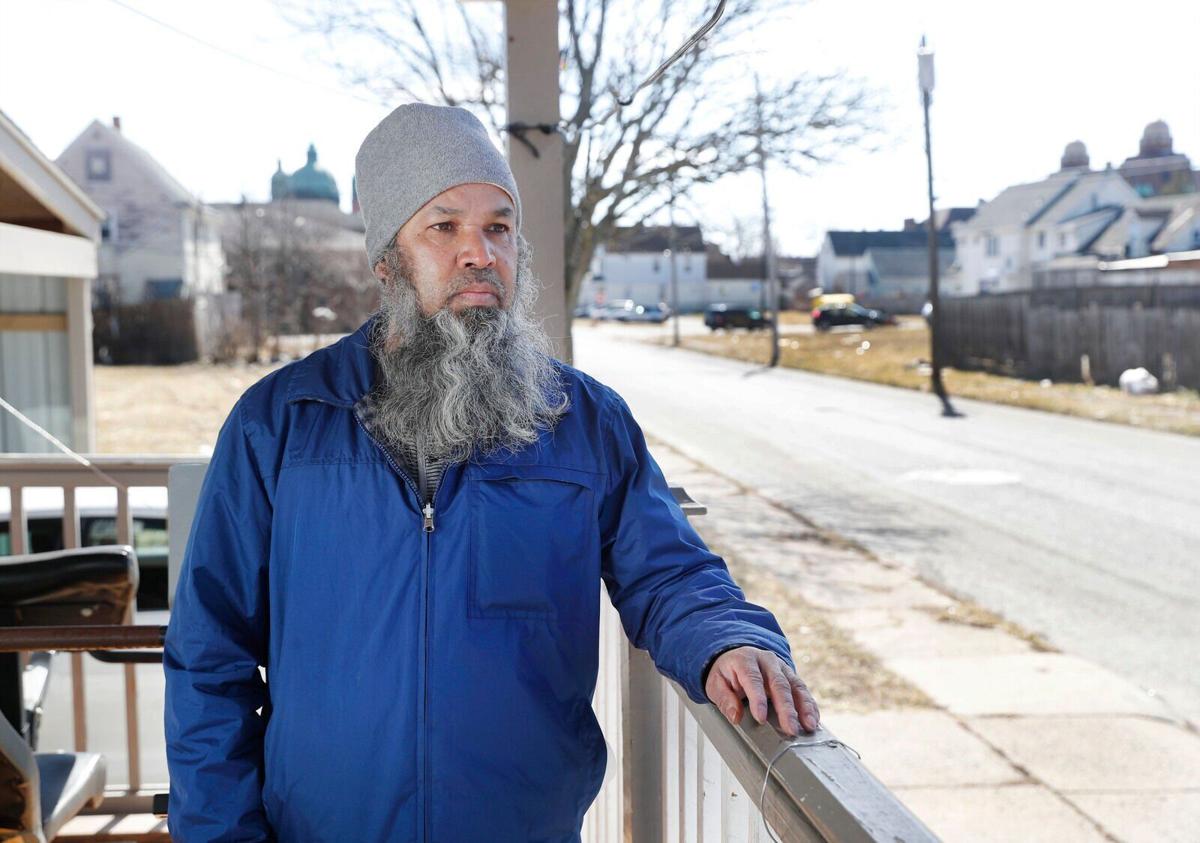
Mohammad Amin doesn't want to leave his Broadway-Fillmore neighborhood.
But crime could drive him and other Bangladeshi Sunni Muslims away. The father of three worries for his family's safety. Two of his cars were stolen. His family was threatened in January. And he saw the police response as lackluster.
"I want to move far from the community at this moment," said Hanin, a small grocery store owner. "And I love it here. I love Buffalo."
Amin's family in 2003 became the first Bangladeshi family to move to the neighborhood. One community leader estimates well over 1,000 families have arrived in the past 10 years. The new arrivals have bought and repaired dilapidated houses, opened businesses and mosques, sent their children to schools and created a close-knit community where people look after one another.
But incidents of stolen cars increased 106% in 2020, according to the Buffalo Police Department. Burglaries are happening more often. And many Muslims are losing confidence in the police.
People are also reading…
"You have people moving here for a better way of life, and then they have to go through all this," said Ahsanul Hague, a 23-year-old University at Buffalo graduate who has lived in Broadway-Fillmore since age 11. "It's to the point where we are scared to leave our houses with our kids.
"I've seen the worst and I've seen the better days. Now it's looking like it's turning into the worst days again."
Police statistics suggest otherwise, with reported crime in Broadway-Fillmore down to a several-year low in 2020. But residents say the sheer number – 434 last year, including 73 assaults, 80 burglaries, 39 robberies and 66 car thefts – is too high. They say the actual number of crimes is higher because many go unreported due to language barriers or fear of police.

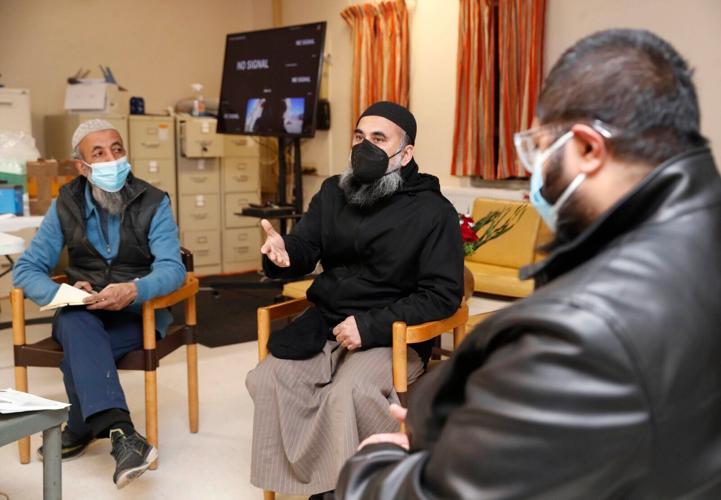
Buffalo Muslim Community Services members Atiqur Rahman, left, Iftikher Amhed, center and Mohammad Choudhury spoke Saturday in a meeting with five Buffalo police officers, including C District Chief Alphonso Wright, and Fillmore Council Member Mitchell Nowakowski about crime in the Broadway-Fillmore neighborhood. The meeting took place in the back room of the Broadway Hardware Store, a frequent community gathering place.
Finding ways to help those in Broadway-Fillmore could hold lessons for other parts of the city such as the West Side and Riverside, where immigrants are helping revitalize neighborhoods, said Fillmore Council Member Mitchell Nowakowski.
He believes hunger, unemployment and undiagnosed mental health issues exacerbated by Covid-19 contribute to the crime. He suspects teenagers learning remotely instead of being in school has also been a factor.
"You can link all of this to a global pandemic," Nowakowski said. "There are always going to be these dynamics in the neighborhood, but Covid lit a match to it."
Slow police response times are the most common complaint, especially for car thefts.
"I can understand their frustration," said Chief Alphonso Wright, who heads the Police Department's Ferry-Fillmore District, also known as C District, which includes Broadway-Fillmore. "Because calls are prioritized, if there's a larceny it would be seen as a low-priority call and a car may not receive that call from the 911 dispatcher for a while."
That leaves the community frustrated and scared, said Atiqur Rahman, a community leader.
"We don't like to blame the police or complain," Rahman said. "We just want a solution."
The stolen cars
What happened to Hanin is an example of the frustrations neighborhood residents feel.
Hanin drives a refrigerated truck each week to and from Trenton, N.J., to stock his small grocery on Sycamore Street, BBS Wholesale, with ethnic vegetables. After returning from one trip in January, he moved his 2008 Honda Civic from the store's driveway, where he had left it, to put his truck in. He left the engine running to warm up the car.
That was long enough for a group of teenagers to get in and drive away. His wife's fob was on the same key ring, and the thieves stole the couple's 2018 Mazda CX-9, too.
The next day, after hearing from six people in the community who spotted the car, Hanin was able to follow his stolen vehicle and call 911, but police responded too late to be of help.
Eventually the car was found by police with considerable damage to the exterior and a trashed interior.
Soon after, teens went to Hanin's house in a menacing manner and also harassed his wife while she was driving. The lack of a strong police response once again left them feeling defenseless.
Sheikh Rahman, a married father of three on Rother Avenue, was at a cousin's nearby house in September to fix the front door lock following a break-in. He was attacked by three teens who hit him in the face and body, and choked him from behind. They stole his identification, phone and $300.
The police arrived promptly, Sheikh Rahman said, but when he tried to show them where the assailants went, they showed a lack of urgency and told him to wait for a detective.
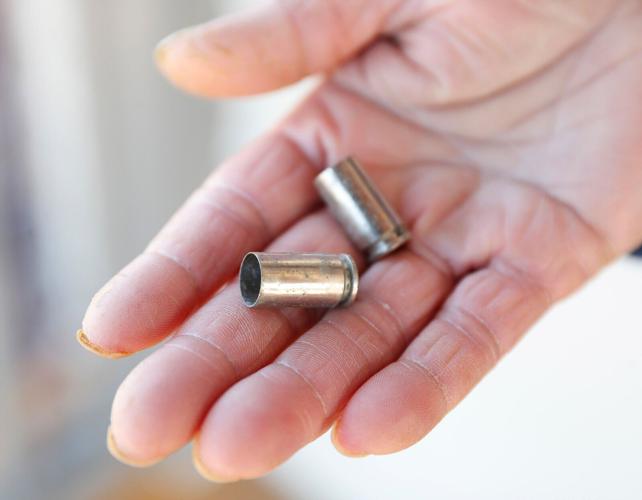
Soon, other acts of violence occurred. A bottle was thrown into a car window. Bullets were fired into a tenant's car and the second-floor of a nearby house.

Sheikh Rahman was assaulted and robbed at his cousin's house on Sycamore Street, not far from his house on Rother Avenue in Buffalo last September. His cousin's house was burglarized and he was there to fix the locks on the door. Rahman's tenant's car was shot at as well as a house next door. He shows two of the bullet shells found by his tenant's car on the night it was shot at.
Now, Sheikh Rahman is considering moving, despite owning three houses on the street.
"I like it here," he said. "My kids grew up here and were City Honors students and now go to university. But my children say they are scared, and they say maybe we have to sell the house and move from the city."
Hague, the UB student, said his car was parked in front of his house on Woltz Avenue last month when it was slammed into by a stolen car.
The teenagers were laughing when they got out of the stolen car and showed no fear of being caught, Hague said. By the time the police arrived 20 minutes later, they were long gone.
"A police officer told me the address where these criminals lived," Hague said. "I'm like, what am I supposed to do with that? Are you telling me that I should take action against them?"
Hague said he was told that they were underage and would only be released a short time later, as if it wasn't worth the bother.
Zubair Butt has installed security devices around his home and the neighborhood in an effort to uncover crimes being committed.
He's also part of a community chat group that informs others on what's happening "every moment" in the neighborhood, he said.
A Muslim Community Patrol is being planned to help monitor the neighborhood and support police.
"We want to give something in order to get something," Butt said.
He would like to see more security cameras installed, better police response times, a more diverse police force with multilingual officers, and police updating the community about what is being done to address their concerns.
Butt said community members are sometimes partly to blame by not expressing themselves clearly to police when a crime is committed, making it hard on officers to fill out a police report.
"It's a problem from our end as well," he said.
Butt said police did "a great job" after thieves beat his father and stole his car. After he tracked the car's location on his phone, officers made an arrest and got the car back.
No easy fix
In the back room of the Broadway Hardware Store, which serves as a frequent gathering place, Buffalo Muslim Community Services leaders met last week with Wright, the police district chief, and four police officers along with Nowakowski.
The Council member, community representatives and the police meet often to discuss progress on issues, discuss solutions and sometimes vent.
Nowakowski, who facilitated the meeting, said the importance of containing crime in Broadway-Fillmore extends to other parts of the city.
"This is a story that is universal in neighborhoods all across the City of Buffalo," Nowakowski said. "As we have refugees and new Americans repopulating our communities, we need to tackle these problems to keep our city growing."
Rahman spoke in frustration about the rash of stolen cars in the community.
"Sometimes they are stealing our cars and we are calling 911 and they are driving in front of us," Rahman said. "911 will say don't worry don't do anything, we will take care of it. Take care of what? This is the No. 1 frustration in this area."
He said the community wants to work with the police.
"We are with you, and I know you cannot (succeed) 100%, and need our help," Rahman said. "We mostly need your help."
Rahman praised the involvement of C District Community Police Officer Shree Siwakoti, who also speaks their Bengali language.
Wright said a quality-of-life detail car is now available for larcenies in every district, and this could help when other crimes take priority.
He also stressed prevention measures.
"We get weekly reports and if I see 10 cars are stolen, seven or eight had keys running in the ignition," Wright said. "That's inviting someone to steal your vehicle, and you have to get that information out there."
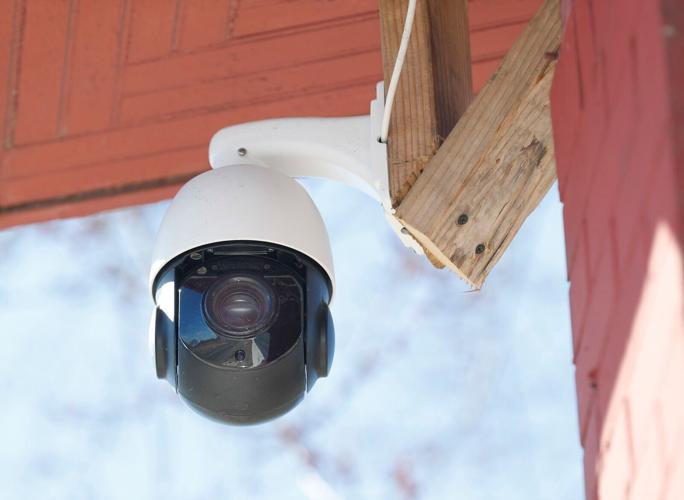
Wright encouraged residents to install private cameras registered to BuffaloSafeCam, which informs police where the cameras are in case they want to see footage, something that's been occurring.

A number of residents have installed security cameras that are linked into BuffaloSafeCam, allowing the Buffalo Police Department to know where security cameras are located. The camera above records license plates.
Crime in Broadway-Fillmore "isn't an easy fix," Wright said. "We need to come up with solutions, but we need time."
Releasing those arrested with appearance tickets and limits to handling underage suspects also add to the problem, he said.
Rahman, a retired customer service supervisor for the U.S. Postal Service, stressed the importance of customer service in dealing with the Bangladeshi population.
"Most of the people in this area are immigrants and refugees, and even me sometimes, oh my goodness, I'm shaking when I am talking to the chief," he said. "Many get flustered and scared.
"We are trying to improve this communication within the community. We aren't asking for any favors, just what we deserve."
Mark Sommer covers preservation, development, the waterfront, culture and more. He's also a former arts editor at The News.