A Mesa family has been in a state of panic since Mexican national Tomasito Fuentes Ponce, 41, was detained by immigration agents March 13, the day before he was scheduled for the life-saving dialysis treatment he needs three times a week to survive.
More than a week later, all his wife knows is that at some point after he was detained, Fuentes Ponce had to be hospitalized — U.S. Immigration and Customs Enforcement wouldn't say where — before he was returned to an Arizona ICE facility. She has received no information on his health status, she said.

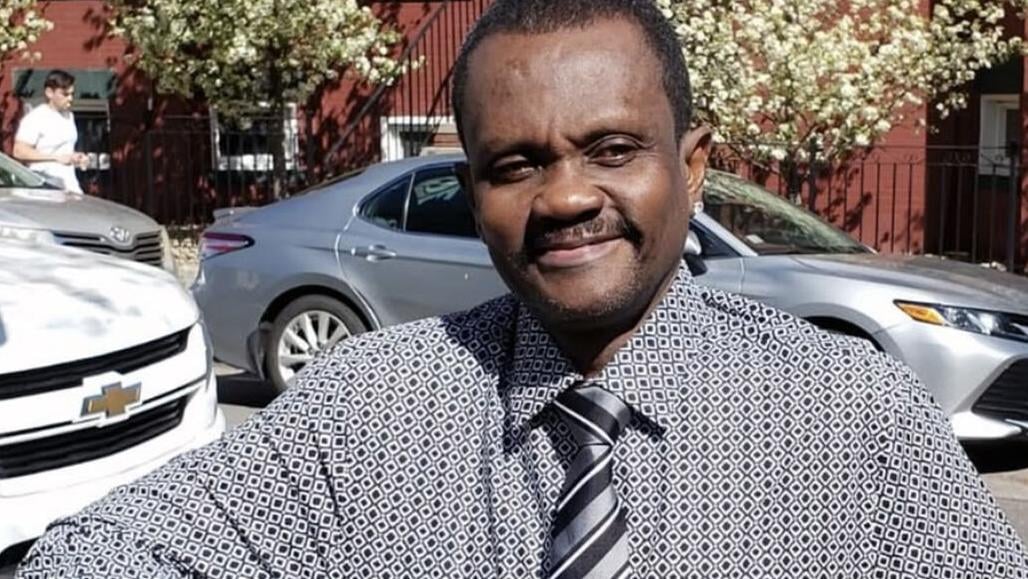
Mexican national Tomasito Fuentes Ponce was detained by ICE on March 13 in Mesa. The father of three U.S. citizen children has kidney failure and needs dialysis to survive, his wife said. Sometime after he was detained, Fuentes Ponce was hospitalized, but his family says ICE wouldn't tell them where.
"I truly believe he could die, due to the state of his health," said his wife, Maria, who asked the Arizona Daily Star to identify her only by her first name because she does not have legal status. "I believe it’s a fundamental right, a human right, to at least know what his current health status is. I need to know how he’s doing, simply so I can have some peace of mind."
People are also reading…
Fuentes Ponce, a restaurant cook and the father of three U.S. citizen children, has kidney failure and other urgent health needs, following two strokes, Maria said. He has high blood pressure and a shunt placed in his head to relieve pressure from hydrocephalus, a build-up of spinal fluid in the brain, she said.
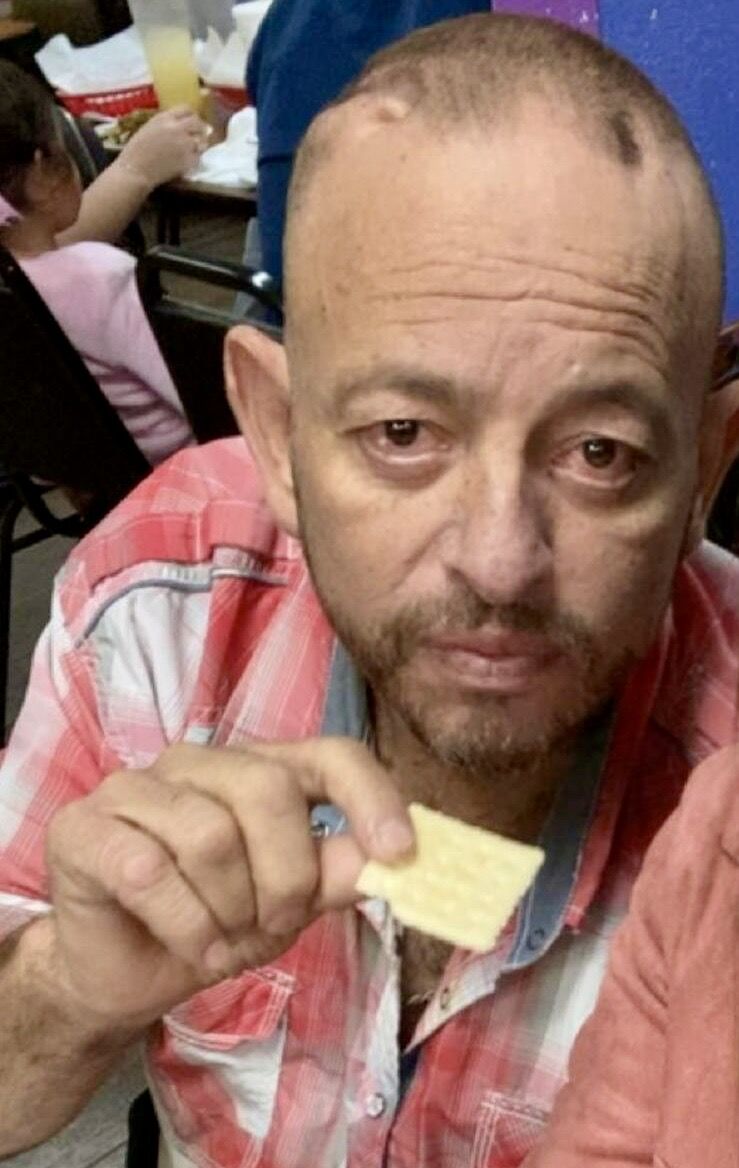
Tomasito Fuentes Ponce, 41, moved to Arizona from Jalisco, Mexico in 2009 with his wife Maria. The couple left Jalisco seeking "a better life," said Maria, who asked the Arizona Daily Star only to identify her by her first name, since she's undocumented. They now have three U.S.-born children. This photo of Fuentes Ponce was taken near the start of 2026, showing scars from brain surgery to place a shunt, which helps relieve pressure from spinal fluid build-up, Maria said.
After five desperate days without any information from ICE, Maria heard Wednesday from the Mexican Consulate in Tucson — which reached out to ICE on her behalf — that her husband was too ill to speak with her and had been hospitalized sometime after he was detained at the "Florence Staging Facility," a temporary holding space for new ICE detainees.
The consulate told Maria on Friday that ICE said her husband is now back at the same facility, she said. (ICE's online "detainee locator" only confirms that Fuentes Ponce is in ICE custody, but doesn't say where.)
Maria said she's heard about deaths among ICE detainees due to inadequate medical care, and she fears ICE will suddenly call with terrible news: either that her husband is dead or near death.
"That is exactly what scares me, the fear that they aren't keeping me informed and that they’ll only tell me at the very end, when I can no longer do anything to help," she said, speaking in Spanish.
ICE has not responded to the Star's requests for information on Fuentes Ponce since March 14.
ICE does not disclose where its detainees are hospitalized, said an official with the Mexican Consulate in Tucson.
"Neither ICE nor any other law enforcement agency discloses the location of individuals hospitalized while in custody," said the consulate's Jesús Gutiérrez Monroy in a Thursday email. "This is a common practice to ensure the safety and security of both detainees and custodial and medical staff."
For families of ICE detainees — who aren't in federal custody as punishment; ICE detention is civil detention, not criminal — the lack of information can be torturous, advocates say.
Maria said her three U.S. citizen children — a daughter, 16, and two sons, 14 and 9 — are having trouble sleeping and eating, due to the lack of information about their dad, who she said has no criminal record.

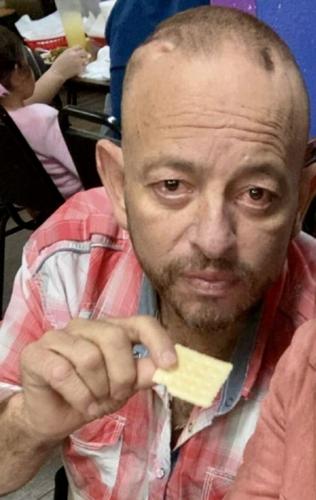
Tomasito Fuentes Ponce is pictured in Mesa, Arizona in March 2021, before his second stroke.
"They don't have an appetite, and they don't sleep well because they’re lying there thinking, or listening in while I’m on the phone, trying to get news about their dad," she said.
"I still have to leave the house to go to work, all while constantly worrying. ... They won't let me know anything."
She also worries that if Fuentes Ponce is deported suddenly, and to an unknown location, "that would leave us unable to make any arrangements to ensure he receives medical assistance and, given his current health condition, I fear he could lose his life," she said.
Secrecy common
Families of hospitalized ICE detainees often struggle to receive timely information on their loved ones' health status and are almost never allowed to visit them in the hospital, advocates say.
The brother of Haitian asylum seeker Emmanuel Damas, who died March 2 at a Scottsdale hospital while in ICE custody, said hospital staff stopped sharing updates on Damas' health after ICE called the John C. Lincoln Medical Center to tell staff to stop talking to the family.
Damas' brother, Presly Nelson, told the Star earlier this month that he was distraught when medical staff stopped sharing information with him.
"They (ICE) called the hospital and said, 'Absolutely do not divulge any information,'" he said, recounting what a nurse told him. "It was a nightmare. ... I said, 'Can you please tell me if he's alive?' She said, 'I can tell you he's alive, but I can't tell you anything else.'"
HonorHealth, which owns the hospital, did not respond to the Star's requests for an explanation of why ICE decides whether the hospital can share health updates with a patient's immediate family.
ICE also did not give permission for the family to visit Damas until he had already been hospitalized for nine days and was unconscious, in dire condition — a claim by Damas' family that was confirmed by ICE's news release on Damas' death.
The family scrambled to travel to Arizona from Boston once they got permission and arrived in Scottsdale on March 1.
Damas died one day later. He had been handcuffed to the hospital bed for his entire hospital stay — standard practice for hospitalized ICE detainees — until his mother pleaded for the restraints to be removed just before her son was taken off life support, Nelson told the Star.
Deaths surging
In 2025, President Donald Trump's first year in office after campaigning on a promise of mass deportations, the number of deaths in ICE custody nearly tripled to 32 deaths, up from 11 in 2024.
So far in 2026, 13 people have died in ICE custody, a rate of one death every six days. Most recently, on March 16 a 19-year-old Mexican man died of "presumed suicide" in ICE custody in Florida, ICE said.
At this pace, ICE is on track to record more than 60 deaths in 2026.
Fuentes Ponce and Maria traveled to Arizona from Jalisco, Mexico, in 2009, seeking a "better life," she said.
In Jalisco, "there's a severe lack of jobs," she said. "There aren't enough resources to survive."
Fuentes Ponce does not have a final order of removal, but did go through immigration proceedings a few years ago, she said.
In 2023 Fuentes Ponce's removal case was "set aside" by an immigration judge, Maria said — likely an "administrative closure" for cases deemed low priority, based on what Maria told the Star. Attorneys say the Trump administration has been reopening previously closed cases like his, which weren't considered a priority under previous administrations that prioritized deporting violent offenders.
Maria said she doesn't think her husband was targeted by immigration agents.
Fuentes Ponce was detained March 13, soon after dropping off his youngest son at school. He stopped at a convenience store and after he returned to his car, immigration agents approached either side of the vehicle and asked him about a specific person. When he said he didn't know them, the agents asked for identification and then detained him, Maria said.
Maria said she's had one brief conversation with him since he was first detained, when he called to tell her he was at "Florence" and told her how he was detained.
Life-threatening condition
After learning of Fuentes Ponce's urgent health needs on the night of March 14, the Star immediately emailed ICE and CoreCivic, the private, for-profit prison company that runs Florence Correctional Center (but not the Florence Service Processing Center or the nearby "staging facility").
CoreCivic's Brian Todd responded March 15 to say Fuentes Ponce is not in their facility.
ICE did not respond to the Star's queries, which explained the urgency of Fuentes Ponce's medical condition and asked if he'd been assessed medically.
ICE's detention standards say all detainees are supposed to receive a medical screening within 12 hours of being detained, or sooner if they have urgent health needs.
Without dialysis, kidney failure can be life-threatening within days, said retired nurse Sarah Roberts, a volunteer with Tucson's "Rapid Response" Network who received Maria's desperate call about her husband on March 14.
Increasingly, Tucson's advocacy community for immigrants is hearing from panicked families who can't find their loved ones in ICE custody. A day or two delay before a detainee shows up in ICE's online locator system used to be the norm, Roberts said.
That's changed since Trump took office, as the number of immigrants held in detention has soared from 40,000 in January 2025 to 71,000.
"Now it seems like it's not fruitful to use that website because they’re not updating it, or not updating it in a regular manner," Roberts said. "It causes very, very high anxiety. ... It creates a type of trauma itself for family members (of detainees) who don't know how they’re doing, and don’t even know where they are."
Legislators push for answers
U.S. Rep. Adelita Grijalva, a Tucson Democrat, said Friday she "submitted an urgent inquiry to ICE" on behalf of Fuentes Ponce's family, after the Star reached out to her for comment on his family's concerns.
The family deserves answers, Grijalva said in a written statement.
"It is very upsetting to learn that a father who was simply dropping off his son at school is now the latest individual to be hospitalized after being picked up by ICE," she wrote. "I am deeply concerned that ICE is failing to promptly share the whereabouts and medical condition of individuals in its custody with their families. Especially in light of what happened to Mr. Damas — and the lack of communication with his family — it is alarming if corrective action has not been taken."
Last month, Grijalva advocated for the release from ICE custody of 79-year-old Julia Benitez after the Star reported on the Cuban asylum seeker's plight. Benitez was released from CoreCivic's Eloy Detention Center on humanitarian parole, 11 days after the Star's investigation was published and one week after Grijalva had a "heartbreaking" visit with Benitez at Eloy.
The Mexican consulate in Tucson told Maria that she may not get more details about her husband's status until his first court hearing.
Maria still hopes ICE will update the family sooner. Fuentes Ponce is the family's main breadwinner, although she works part-time as a seamstress.
"We just want to stay informed about his condition and find some relief from this anguish that we are going through," she said.
Maria said if she could send a message to her husband, she'd tell him not to give up.
"His family is worried, his siblings, his children, and his wife, and he should find the strength to stay strong knowing that out here, we are doing everything possible to find him and help him," she said.
Contact reporter Emily Bregel at ebregel@tucson.com. On X, formerly Twitter: @EmilyBregel

Emily Bregel
Border reporter