
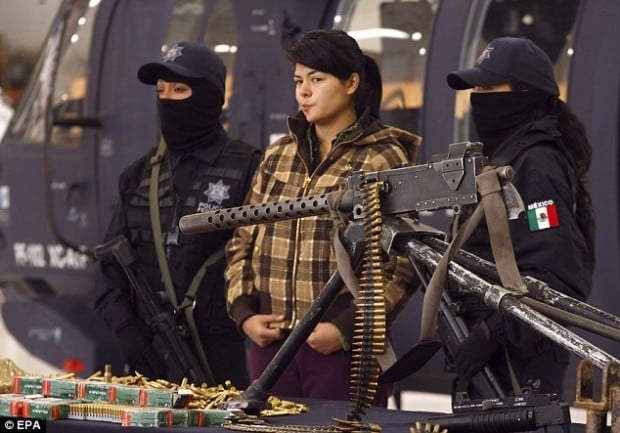
Human rights groups say Mexican police are violating the rights of suspects they parade in front of the cameras after the arrest.
If you read Mexican newspapers or watch Spanish-language news, you’ve probably seen it dozens of times: Mexican authorities parade a suspect they’ve arrested out in front of cameras, with masked police behind him. There’s often times seized weapons and ammunition there, with the handcuffed suspect and masked police standing in front of a truck or poster with the name of the law enforcement agency.
This age-old practice is coming under increased fire from human rights groups that worry it presents the subjects as guilty before they have been charged.
The LA Times wrote an outstanding story on the topic: Mexico puts its drug suspects on parade.
People are also reading…
The subhead reads: “Critics of the media events say human rights are also on the line, along with the country's efforts to establish the rule of law. But Mexico wants to show victories in its drug war.”
Here’s an exceprt from the story:
“The ritual is called a presentacion, Spanish for "presentation" or "introduction," though no one ever shakes hands. Almost daily, one of the thousands of suspects who have been rounded up in the drug war is paraded in front of cameras, posed with seized weapons and contraband and even grilled by police officers while reporters jot down answers that are often self-incriminating.
Human rights advocates are appalled by the practice, a more elaborate version of the U.S.-style "perp walk," saying it violates suspects' rights by exhibiting them as if they were guilty before they have even been charged.
Yet for a society haunted by a level of violence not seen since the Mexican Revolution, the presentacion serves as hunter's trophy and modern-day dunking stool, a chance for Mexican authorities to convince crime-weary constituents that they're making the streets safer, and for residents to savor a morsel of justice meted.”
The LA Times also included a slide show with examples.
As the article details, this practice happens all over Mexico, from the arrests of major drug kingpins to small players. I see it regularly in the Sonoran newspapers I read.
What do you think of this practice? Do you think it’s fine or do you think it’s a violation of the suspects’ human rights?