

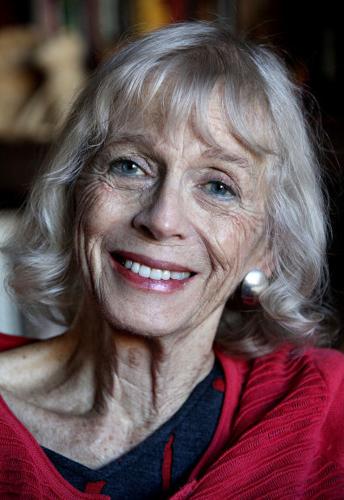
In September, my friend Karen Seger and I met to discuss a possible column about a troubled man she had helped out for years and who had just died.
We met at the central-Tucson home of that man, Doug Menth, whose hard luck was cruelly extended when I hired him to do yardwork this summer, and he accidentally broke a window in each of our family cars with a weed-whacker.
Poor Doug’s story — brilliant musician, troubled alcoholic, colorful Tucsonan — seemed worth telling, but Karen couldn’t talk much at the time, in part because she was feeling badly from what she thought was gallstones. It turned out to be pancreatic cancer.
Now, it seems Karen’s is the story worth telling.
When I met her again last month, it was to talk not just about Doug, but about her own experience with this very deadly cancer and about what I consider one of her most exceptional qualities: Karen is open to life and as a result often takes people in.
People are also reading…
You probably have known someone like this: They see a person in need, and they instinctively help the person, not just in a spirit of charity but also out of genuine interest. Karen and her husband, Bob White, have done it over and over. Even now, as Karen goes through chemotherapy, a young Tuareg nomad from northwest Africa has been staying in the downstairs apartment of their midtown home.
Now 74, Karen moved to Tucson in 1981 with her daughter Kariman (pronounced “CARRIE-mahn”), after years of going back and forth between archaeological digs in Israel and periods in the United States. Within a couple of years here, she had taken in her first stray, a boy 10 years old, about the same age as her daughter.
“I kept seeing this beautiful red-haired child outside,” Karen recalled. “I started bringing him over for supper, then I started helping him with homework.”
He was Jonathan Zenz, whose young father worked nights. Before long, Karen’s house was his, and now he considers Karen his mother and Kariman his sister.
After arriving in Tucson, Karen quickly got engaged in regional culture, guiding tours to Alamos, Sonora, and helping run Tucson Meet Yourself in its early years. Out of that festival, she partnered with Angelo Joaquin Jr. to create the annual Waila Festival, featuring the O’odham music also known as “chicken scratch.”
“She was pretty much in charge of everything,” Joaquin told me Tuesday. “I was running around, touching base with the musicians primarily. She was actually the person running the festival. She would make certain that I did what I said I was going to.”
It helped that Karen is “culturally competent,” Joaquin said, meaning she knew how to work with O’odham musicians as well as all the people attending the shows.
Through her activities, she met Doug Menth’s parents, Blaine and Nancy, who were more full of life than anyone she’s known. They became close friends and, in the last three years of Nancy Menth’s life, Karen and a group of friends took care of her.
That experience is proving useful now, Karen told me, as she watched Nancy deal with her last years so ably.
“She loved people being around her,” Karen said. “She made every meal or cup of tea a celebration.”
Karen is going through chemotherapy now and hoping for the best, but pancreatic cancer carries a poor prognosis, in part because people discover it so late. Looking back now, Karen, who was always small, realizes she was getting thinner this spring. If only she’d checked it out, she now realizes, she might have caught the cancer earlier.
But even after that she was hard to suppress: This summer, I witnessed her plunging into a cold pool below a waterfall north of Payson.
Now, though, her life is definitely limited.
“I can maybe go out and do one thing a day,” she said. “Your life is completely different. You’ll never have the same mind or body or physical milieu.”
People came through Karen and Bob’s milieu in part because a visiting Englishman named Ian Dunn bought a trailer, and they let him park it on their property. Dunn stayed there, and a host of other people moved through: a German woman and her husband, a mentally ill woman with a vendetta against her parents, a lost young woman who had a string of overnight visitors. Others, such as a Yemeni teen and a Sri Lankan woman, stayed in the house.
Doug Menth was one of the long-term trailer occupants. He stayed there when he got out of prison in 2004, and Karen helped him set up a semi-stable way of living on the outside.
Then came the Tuaregs. Through a UA connection, Karen and Bob met one man from the Tuareg culture, a nomadic people who live in the western Sahara, in countries such as Niger.
One of the arrivals was a jeweler named Moussa Albaka, whom Karen met at the Tucson Gem and Mineral Show. He, too, stayed in the trailer, and she helped him establish himself as a craftsman in Tucson, where he lives now more than he does in Niger.
“She adopted me, like son,” Moussa told me Tuesday. “She helped me a lot.”
It’s what can happen when you open yourself up.
“The most interesting thing in the world is how people live and cope,” Karen told me. “This is such a rich area, and most people don’t even delve into it.”
The same could be said for life itself.
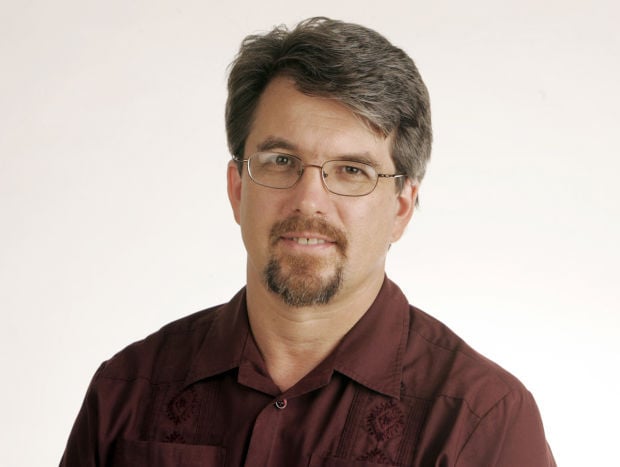
Contact columnist Tim Steller at tsteller@azstarnet.com or 807-7789. On Twitter: @senyorreporter

Tim Steller
Columnist


