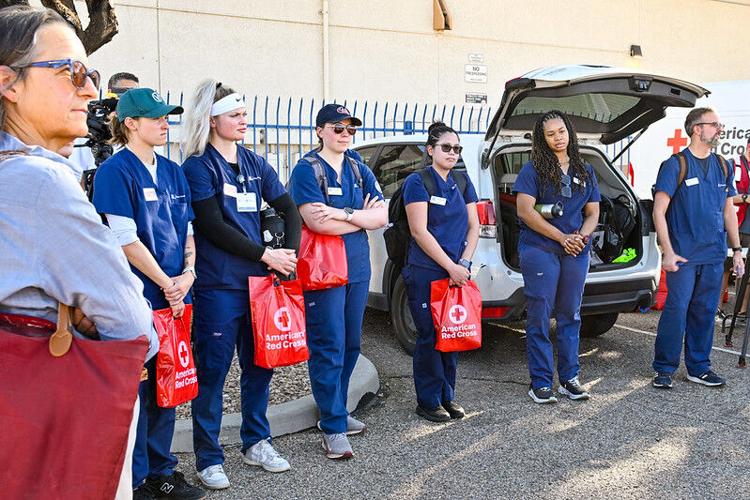
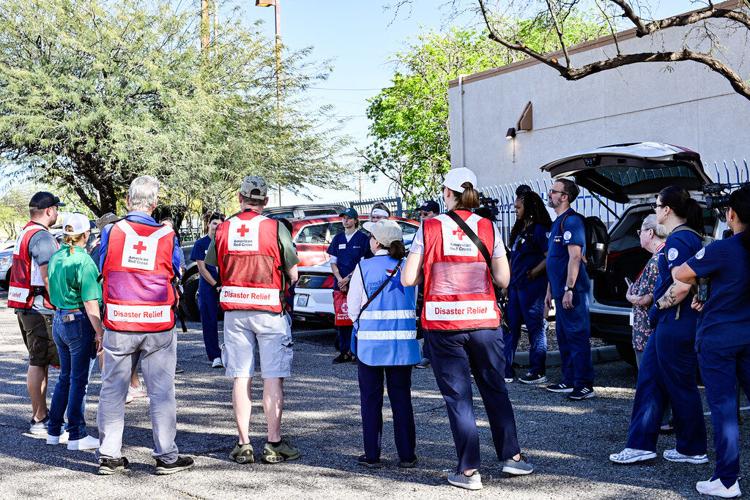
The American Red Cross of Arizona and New Mexico received the agency’s Presidential Award for Excellence this month for work to prevent heat-related illness and death through education, preparedness and volunteerism, and nursing students from the University of Arizona and Northern Arizona University directly contributed to the effort.
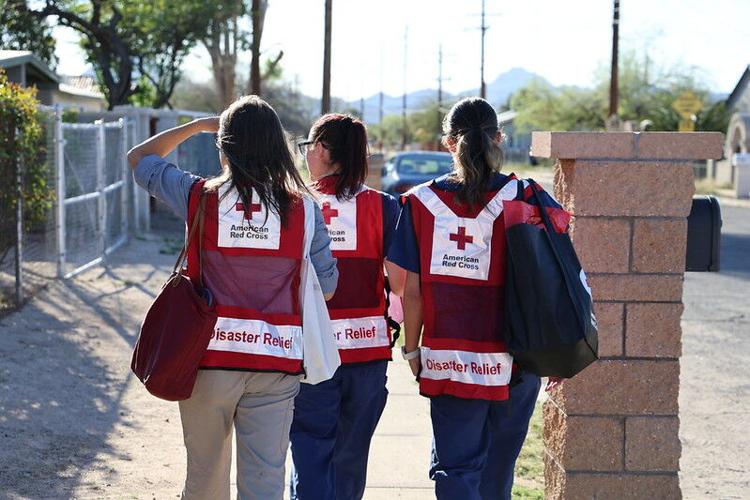
Students were trained with the American Red Cross to go out in groups to “very low-income, high-risk areas,” such as trailer parks with inadequate cooling and heating systems, to survey residents about how extreme heat affects them, to install smoke alarms, and to conduct other outreach, said Kate Straub, a lecturer with UA’s College of Nursing.
“They got to practice Spanish, they got to meet people in the community, they got to see how people live, and they saw the reality of people’s lives, how difficult it is for people,” Straub said. “‘Do you turn the AC on or do you eat food?’ People are making these choices and it was evident to them. Everywhere we met these really hard choices that many people in our community are having to make, and it adds to their empathy and understanding for their patients in the future.”
People are also reading…
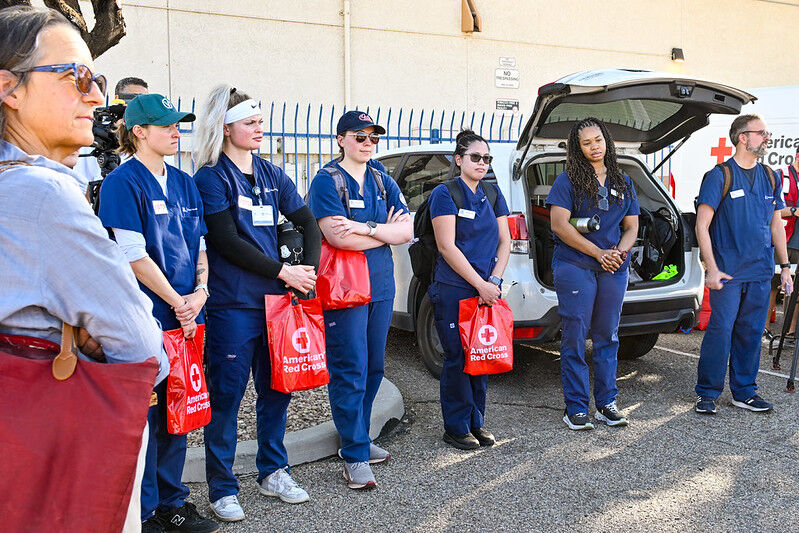
Nursing students with the University of Arizona and Northern Arizona University working with the American Red Cross across Tucson-area communities.
The American Red Cross gets data from 911 and maps out areas to visit with a high incidence of calls related to heat and extreme heat events.
Master’s program students are most involved in the community engagement, while bachelor’s students come in for specific kinds of support, such as volunteering to install smoke alarms for residents, said Wanda Larson, a clinical faculty member at the UA College of Nursing.
Molly Ashendorf, a senior in the Bachelor of Science Nursing program who is studying population health and community nursing, said knocking on people’s doors taught her the best way to approach people and keep them engaged.
The students also helped create an electrolyte mix that residents can make for themselves to consume during hot weather, because it’s a financial barrier for certain people in the community to buy ready-made packs, said Courtney Slanaker, executive director of the Southern Arizona Chapter of the American Red Cross.
“When we started looking at heat and treating it more like a disaster, we’re able to be a lot more intentional with how we talk to the community about preparedness, how we engage with the city or the county. And then having the students join us from a clinical perspective, they’ve got a lot of insight ... of how people are impacted from a health standpoint,” Slanaker said. “Certain ages put you at more risk, certain medications put you at more risk, certain illnesses, things like that they were kind of able to look at from a clinical side.”
Melissa Lyapustina, an assistant clinical professor with Northern Arizona University’s Maria and Steve Sanghi College of Nursing based in Tucson, said this provided hands-on experience as part of a public health course.
“It was a little scary for the students at first, because some of them have never been out of their comfort zone in this way,” said Lyapustina. “They were able to talk to members of the community and see what we would do in cases where we were worried about someone who maybe was at risk of a heat-related illness.”
Straub said experiences like these open students’ eyes to careers that exist in the community. Aside from hospital work, students can work in schools, jails, the Pima County Health Department, conduct outreach activities for the unhoused or work to prevent or treat domestic violence, she said.
Lyapustina said it’s also part of nurses’ values to give back and to volunteer in the community.
Reporter Prerana Sannappanavar covers higher education for the Arizona Daily Star and Tucson.com. Contact her at psannappa1@tucson.com or DM her on Twitter.

Prerana Sannappanavar
Higher Education Reporter