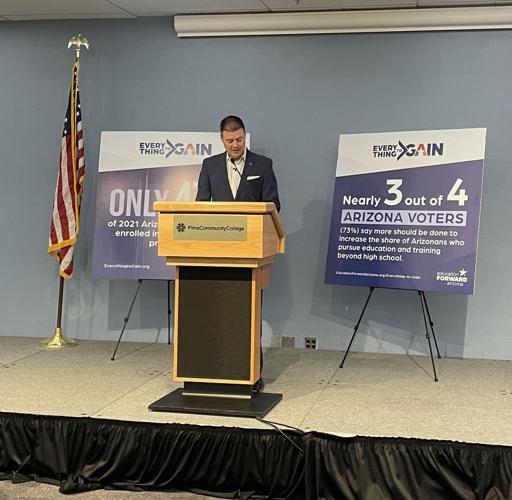
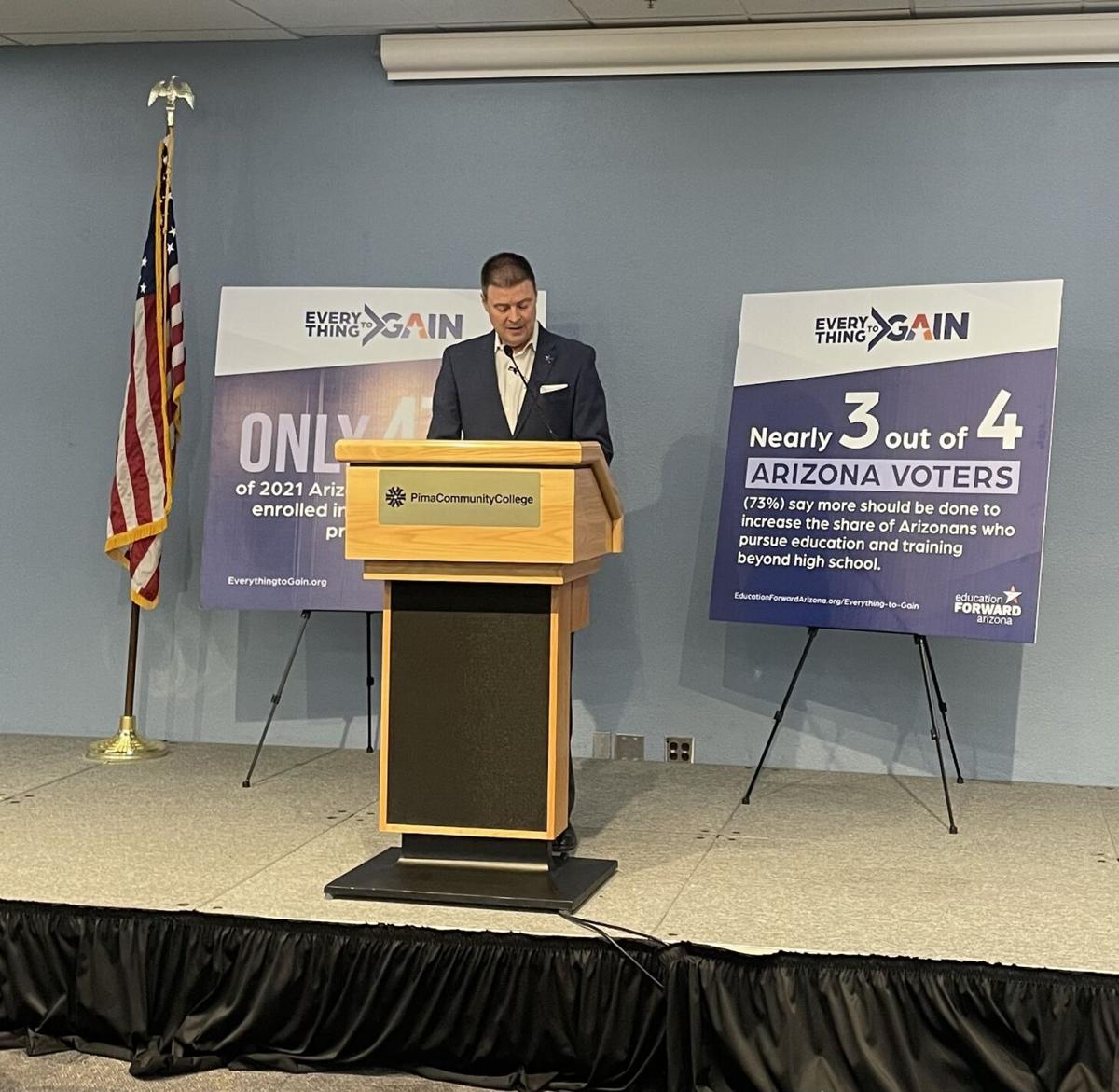
Arizonans think more should be done by the state’s education, business and elected leaders to enroll more students in post-secondary education, according to a new poll released by Education Forward Arizona.
“Arizona voters say that they want more to be done to ensure that a higher share of Arizonans have the opportunity to get that degree or workforce certification,” said Rich Nickel, the president and CEO of the nonprofit. “Three out of four Arizonans say they want this. To me, that sounds like a mandate for action.”
The poll was conducted to support the bipartisan Achieve60AZ goal, which hopes to add more than 500,000 degrees and certificates by 2030 so that 60% of the state’s population of working adults (between the ages of 25-64) will have a post-secondary certificate, license or degree.
Nickel acknowledged “this is not the flashiest issue,” but said that “the future of Arizona is literally tied to its educational attainment rate.”
People are also reading…
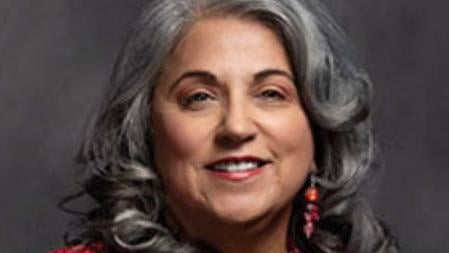
He was joined by Dolores Durán-Cerda, interim chancellor of Pima Community College; Shelley Watson, senior vice president and chief operating officer of the Southern Arizona Leadership Council; and Trisha Jean Lane, a third-year student at the University of Arizona, to announce the data.
“Arizona must address our state’s lagging level of post-secondary degrees and certification attainment, especially for our first generation, underrepresented students,” Durán-Cerda said. “There are Arizona residents, there are 575,000, who don’t have either a high school diploma or a college degree. It’s clear that we have the support of all Arizonans to do this work.”

Pima Community College
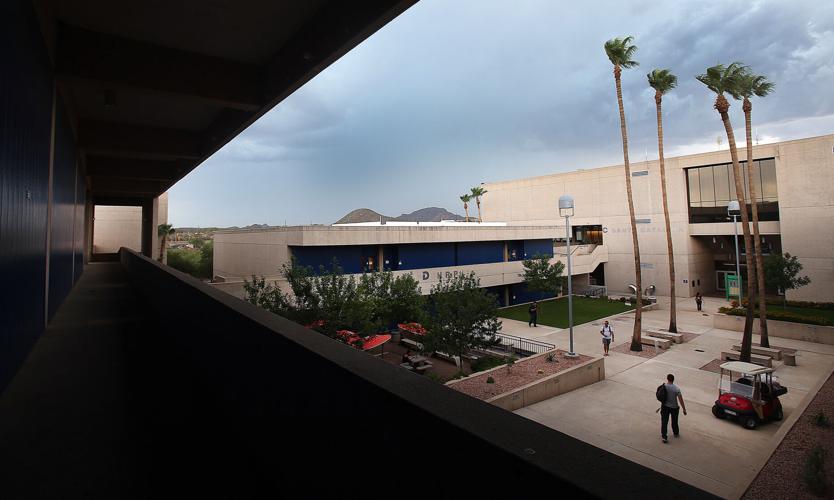
The interim chancellor said Pima Community College is working hard to support those students seeking post-secondary education. She cited PCC’s recently opened advanced manufacturing building, “which will help position our graduates for jobs that pay family sustaining wages” in areas such as advanced manufacturing, robotics and welding.
Additionally, the community college has a “Pima Fast Track” initiative, offering technical education, training and industry-recognized certificates that can be completed in as little as four months.
The reason PCC has worked so hard to create these programs, Durán-Cerda said, is because the lack of workers with a post-secondary education has begun to impact Southern Arizona’s economy.
Those points were echoed by Shelley Watson, senior vice president and COO of the Southern Arizona Leadership Council.
“Arizona’s prosperity depends on a growing economy, and that economy can only grow if we attract more job-creating businesses and those businesses need to fill their positions with qualified candidates,” she said. “For the existing employers in Arizona, the labor market really remains extremely tight.”
According to data from the Southern Arizona Leadership Council, “nearly two-thirds, or 65%, of jobs are now professional in nature,” meaning they require some form of education after high school, Watson said.
Yet despite this, the data shows that only 33% of working-age adults in Tucson have a bachelor’s degree or higher, she added.
“Ultimately, we’re interested in improving the quality of life for everybody in Southern Arizona,” Watson said. “Education is not just a tool. Education promotes a higher quality of life.”
That is especially true for Trisha Jean Lane, a third-year student at the UA who transferred to the university from PCC.
She is in the environmental engineering undergraduate program and an Arizona science, engineering and mathematics peer mentor, as well as an Arizona space grant intern and a McNair Scholar.
“None of this would have been possible without the ability to pursue education after high school,” she said. “Growing up on the reservation without running water and electricity, I am dedicated to pursuing a PhD that will enable me to work toward innovative solutions for accessible and affordable water treatment processes to bring clean water to rural communities in Arizona and across the globe.”
College was a “game changer for me,” she said.
“Change the game for others,” Lane urged. “If you help create more opportunities for learning and training beyond high school, you’ll be helping to change the lives of individuals, families, communities and the state.”
Get your morning recap of today's local news and read the full stories here: tucne.ws/morning
Reporter Ellie Wolfe covers higher education for the Arizona Daily Star and Tucson.com. Contact: ewolfe@tucson.com.

Ellie Wolfe
Education Reporter