A plan to reshape southern Arizona’s largest school district could come down to a single governing board member.
In less than three weeks, the Tucson Unified School District board will decide whether to close seven campuses. The schools proposed for closure include Hudlow, Cragin, Collier, Steele and Cavett elementary schools and Magee and Secrist middle schools.
With board members Sadie Shaw and Jennifer Eckstrom firmly opposed to the entire package, it will take just one more dissenting vote on the five-member board to block the closures.
Four of the five governing board members interviewed by the Star offered different perspectives on the proposals, including concerns about student safety, the financial implications of closures and whether the district has adequately involved affected communities.

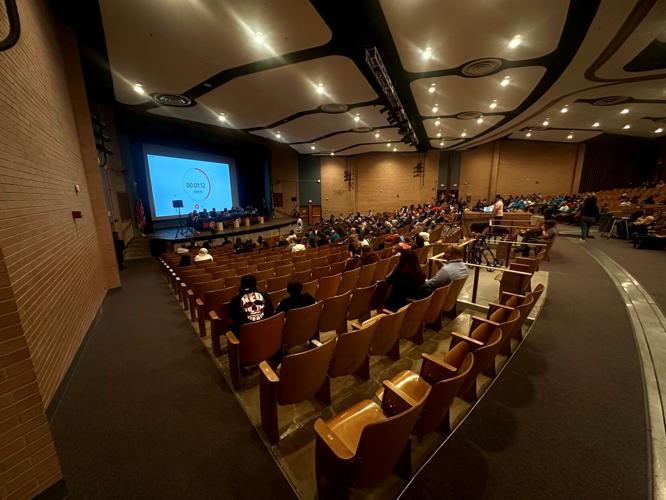
Tucson Unified School District's governing board will vote Dec. 8 on closing seven schools. Two members oppose the plan, and one more dissenting vote could block the proposed closures.
Eckstrom and Shaw said they could not support the proposals as currently presented. Board clerk Natalie Luna Rose said she is still weighing all of the options, while board president Ravi Shah expressed support for trying new models and restructuring campuses.
People are also reading…
Outgoing board member Val Romero declined an interview with the Star, but said during Tuesday’s board meeting he was in favor of some closure plans. While some closures are necessary to address enrollment declines and financial risks, he said the district must improve academic performance and extracurricular offerings to prevent families from leaving for other local school districts, charters or private schools.
Board members question 6-12 model
One of the district's most significant proposals would move students from Magee Middle School to Sabino High School and students from Secrist Middle School to Santa Rita High School, creating “secondary academies” on the campuses.
District officials have said the model could expand career and technical education opportunities, extracurricular activities and access to high school programs. But concerns about keeping middle school students safe and separated from older students have surfaced during public meetings.
Eckstrom said the concept has potential, but she wants more information about how the district would separate the age groups and ensure middle school students still have access to athletics and activities.
"I can't vote on this right now the way that it's proposed to me because I don't have all these details," Eckstrom said.
Shah said he supports trying a different approach to middle school education, pointing to enrollment losses and academic challenges at some of the district's middle schools.
He said the district's current middle school model has struggled to compete with charter schools and other districts, and he believes bringing students onto established high school campuses could offer new opportunities.
At Sabino, students could benefit from the school's existing academic, athletic and arts programs, he said. At Santa Rita, the district could build stronger partnerships with nearby Pima Community College and expand career and technical education offerings.
Shaw, however, said she currently opposes the 6-12 model, citing concerns about separating students by age and coordinating athletics.
"I'm still not convinced that we'll truly be able to segregate these different age groups," Shaw said.
She questioned whether the district could adequately address scheduling, locker room and athletic concerns before the proposed academies open.
Luna Rose was more optimistic about the model, noting that other 6-12 schools outside of Tucson successfully separate younger middle school students from older students. She said she believes high school students could also serve as positive role models.
She acknowledged community concerns but said the district has experience creating age-appropriate environments within its existing middle and K-8 schools.
Communities push back with alternatives
The board members also touched on proposals from the communities of Collier, Cragin and Hudlow, which are asking the district to reconsider closure recommendations.
Collier families have proposed turning the school into an environmental-focused campus. Cragin families are asking for more time under new leadership to improve enrollment and performance. Hudlow families have questioned why their students would be moved to Sewell Elementary rather than the reverse.

Brigette Patterson, a member of Cragin Elementary's PTO joins the school mascot at the campus, 2945 N. Tucson Blvd., for Ruby Bridges Day. Cragin families are asking for more time under new leadership to improve enrollment and performance.
Eckstrom said she wants the district to be more open to ideas from school leadership and communities, particularly when they offer ways to attract students.
She pointed to Collier's environmental campus proposal and Cragin's recent improvement from a D-rated school to a B-rated school as reasons to give the campuses an opportunity to grow.
"We have to be able to move with the times, try something new," Eckstrom said.
Luna Rose said she appreciates the communities' efforts to develop alternatives and plans to visit Collier to learn more about its proposal.
She said she is not making promises about any school but is willing to consider the proposals and whether ideas could be adapted elsewhere in the district.
Shah said he is reviewing the proposals and speaking with district administrators to determine whether they are feasible. He said he is also planning to visit a campus with the district's chief operating officer to better understand some of the issues being discussed.
Shaw said she would be open to Collier's and Cragin's proposals but would vote against all the closure proposals, including reversing the recommendation to move Hudlow students to Sewell.
"I think everyone has great ideas, and I think, in hindsight, we should have reached out to them way sooner," Shaw said.
Questions about costs and enrollment
Board members also expressed differing opinions about whether projected housing developments near Collier and Sewell should influence the district's decisions.
District officials estimated Tuesday that a proposed apartment development near Collier could bring less than 10 students to the school.
Shah said a few additional housing developments are unlikely to significantly change enrollment at struggling campuses without evidence that they could bring in substantially more students.
Luna Rose said she wants more information about the developments, including whether the housing would attract families with school-age children.
Eckstrom questioned how the district calculated its enrollment projections and whether it had adequately considered the potential for new students.
The financial implications of closing schools were another point of disagreement.
Shaw said she believes the district could end up in a worse financial position after accounting for improvements needed at receiving campuses.
"I think closing and consolidating schools is only going to dig us deeper into this financial hole," Shaw said.
Shah said closures would not solve the district's budget problems on their own but could generate some savings that could be redirected toward programs and services for students across the district.
He said the district has been running deficit budgets for several years and is approaching a point where it can no longer rely on its remaining savings to cover the shortfall.
What board members want before Dec. 8
Eckstrom said she was disappointed that the governing board was not more involved in the district's reconfiguration committee and that parents and community members were not adequately represented.
She said she wants more discussion among board members and more input from families, teachers and school communities before a vote.
"I can't make the vote on December 8," Eckstrom said. "With the proposals presented to me as they are, I cannot vote yes."
Luna Rose said she wants to hear more from families of students with disabilities, particularly those who could be affected by proposed changes to special education services and programs. She said families may have chosen particular schools because of the services they provide and deserve to understand how proposed changes could affect their children.

TUSD Governing Board members Ravi Shah, left, Natalie Luna Rose, Jennifer Eckstrom and Val Romero listen to a speaker during a board meeting.
Shaw said she wants to hear from families at the schools that would receive students, not just those facing closures. She also wants more complete financial information, including what the district actually saved from previous rounds of school closures.
Shah said he believes board members have heard extensively from affected communities through public comment periods and meetings. He said he is now focused on reviewing proposals, talking with district staff and considering the long-term needs of the district.
The governing board is expected to make its decision at its Dec. 8 meeting at Palo Verde High School, 1302 S. Avenida Vega.



 TUSD consultant used AI to parse school closure feedback