PHOENIX — Arizona's attorney general is dropping her legal fight to require parents whose children get vouchers to document each time how their purchases of items are truly educational.
In a new agreement, Attorney General Kris Mayes has agreed to settle a lawsuit brought by the Goldwater Institute, which challenged her position that individual "supplemental'' items bought by parents must be listed as required or recommended in a specific curriculum document before they can be reimbursed. The challengers said that mandate, implemented by the state Department of Education at Mayes' direction, created unnecessary — and they argued, illegal — hurdles for items as simple as books and pencils.
But the agreement does not create carte blanche for voucher parents — those who homeschool are the ones mainly affected by this case — to just go out and buy what they want.
People are also reading…
As part of the settlement, the state Department of Education has agreed to a scaled-back system. It will require parents requesting reimbursement from what is formally known as the Empowerment Scholarship Account program to detail the kind of courses for which their students need the items.
Potentially more significant, the parents also will have to attest that the items are "intended to support a curriculum or course of study'' for the students "and are not being purchased for any other purpose.'' That attestation will have a warning that providing false information can lead to suspension or total loss of voucher funds.
Mayes' spokesman, Richie Taylor, said the attorney general still believes all purchases of items that are not clearly for educational purposes only must be examined — and preapproved — by the Department of Education.
"We believe that this was important so that the money being spent for taxpayer dollars had documentation to prove that it was tied to a curriculum and general educational needs,'' he said.

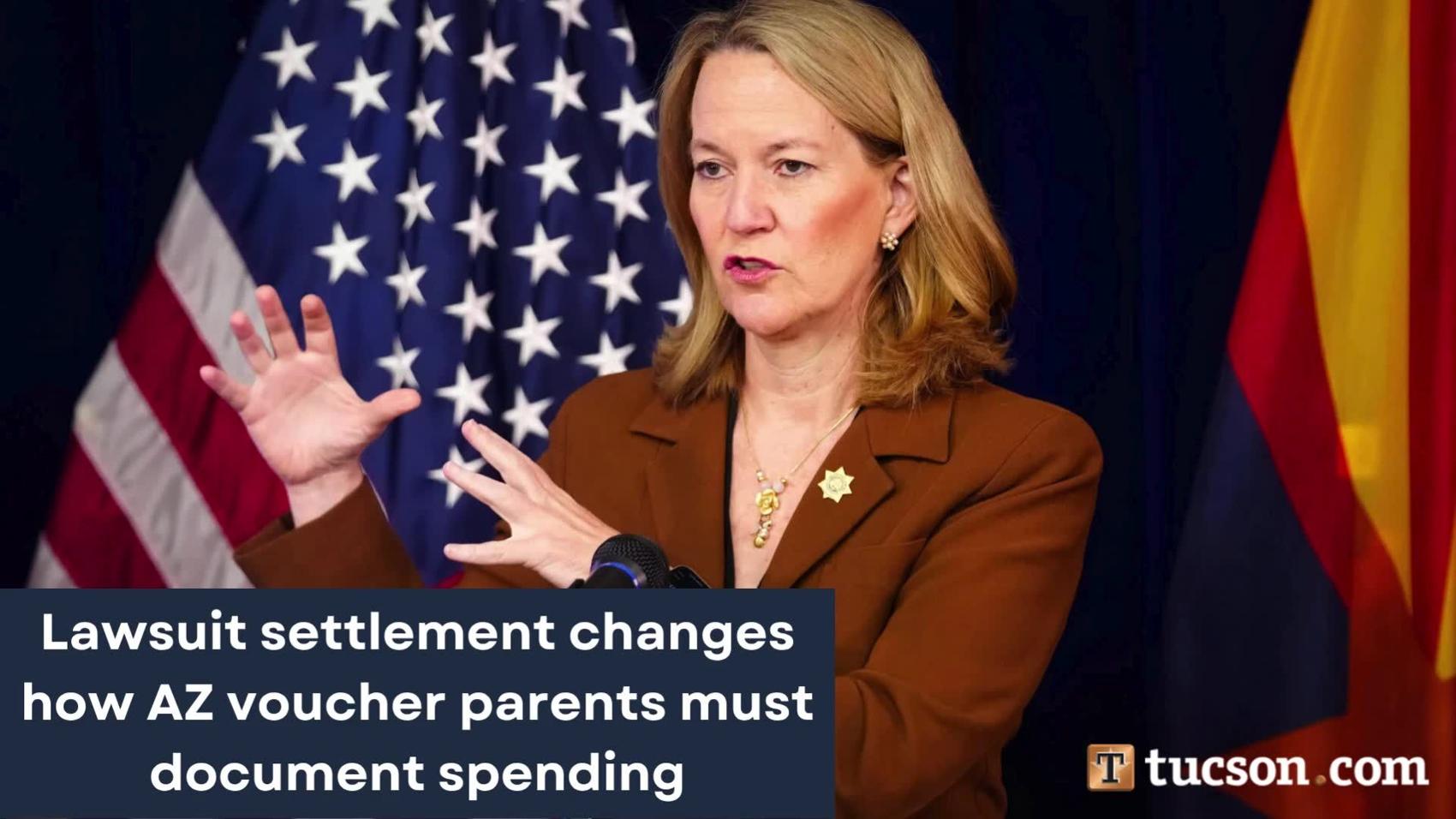
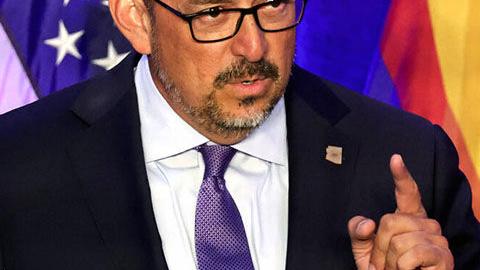
Arizona Attorney General Kris Mayes
In legal briefs, the Attorney General's Office said the alternative of simply allowing automatic reimbursement based on a claim that an item was "educational'' is unacceptable.
"This would result in the state buying items that a family might like to have — e.g., pianos, telescopes, passes to trampoline gyms, or expensive gardening or kitchen equipment — that have no discerning connection to their child's education,'' lawyers for the state told Maricopa County Superior Court Judge Rodrick Coffey.
Taylor said there are reasons to take that position.
"The facts of the ESA program and the reports of misspending on things that are clearly not educational have been borne out,'' he said.
Still, he said, lawyers from Mayes' office involved with the case decided that the compromise — requiring parents to actually link their requests for reimbursements to a specific course or curriculum item — made settling the case the better course of action than pursuing their claims.
There is also the fact that Coffey had already rejected the AG's bid to have the lawsuit tossed before a trial.
"Appealing this to another court wasn't the best use of the state's resources,'' Taylor said.
'Voters are going to decide this'
Something else is also at play: Taylor pointed out that education groups have filed the paperwork to put a measure on the November ballot to make major changes to the ESA program.
Some of the initiative's provisions, such as a cap on family income to be able to get the $7,500-per-child vouchers, are unrelated to this spending issue.
But the measure contains a list of items that could not be purchased with ESA dollars, plus an explicit requirement for the Department of Education to approve only purchases that are "directly and substantially related to curricular content and used to teach or enhance an approved curriculum.''
"Voters are going to decide this,'' said Taylor.
Jon Riches, general counsel of the Goldwater Institute, said the settlement of the lawsuit his organization brought proves the merits of its claim.
"The big issue was that the state was demanding curriculum documentation that state law doesn't authorize and that the ESA Handbook and ESA rules certainly don't authorize,'' he said.
Riches said that, from his perspective, the settlement is a victory. He said the new obligation on parents — the checkbox for which courses the materials are being bought for, and the attestation that the items are required — is much better than what the Department of Education had been requiring.
"That's a much different requirement, that's a much different demand than actually having parents go back and create curricula from whole cloth to justify buying Brown Bear, Brown Bear (a children's book to help toddlers learn colors and animals) or a box of pencils,'' he said.
'A stupid burden'
Part of what made the case unusual is that state schools chief Tom Horne, an elected Republican who heads the Department of Education, originally started out as a defendant in the case filed by the Goldwater Institute.
But as the case progressed, Horne took the position that the challengers were correct. And that actually made him a plaintiff in the case against Mayes, an elected Democrat.
"It's a stupid burden when somebody buys pencils to make them tie them to a curriculum,'' Horne said. "It doesn't make any sense at all. We're talking about standard educational materials. We're not talking about negligees or diamond rings.''
Those two examples are not random.
KPNX-TV, the NBC news affiliate in Phoenix, found that the Department of Education had approved exactly those kinds of purchases with ESA funds.
That occurred because the department, unable to preapprove each purchase, instituted a "risk-based auditing system'' through which there was automatic reimbursement of items of less than $2,000, subject to subsequent review and possible demands that parents reimburse the spending.
The agreement comes against the backdrop of the initiative filed by the Arizona Education Association and Save Our Schools Arizona asking voters to enact major changes to the voucher system.
It also comes as the voucher program has seen meteoric growth.
First approved in 2011, it was designed largely for students with special needs that couldn't be met by the public school system. It was subsequently expanded in steps to include foster children, children from military families, those living on reservations, and those attending schools rated D or F.
But the big change came in 2022 when the Republican-controlled Legislature made vouchers available for all students. That expanded the program from 12,000 students that year to now more than 100,000, with a price tag exceeding $1 billion.
That, in turn, led to some of the issues about purchases made, largely by parents who were homeschooling instead of using their ESA dollars to send their children to private or parochial schools.
Howard Fischer is a veteran journalist who has been reporting since 1970 and covering state politics and the Legislature since 1982. Follow him on X, Bluesky and Threads at @azcapmedia or email azcapmedia@gmail.com.