The two candidates seeking the Republican nomination for the Legislative District 17 Senate seat disagreed in a debate Thursday on whether to renew Proposition 123, a 2016 voter-approved measure to boost K-12 education funding that expired last year.
Candidates Anthony Dunham and Chris King were asked in the debate sponsored by the Citizens Clean Elections Commission whether they would vote to send voters a proposal for a “clean renewal” of the education funding source.
Dunham, a retired federal detention officer and Iraq War veteran, said he would not commit to voting for a proposal until he knows where the K-12 education budget shortfall came from. He said he would support a DOGE-style audit of school districts to reach his conclusion.
“I would have to look at a bill … read it over extensively and figure out why, when more than 50% of the state budget is already going toward education, these districts and schools are running out of money before I would 100% get behind a bill like that,” Dunham said.
People are also reading…
King, who has served on the Vail Unified School District board since 2020, said he’s all for renewing the measure, so long as “nobody gets anything new,” there’s no increase in tax rates, and there’s no increase in the percentage taken from the State Land Trust.
“Prop 123 actually provides additional funds for sites and other things, and last year, the state had to make up that roughly $300 million that fell off,” King said.
King was referring to the Legislature’s one-time appropriation to backfill the funding that ended when Prop 123 expired in 2025. Voters approved the measure in 2016 to deal with an Arizona Supreme Court ruling that the state had ignored a legal requirement to increase state aid to schools annually to keep pace with inflation.
Instead of raising taxes, then-Gov. Doug Ducey came up with a plan to tap into the State Land Trust, which is funded through the ongoing sales of about 10 million acres of land the federal government granted the state in 1912.

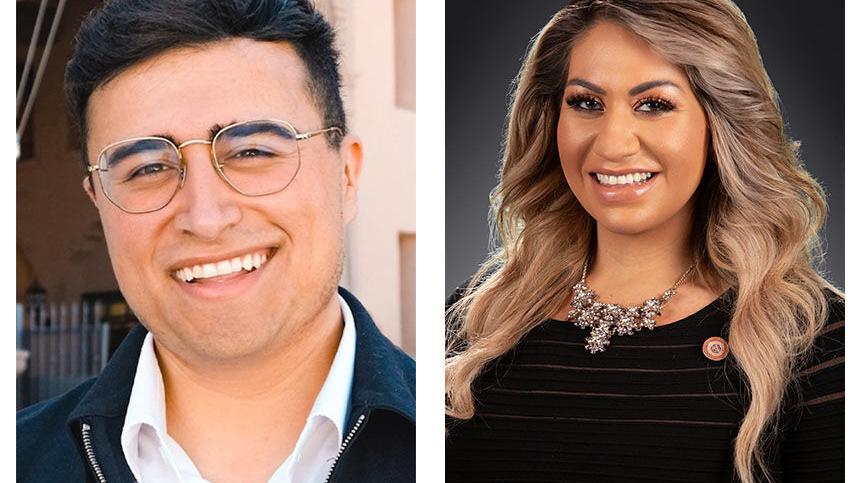
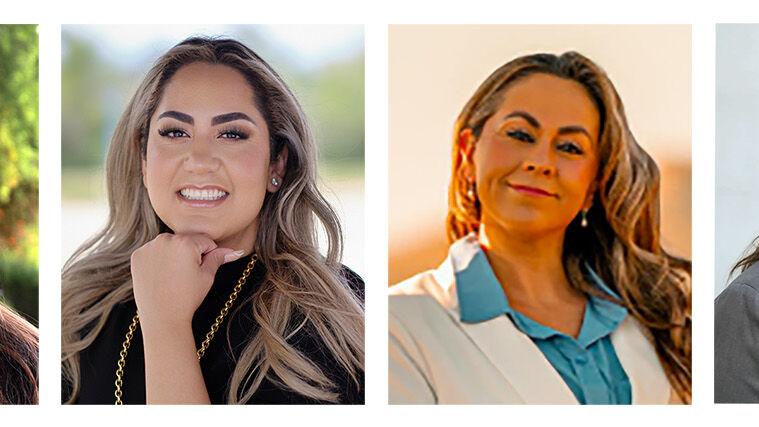
In a debate sponsored by the Citizens Clean Elections Commission, candidates Chris King (left) and Anthony Dunham disagreed on whether they would vote to send voters a proposal for a “clean renewal” of Prop. 123, an education funding source for Arizona's public K-12 schools.
The candidates’ opposing stances are meaningful, since the Republican-controlled Legislature has so far refused to renew the funding mechanism. But Republican lawmakers have suggested they would renew Prop 123 if it were tied to enshrining school vouchers in the state Constitution and earmarking the Prop 123 money for teacher raises.
Democratic Gov. Katie Hobbs has opposed that idea, and Prop 123 has become a central hang-up in this year’s budget fight at the Capitol.
The race between Dunham and King is key to Republicans maintaining control of the Senate.
Although Republicans have a formidable edge in registered voters over Democrats in the district, LD17 voters have chosen candidates all along the political spectrum — from moderate Democrats and Republicans to far-right supporters of President Donald Trump — over the last few years.
The politically competitive district wraps around Tucson's north and east sides, from Rincon Valley and Tanque Verde north through Oro Valley and Marana to SaddleBrooke in southern Pinal County.
The district’s current senator, Republican Vince Leach, is retiring this year, leaving an open seat that both parties are eyeing as critical to controlling the state Senate.
Dunham and King also showed their differences when discussing the accuracy of the 2020 election in Arizona, which Trump has falsely claimed he won.
Tucson Agenda senior reporter Joe Ferguson, who moderated the debate, asked the candidates if they believed their ballots were counted accurately.
“Absolutely,” King said, noting he has worked in the tabulation room of Pima County Elections for several years. “I know what goes on, and I know once the ballots get in there, they're tabulated accurately. We've actually done the hand counts.”
Dunham, who is endorsed by Turning Point Action, which frequently echoes the president’s belief that the 2020 election was rigged, said he doesn’t believe his ballot was counted accurately.
“I mean, I believe it's indisputable — 80% of Americans, no matter what their political affiliation, do not believe we have safe and secure elections,” he said.
Credible polling consistently shows that a majority of Americans believe elections are safe and secure.
Dunham’s position falls in line with Freedom Caucus Republicans in the Legislature, including LD17 Republican Rep. Rachel Keshel, who has pushed claims that Arizona’s elections, especially in Maricopa and Pima counties, are rife with cheating and mismanagement.
Following Trump’s lead, Republican lawmakers have pushed to end mail-in voting. The president inaccurately claims that mail-in ballots aren’t secure and that mail-in voter fraud caused his 2020 loss.
Dunham said that while mail-in voting is popular, he would like to see a “Florida-style voting system where your personal identifiable information and your party affiliation are not on the outside of the envelope.” In an ideal world, only military employees deployed overseas or disabled voters could vote by mail, he said.
“I 100% support same-day hand-counting ballots,” Dunham said. “I think there's too much fraud amongst the machines.”
King said he would reduce the number of days for mail-in voting from 29 to 21.
“We don't have to get rid of mail-in voting, but we could absolutely tighten up the time frame in which mail-in voting does need to or can occur,” King said.
Both candidates said they have used mail-in voting — sort of.
King said he has voted by mail in the past, but he prefers going to his polling place.
“I actually like that, because I get to know the people who are working in the system,” King said.
Dunham said he has received his ballot in the mail in the last few elections, but he prefers to drop it off at a polling place.
“I just don't trust the mail,” Dunham said.
The candidates also have slightly different takes on a proposed detention center in Marana for U.S. Immigration and Customs Enforcement. City officials have said there is nothing they can do to stop a private prison company from leasing a vacant prison to the federal government.
Ferguson asked the candidates how they would vote if the city reversed course and attempted to stop the facility from opening: If they were elected to the Legislature, would they vote to override the city?
“I would absolutely vote in favor of the facility,” Dunham said. “Keeping our borders safe is something that we have to do if we want safe communities. It's not debatable.”
He said there is no reason for a local official to stop law enforcement from doing their job.
King’s answer was more nuanced.
He said lawmakers must take into consideration what a city wants.
“Because in the end, right? The municipality has to live with the decisions that are made,” King said.
An area of agreement was that they both think Karrin Taylor Robson, the 2022 Republican gubernatorial candidate who lost in the primary election to Kari Lake, would make a better governor than Lake would have.
King said Robson had more policy experience, having served on the Arizona Board of Regents, the governing body of the state’s universities, and she had business experience.
Dunham wasn’t thrilled about either Republican.
“Definitely not excited about Katie Hobbs. I think Karrin Taylor Robson would have done a better job, and we wouldn't be in a lot of the positions (we’re in now),” Dunham said.
Ferguson asked Dunham to respond to an Arizona Republic report last month that detailed how he temporarily lost his parental rights in 2022 after his ex-wife imposed an unusual punishment on his children from a previous marriage.
Dunham said the story took things out of context and twisted the facts, especially allegations that he stood by and did nothing while the woman forced his daughter to drink vinegar until she vomited.
“And one of the things that is false is ‘let,’ I did not let her do anything,” Dunham said. “I was actively in therapy with her. Was actively working with my therapist on an exit strategy.”
He said the day he showed up to “put the exit strategy in place” and take his kids to a safe location was the day he lost his parental rights, which were restored within six months.