The two Democratic candidates running to represent large swaths of Tucson in the state Senate debated whether to pause the proliferation of data centers on Wednesday.
And in a separate debate among four Democrats running to represent the two House seats in Tucson’s Legislative District 20, candidates discussed raising taxes, affordable housing and whether Gov. Katie Hobbs is too moderate.
All of the candidates will face off in the July 21 Democratic primary election to represent Legislative District 20, which covers most of Tucson south of River Road and west of Country Club Road, including the University of Arizona, downtown, South Tucson and Drexel Heights.
Democratic voters outnumber Republicans in the district by such a wide margin that no Republicans even qualified for the primary ballot. That means the winners of the primary will be uncontested in November unless there’s a successful write-in candidate.
People are also reading…
In the Senate debate, candidates Rocque Perez and Rep. Alma Hernandez were asked if they would support imposing a pause on data center approvals.
Perez, who was a member of the Tucson City Council when it unanimously rejected the $3.6 billion Project Blue in August, took a hard stance against the centers, while Hernandez argued they're important job creators.
“Look, I understand that this is a difficult issue,” Hernandez said. “There are many individuals who want to completely do away with the data centers. That is not the reality that we're living in.”

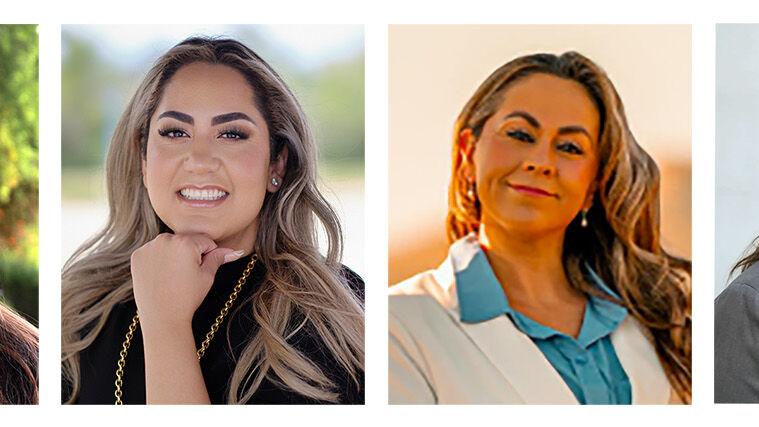
Rocque Perez, left, and Rep. Alma Hernandez are candidates for Arizona State Senate in LD 20.
Hernandez, who is running for the Senate after reaching her term limits in the House, said she's a proud union member who wants to work with the unions while protecting water.
“I think one of the biggest issues is we don't have a lot of really great-paying jobs in Tucson, specifically in LD20,” she said. “So, if we can work with our unions, work with these businesses that are coming here and find a way where we could be sustainable, I am all for coming to the table and being able to negotiate.”
Perez said he sat across from stakeholders when Project Blue was under consideration, and he felt some were either misleading or had been misled about the project.
“I would vote against the incentives for data centers, and would probably take action to inhibit other means of extractive development in Arizona, as we've kind of faced a water shortage among other environmental concerns,” Perez said.
And Perez said that massive data centers like Project Blue don't create a significant number of union-paying jobs, and there's no guarantee the developer would use union labor to build it.
Hernandez took exception to his comment.
“I know my opponent just said that there aren't many good-paying jobs. Well, tell that to the carpenters, tell that to the iron workers, tell that to all of the individuals who have been fighting and trying to be at the table in negotiations for these (data centers) to continue.”
The candidates also showed their differing Democratic worldviews when Tucson Agenda reporter Joe Ferguson, who moderated the debates for the Arizona Citizens Clean Elections Commission, asked a question about whether short-term rentals should be taxed more to help pay for affordable housing.
Perez said he would vote to raise taxes on short-term rentals since companies like Airbnb yield large profits. He argued the Legislature needs to consider “how we're yielding back benefits to our communities.”
Hernandez said that while corporations that own many short-term rentals contribute to Arizona's housing affordability crisis, they should be treated differently from people who have only one or two rentals and rely on the extra income.
The candidates also disagreed on whether lawmakers should get raises — at least right now. The Legislature is considering Senate Concurrent Resolution 1020, a proposed ballot measure that would give lawmakers yearly salary increases to adjust for inflation if voters approve.
Perez said he would have voted against the measure because the timing is not right since the state is in a budget and housing affordability crisis, but he's for the idea of better-paid legislators. He says the current pay of $24,000 a year is keeping younger people, working people and people without wealth from serving and may be leading to corruption.
Hernandez is dead set against it.
“So look, I knew what I signed up for,” Hernandez said. “I don't expect to be compensated more, especially right now in the times that we're living in, so I would be a no.”
House debate
The House race for two seats includes Sen. Sally Ann Gonzales, who reached her term limits in the Senate; Rep. Betty Villegas, who is running for a third term in the chamber; Ben Koehler, a teacher and new resident to Tucson, and Genoveva Diaz, an educator and political newcomer who is running as a team with Gonzales and Hernandez.
The debate came as the state faces a budget crisis created in part by former Gov. Doug Ducey’s 2.5% flat tax, which replaced Arizona’s old graduated tax structure. The flat tax took effect in the 2023 tax year and has been blamed for a dramatic drop in revenue.
Ferguson asked the candidates if they would vote to raise income taxes for people who earn more than $250,000 a year to fund schools and healthcare.
Gonzales said she would prefer to raise taxes on millionaires “and have them pay their fair share of Arizona taxes.”
Villegas said it is difficult to raise taxes after cutting them, but she would give it a try and start at a number higher than $250,000.
“Right now … we're getting to that place where you need that much to raise a family in the times we're living in,” Villegas said.
Koehler said he wants to see a progressive tax structure in which higher earners pay more.
“They have the capacity in their own personal budgets to afford that, and that's their duty to society to pay that back,” Koehler said.
Diaz said that as a teacher, she wouldn't want to see her taxes increased, and she would want to know where the money would go before she committed to any tax increase.

From left to right, Sen. Sally Ann Gonzales, Rep. Betty Villegas, Ben Koehler and Genoveva Diaz.
The candidates also addressed housing affordability, who's to blame for the housing crisis in the state and what legislation they would introduce to address it.
Koehler said he would push to pass eviction moratoriums, rental support and public housing.
“Housing is, I believe, a human right, and we need to do everything we can to make sure people keep housing and if they happen to lose it, find it again,” he said.
Diaz said she needs to learn more about the issue, but she sees many students who get evicted, and she knows that if she wanted to buy a new house, she would not be able to afford it.
Villegas said Democrats have introduced many bills to address housing, including the housing shortage generated by corporate ownership of short-term rentals, but the Republican-controlled Legislature doesn't hear them.
Gonzales said she used her influence on the Pasqua Yaqui Tribal Council to build homes on tribal land. As a legislator, she said she has co-sponsored many bills related to rental assistance, homebuilding, and first-time buyer assistance.
“Those are the kinds of things that the state as a government should be doing,” Gonzales said.
Koehler, Villegas and Gonzales agreed that Gov. Katie Hobbs is too moderate, while Diaz said she didn't know.
While no candidates qualified for the Republican primary ballot, Republican Katherine Weasel, a Walmart sales clerk, is running as a write-in candidate in her party's primary election.