

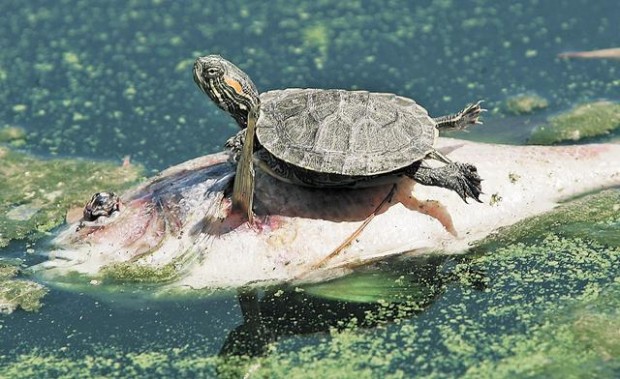
Wonder what's killing the fish at Reid Park lake?
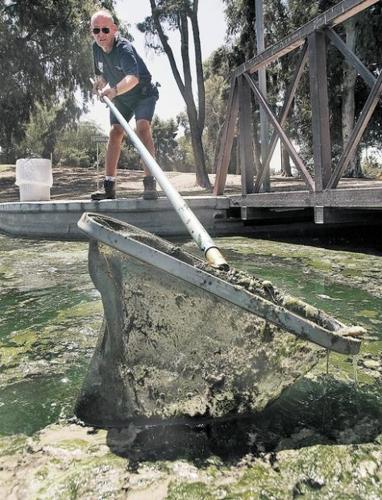
The warm, sunny weather has created ideal conditions for an algae bloom, said Sterling Ford, the environmental project coordinator for Tucson's Parks and Recreation Department. But the algae makes the water's oxygen level fluctuate — the slimy plant thrives in the daytime, releasing oxygen, then begins to die in the evening.
The small, minnowlike fish — which Sterling identified as shad — just can't survive the changes in oxygen level, he said. Add some swings in temperature, with hot days and cooler nights, and that means dead little fish.
There really aren't supposed to be fish in there at all, Sterling added. The lake's purpose is to irrigate the grass at the Midtown park, and the city doesn't put fish there.
"That lake is not designed to support fish life," he said.
People are also reading…
Where do they come from?
Most likely, people who don't want their fish any more put them there, Sterling said. There may be koi and catfish in the lake in addition to the smaller ones, but Sterling can't say for sure because the city doesn't stock the Reid Park lake.
It's unfortunate the fish are dying, he said, but there's not much the park's employees can do to stop it. Still, Sterling said he hasn't seen this many small dead fish in several years.
"It's all governed by Mother Nature, but we try to do our best to manage it," Sterling said.
The city has added a blue dye to the water to block the ultraviolet rays that cause the algae to flourish, but that's mostly for looks: No one wants to see a lake covered with green, slimy algae, he said.
People shouldn't dump their fish into the city's or county's lakes, he said. Instead they should find a friend or maybe a school that wants a fish.
People also shouldn't fish, swim or wade in the lake, Sterling said.
It's unfortunate the fish are dying, but there's not much the park's employees can do to stop it. "It's all governed by Mother Nature, but we try to do our best to manage it."
Sterling Ford
Tucson Parks and Recreation


