


Editor's note: This story first appeared Sunday as an exclusive for our print readers.
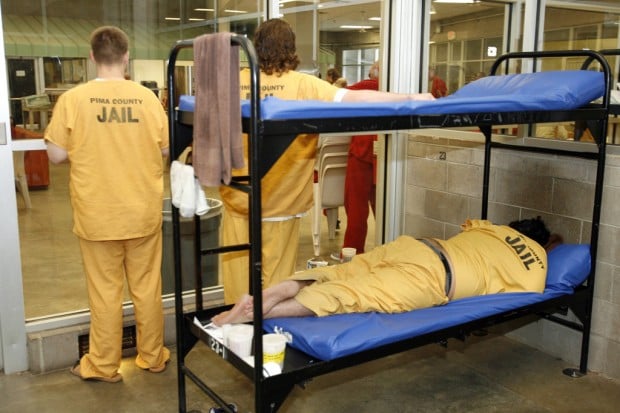
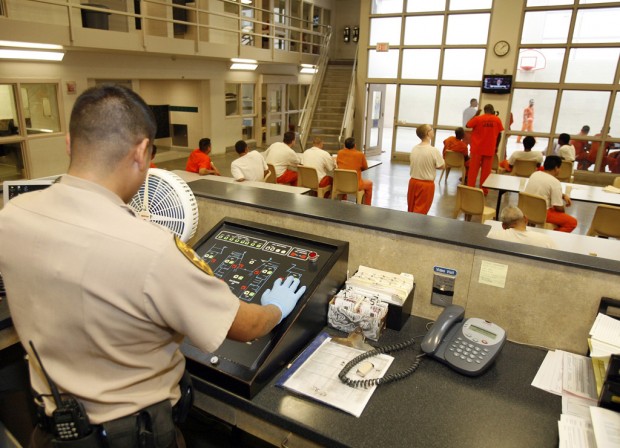
The state's transfer of hundreds of convicted felons to the county jail could cost Pima County taxpayers an extra $6 million, over and above what it would cost to simply leave them in prison.
The Legislature, in order to cut its own budget, passed a law last session requiring criminals sentenced to less than a year to serve their time in their respective county jails. For the estimated 500 Pima County inmates a year who would be affected, the state would save about $3 million.
But because of differences in how prisons and jails operate and the different inmate populations they serve, it is projected to cost Pima County $5 million to $7 million to keep those same prisoners.
On top of that, state law prohibits county jails from giving inmates time off for good behavior as prisons can, which means everyone spends more time behind bars at additional county taxpayer expense.
People are also reading…
The state has offered to keep the prisoners if the counties will pay for them, but it has offered no guarantee the price won't go up. County sheriffs have until June 30, 2012, to make a decision which way they are going to go.
Much of the higher cost stems from the state spending $55.59 per prisoner each day, while Pima County currently spends nearly $92 a day.
Pima County Sheriff's Department Bureau Chief Warren Alter said the state's daily prisoner cost is so much lower because it can spread its fixed costs - staff, food, housing - over the larger population.
Compounding the problem is the Arizona law that gives state prisoners one day off their sentence for each problem-free week they serve. County jails don't have that option, so prisoners would stay in jail longer, further driving up the cost to Pima County by an estimated $2 million.
Similarly, the state corrections director has the ability to release certain inmates to Immigration and Customs Enforcement if they've served half of their sentences, Alter said. The county sheriff has no legal authority to do the same, again keeping people in jail longer at $92-a-day.
While finding an extra $5 million to $7 million would be a huge issue for the county, Alter said equally troubling are unanswered questions as to the county's responsibilities, should the jail house the inmates.
For example, state law says the ADC director is responsible for handling community supervision, what used to be known as parole. Who would be responsible for monitoring former prisoners under the new law? Alter asked. Pima County probation has neither the legal authority nor the resources to take on that task.
If a newly released inmate commits a crime, where would that person be housed? Prison or jail?
Counties across the state not only have to think in terms of the cost of keeping such prisoners, but they must also think in terms of equity, Alter said. If inmates are treated differently depending upon where they are housed, lawsuits could be the result.
Counties have housed state prisoners in the past and been required to provide the same amenities as those afforded in state facilities, Alter said. That could mean contact visits, hot plates and televisions in cells, and the Pima County jail isn't wired to accommodate the latter, he said.
Pinal County Sheriff Paul Babeu also pointed out that state prisoners receive programming and services that are not available in the jail system.
For example, those convicted of drunken driving offenses receive treatment funded by work fees paid from the wages of inmates just like themselves.
"County jails are not funded to pay inmate workers, therefore this fund will essentially be exhausted," Babeu wrote in an email.
The state could opt to charge counties above and beyond the daily charges to pay for such programming, Babeu said.
"I've got real concerns with what the legislators have done. I'm not sure they've thought it out real thoroughly," Alter said at a recent meeting of the county's Justice Coordinating Council. "Every time I ask a question, I end up with five more."
It's his belief state lawmakers expected the counties to just "roll over" and agree to pay the reimbursement fees, Alter said.
Pinal County administrators think it will cost that county between $3 million and $3.5 million annually to house the additional inmates, but Babeu said he thinks the cost could go higher because of the rise in health-care expenses and mental health prescriptions.
Deputy Pima County Administrator Martin Willett said the bill was clearly designed by "budget people," who were not those familiar with the criminal justice system.
The Arizona Sheriff's Association voted 14-0 three weeks ago to seek repeal of SB 1621.
A week later, during the annual County Supervisors Association of Arizona meeting, 44 of the 55 members voted to repeal the law as well, Willett said. The other 11 didn't attend.
Craig Sullivan, executive director of the association, said members will spend the months between now and July working to persuade lawmakers to change their minds.
In addition to the aforementioned problems, Sullivan said some counties, such as Graham County, have jails that are too old and overcrowded to handle additional prisoners.
Also, some counties, such as Coconino County, have federal contracts to house prisoners and may be forced to give up that extra revenue to house those serving less than a year.
Sullivan is hopeful minds can be changed because it now appears as though the state will not be saving as much money as initially anticipated.
Amelia Craig Cramer, chief deputy Pima County Attorney, said attorneys in the civil division are taking a look at the legislation and will offer an opinion. Beyond that, she would only say Pima County Attorney Barbara LaWall is disappointed the state is forcing cash-strapped counties to take on any additional burdens.
Willett said it's believed roughly 500 people are sentenced to one year or less annually.
On paper, the Pima County jail has enough beds to accommodate those prisoners, but each prisoner has to be housed according to their classification and that could pose a problem, Willett said. Sex offenders, juveniles, women, gang members, the mentally ill and violent offenders all have to be housed separately.
Given the economy, now would be the time to talk about who judges are putting behind bars and do a cost-benefit analysis not only nationally, but on the state and local levels, Willett said.
There has been no attempt to do so in Arizona, nor have there been any other meaningful discussions, Willett said.
"Instead of having a discussion on what we can afford, they've just created a budgetary escape valve," Willett said.
Also disturbing is the fact that regardless of Pima County Sheriff Clarence Dupnik's ultimate decision about whether to keep the inmates, the temporary 1 percent state sales tax passed by voters in May 2010 goes away in May 2013, Willett said.
Once that happens, will lawmakers then decide county taxpayers should foot the bill for prisoners who are serving two years or less? Willett asked. Will lawmakers increase the $55.59 per day reimbursement fee?
The county knows from experience the state isn't averse to raising fees or shifting costs, he said.
Several years ago, legislators created a program to restore incompetent criminal defendants to competency at the Arizona State Hospital. At first, the state paid 100 percent of the cost, but soon started billing counties for the charges, which increased more than 62 percent over three years.
Sullivan also pointed out counties are also sending funds to the Arizona Department of Public Safety and motor vehicle division.
If the law isn't repealed, Presiding Pima County Superior Court Judge Sarah Simmons said those involved in the justice system will look at additional programs that might serve as alternatives to incarceration.
Cost per prisoner
Moving inmates to county jails could cost taxpayers millions.
Estimated state cost
$55.59
Daily rate to house one prisoner
$20,290.35
Annual rate to house one prisoner
$10,145,175.00
Annual rate to house 500 prisoners
Estimated county cost
$92.00
Daily rate to house one prisoner
$33,580.00
Annual rate to house one prisoner
$16,790,000.00
Annual rate to house 500 prisoners
SOURCE: Pima County Sheriff's Department, Arizona Department of Corrections
Contact reporter Kim Smith at 573-4241 or kimsmith@azstarnet.com


