

Tucson will celebrate its Chinese heritage this weekend with the Third Annual Tucson Chinese Immigrant History Event, a symposium of presentations, round tables and forums at the Tucson Chinese Cultural Center.
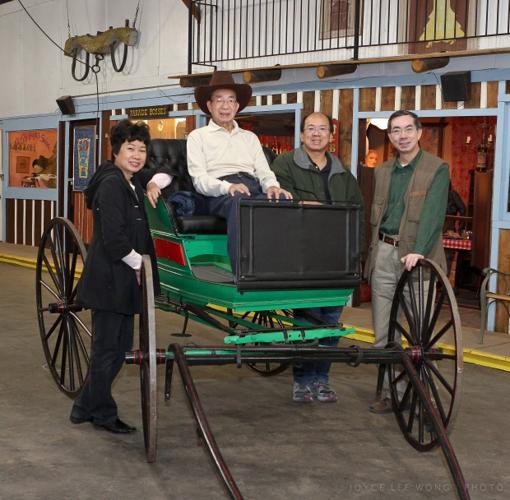
Speakers include Arizona State University professor Karen Leong, who will talk about Tucson's Chinese legacy. University of Arizona professor Maribel Alvarez will discuss the importance of oral histories, and Tucsonan Mary Malaby, whose family ran grocery stores here for decades, will take part in an interactive discussion based on the recovery of her grandfather Lee Goon's carriage, which will be on display at the event.
The center at 1288 W. River Road, operates on a skeleton staff, relying heavily on 200 or so volunteers to serve as the nerve center for Southern Arizona's Chinese community.
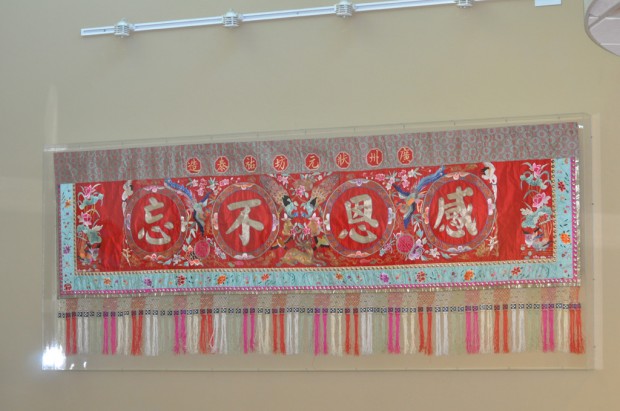
The center offers classes in Mandarin, tai chi, martial arts and cooking, as well as cultural events. The center also serves as something of a museum, offering continually updated storyboards that families use to post pictures and memorabilia from old grocery stores their ancestors ran.
People are also reading…
Robin Blackwood, a 64-year-old historian of Chinese immigrant culture who chairs the history committee and will also speak at Saturday's event, says contributions from Chinese immigrants have affected Tucson for decades.
In many other locales, Chinese immigrants formed insular communities. In Tucson, however, they blended into society, integrating into neighborhoods and learning English and Spanish while establishing shops and serving as economic linchpins.
"Tucson has a very vibrant Chinese heritage," Blackwood said. "Chinese families in Tucson were an essential part of the development of Tucson itself."
Blackwood said that during the Depression, Chinese shop owners would let poor customers buy goods on credit until payday, when they may or may not have been able to make good on the debt.
"We need to make sure the community knows about this," Blackwood said. "It's really a part of our community heritage."
It's a phenomenon Malaby, 78, remembers hearing her parents discuss. Her father, Lee Hop, ran what's now known as La Primavera Market, 1600 S. Ninth Ave.
"My mom would say, 'If everybody charges to accounts, how are you going to collect?' " Malaby said.
"What my dad told my mother was, 'I made money. People with charge accounts have charge accounts because they are poor. They know where I live and will pay me if they can. If they can't I will not go to collect. I'll feel like I'm taking food out of children's mouths.' "
Citing scholarly research, Blackwood said that in many communities, Chinese immigrants were forced to congregate in a particular neighborhood.
"Tucson was pretty tolerant, compared to other places," Blackwood said. "It was pretty easygoing about Chinese mixing in with other Tucson citizens. As a result, while some areas had higher concentration, there was never a 'Chinatown.' "
Tucson may have been more tolerant than many other cities, but as Malaby recalls, prejudice still abounded.
"Kids would throw rocks at me. I'd come home crying," she said. "I'd say, 'Papa, kids are teasing me at school.' He'd say, 'Don't pay attention to them. You have to be higher than them. Don't listen to ignorant people. You go to school to learn, not to listen to comments people have for you.' I developed a hard shell after that."
Malaby remembers her father being told he wasn't allowed to buy land in certain parts of town due to his ethnicity, and how he pulled strings and worked contacts to prove the naysayers wrong by doing just that.
In the 1940s, Blackwood said, there were 100 Chinese grocery stores in Tucson, with some intersections having one on each corner. The fact may seem shocking to those who weren't around at the time, and Blackwood promises many more such revelations at Saturday's event.
She said efforts to piece together Tucson's Chinese heritage is an ongoing process involving research and comparisons of oral histories.
"There are a lot of things left to be discovered," she said. "We're just scratching the surface."
IF YOU GO
• What: Third Annual Tucson Chinese Immigrant History Event
• When: 9 a.m. Saturday
• Where: Tucson Chinese Cultural Center, 1288 W. River Road
• Admission: Free
• Online: www.tucsonchinese.org
Contact reporter Phil Villarreal at 573-4130 or pvillarreal@azstarnet.com


