Conditions are deteriorating to dangerous levels at a decommissioned hotel in Equatorial Guinea, where dozens of immigrants have been imprisoned since the U.S. deported them to the African nation, without warning or due process, the immigrants and their attorneys say.
Three people deported from the U.S. to Equatorial Guinea — including a Phoenix man whose family fled Egypt when he was 4 — told the Arizona Daily Star their lives are in danger at the hotel. All agreed to have their full names published, despite the risks to their safety in speaking out.
In a recent late-night incident, all three say they were dragged from their rooms at gunpoint, handcuffed, assaulted and threatened by armed men guarding the decommissioned Hotel Bamy.
"They said if we leave the hotel grounds, they will shoot us and bury us across the street," said Peta-Gaye Chambers, 35, whose parents brought her to the U.S. from Jamaica when she was 5. A U.S. immigration judge granted Chambers "withholding of removal" to her home country of Jamaica in 2013, agreeing she'd face persecution there.
People are also reading…
In June, U.S. Immigration and Customs Enforcement deported her without notice to Equatorial Guinea, a place where she has no ties. When she and another woman initially refused to board the deportation flight, an ICE officer threatened to put them in full-body straitjackets for the entire 18-hour flight to Africa, both women told the Star.
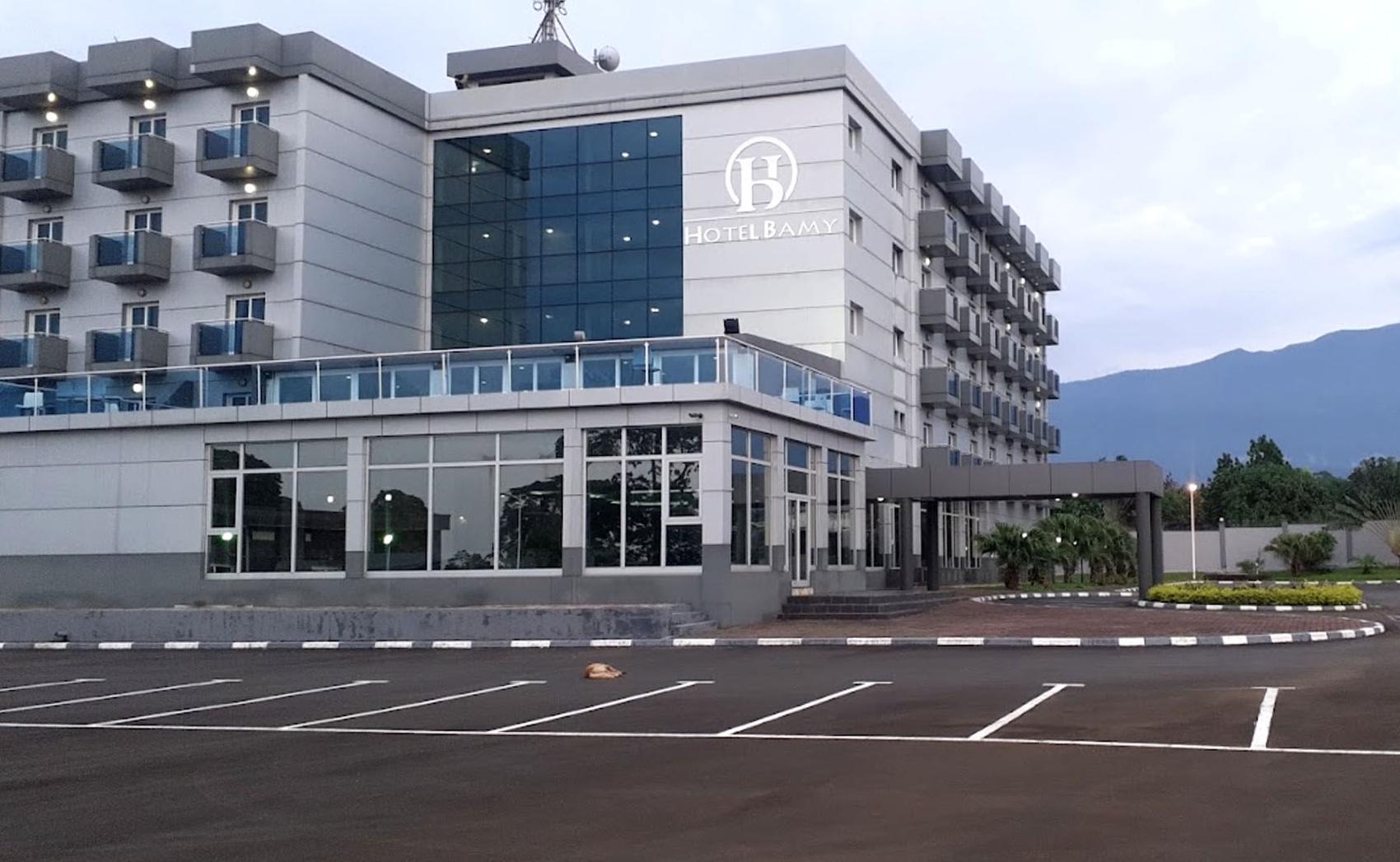
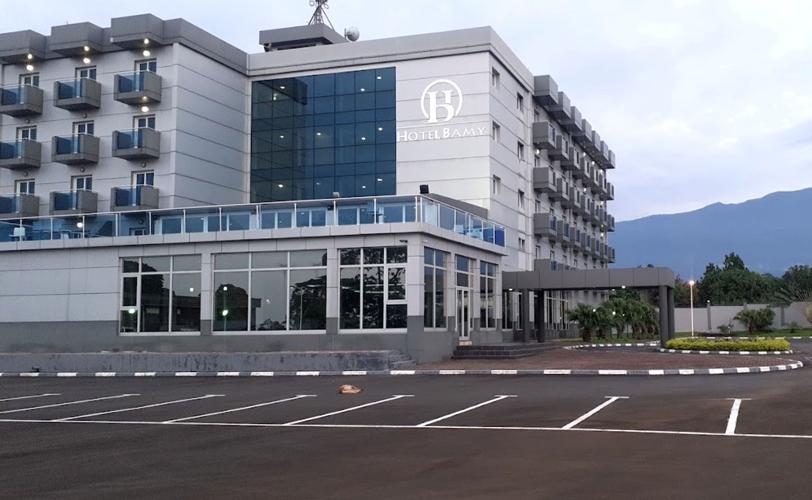
Hotel Bamy in Malabo, in Equatorial Guinea, where dozens of immigrants with no ties to that African nation have been imprisoned since the U.S. deported them there.
Equatorial Guinea security officials have also threatened the U.S. deportees held at the hotel, warning they'd soon be returned to their home countries, despite the protections granted all of them by U.S. immigration judges. That's according to Chambers; Jamaican national Natalie Holmes, 51; and Ahmed Soliman, 30, a Phoenix man who has been imprisoned at Hotel Bamy for more than three months.
The three immigrants say those threats are retaliation for their communications with attorneys and the news media, for attempting to record incidents at the hotel on their phones and for pushing back against violations of their rights and international law.
In June, international right groups filed a lawsuit, now pending before the African Commission on Human and Peoples' Rights, that demands Equatorial Guinea improve detention conditions at the hotel and provide assurances the people held there won't be returned to their home countries, where they face torture or persecution.
At least 17 of the 40 deportees who have been held at the hotel have already been wrongly deported to their home countries, an international-law violation known as "refoulement," said Meredyth Yoon, one of the lawyers who filed the lawsuit on behalf of 14 detainees at the hotel, including Soliman, of Phoenix.

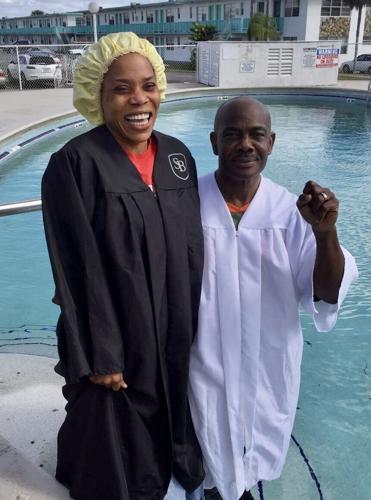
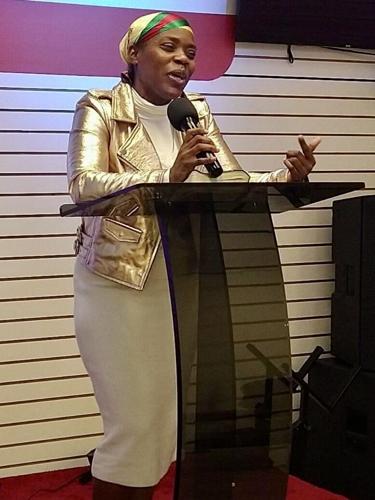
Jamaican national Natalie Holmes, 51, shared a photo of herself during her baptism in Florida in 2016. Holmes, who is now an ordained pastor, was deported to Equatorial Guinea in June without notice, and while her habeas corpus petition was still pending, she said.
While the lawsuit demands improved detention conditions, the indefinite detention of the deportees is also unlawful, attorneys say.
"Generally if someone is going to be held against their will, there has to be some reason behind it, and it has not been stated in the case of anyone (at Hotel Bamy) what's the basis of their confinement," Yoon said. "They remain there against their will."
ICE spokesman Fernando X. Burgos has said the agency bears no responsibility for what happens to deportees it sends to third countries.
"Once an alien leaves the United States, ICE is no longer responsible for tracking their location or activities outside the country," Burgos said in a July 27 emailed statement to the Star. He referred the Star to the U.S. State Department, which signed the secretive agreement to give Equatorial Guinea $7.5 million to receive deportees from the U.S. The State Department did not respond to the Star's questions.
Yoon said the U.S. does bear responsibility for what happens to people it sends to foreign countries against their will.
"The U.S. is the cause of everyone’s current situation (at Hotel Bamy) and has a duty to ensure people they've deported into this situation are not being mistreated and that their rights are being respected," she said.
Attorneys have received no assistance from the U.S. Embassy near the hotel, she said.
"They are just totally unresponsive and yet at the same time, the (hotel) guards are telling people the U.S. government is responsible for what happens to them" at Hotel Bamy, she said. "Both governments are pointing fingers at each other."
Held at gunpoint
Conditions at the hotel have been worsening. Late at night on Friday, July 31, dozens of armed men wearing ski masks — supposedly police officers — swarmed the hotel and dragged five deportees out of their hotel rooms at gunpoint, the Star's sources said.
The traumatizing experience left detainees fearing for their lives, they said.
Chambers, Holmes and Soilman are three of the 27 people deported from the U.S. who are currently detained at the hotel.
The deportees hope that once the public understands the abuse and injustices they're enduring, someone will help them. That hope is worth the risks they face from speaking out, they say.
"My life is already in danger so I’d rather speak out and risk my life for something I believe in, rather than sit idly and watch my life being taken away from me," Soliman said.
"I want the public to know," said Holmes, an ordained pastor, who was deported alongside Chambers in June.
Holmes said the tendons in her hands were damaged from being handcuffed too tightly by the armed men at the hotel July 31, and she's still experiencing pain in her wrists a week later.
That night, Holmes went downstairs to investigate after hearing Chambers scream, she said. One of the armed men "shoved me really hard, then shoved me again," Holmes said. "He said, 'Put cuffs on her.'"
Nearby, the armed men repeatedly kicked Soliman's legs, in an attempt to bring him to the ground, after they saw him trying to record the incident on his phone, all three detainees said.
Another man was choked and thrown against the wall, then handcuffed and held on the ground for an hour, Soliman said.
"They were telling us things like, we’re getting too comfortable in this hotel, they don't want us in this country, and 'There’s a reason America didn’t even want you guys,'" he recalled.

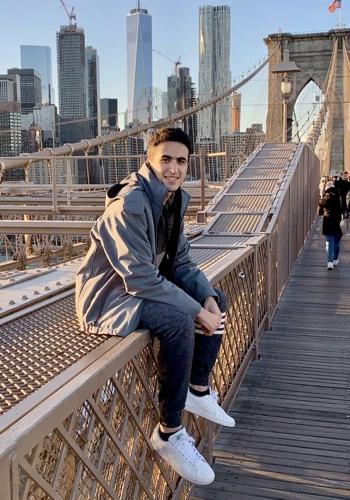
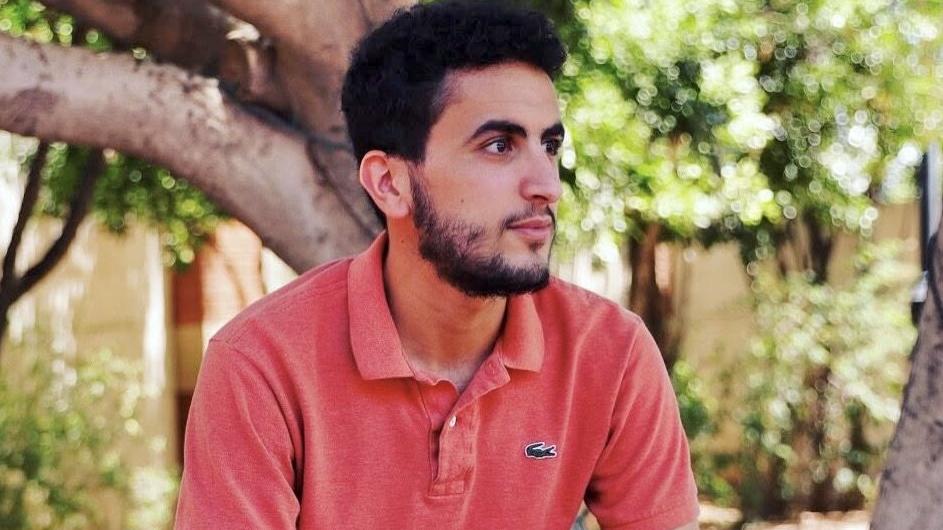
Ahmed Soliman, now 30, is pictured on the Brooklyn Bridge in 2019. Soliman, whose family moved from Egypt to Arizona when he was 4, has been detained at a decommissioned hotel in Equatorial Guinea for three months, since ICE deported him there April 28 without notice. He said he’s intent on speaking out about the injustices he and other deportees at the hotel are facing, despite the risks to his personal safety.
"They’re telling us that as if we have a choice, as if I'm sitting here with a passport enjoying my time in this awful hotel," said Soliman, who said he was deported without any travel documents.
The deportees were violently dragged down four flights of stairs, cuffed and eventually taken outside where police vans were waiting. They were told they were going to prison, for unclear reasons, before being released later that night, the deportees said.
The men wielding high-powered weapons smelled strongly of alcohol that night, and they appear to be intoxicated on a daily basis, all three deportees told the Star.
"The way they were acting, this is not the way police officers are supposed to act. You have a gun, and you’re stone drunk," Holmes said. "For you to come manhandle us like this, we’re not used to that. We grew up in the United States. That's where all our family is."
She's been shocked by the inhumane treatment she received both in Equatorial Guinea and while in ICE custody in the U.S., where she said it feels like there's no longer rule of law.
"I feel we’re in Nazi Germany," said Holmes, whom ICE deported while her habeas corpus petition was still pending in Florida. "If you can just get up and move people that federal judges say are not to be moved, you're a one-man dictatorship."
As a pastor, she's sickened by the way U.S. government officials claim to be Christians, while treating vulnerable people with cruelty.
"They all are screaming 'Christianity,' but real Christians would never do that," she said. "Jesus Christ never did this to anybody, and neither did his followers."
Third-country removals
The Star reported Aug. 2 on Soliman's continued imprisonment in the African nation, and on the Trump administration's embrace of secretive third-country removal agreements.
The agreements, now in place with dozens of nations, allow the U.S. to deport people who can't be returned to their home countries, due to protections granted by U.S. immigration judges, by finding a third country to accept them.
But those third countries often end up sending those people back to their home countries anyway, making the U.S. a participant in "chain refoulement," a violation of international law, human rights advocates say.
Soliman grew up in Phoenix after his family moved there when he was 4 years old. Soliman was granted protection under the United Nations' Convention Against Torture, after a U.S. immigration judge agreed in October 2025 he'd face torture and death in Egypt, due to his family's politics and his identity as a gay man.
But with his life increasingly threatened in Equatorial Guinea — and U.S. officials insisting they bear no responsibility for those conditions — Soliman said he's approaching a point where he'd rather return to Egypt. He emphasized that at this point he has not agreed to be returned to Egypt, where he faces grave risks to his life.
But if death appears imminent in Equatorial Guinea, "I'd rather die in my country than die in a stranger’s country," he said.

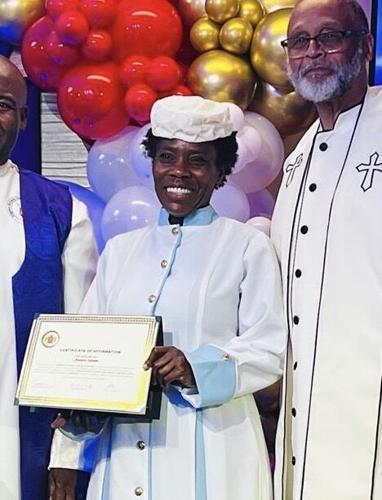
Natalie Holmes, now 51, is pictured during her ordination as a Christian pastor in 2022 in Florida. Holmes said she has been horrified by her treatment in ICE custody, and in Equatorial Guinea, where the U.S. deported her in June, despite her having no ties there.
"They’ve threatened our lives, just not verbally. When you have armed people pointing guns at us, that's a threat," he said. "In the States, that's aggravated assault."
The conditions at the Equatorial Guinea hotel are intended to scare detainees into wanting to return to their home countries, said attorney Yoon, litigation director of Asian Americans Advancing Justice in Atlanta.
Since November, the U.S. has deported about 40 people to Equatorial Guinea who have no ties there, Yoon said. There are currently 27 immigrants from the U.S. detained at the hotel, after DHS deported 10 more people there at the end of July, Yoon said.
On July 29, the Star sent detailed questions to Equatorial Guinea's embassy in Washington, D.C.; a staffer said Ambassador Crisantos Obama Ondo would answer the questions. On July 31, someone at the embassy replied to the Star's questions to say the ambassador was "on vacation."
The Star has since followed up with several emails; the Embassy has not responded.
Forced onto plane, detainees say
Soliman, Chambers and Holmes all had habeas corpus petitions pending in U.S. District Court when they were deported without warning to Equatorial Guinea.

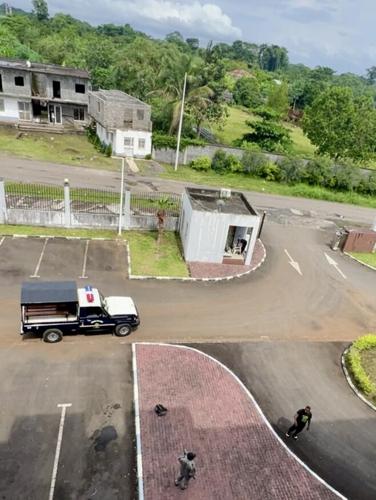
Ahmed Soliman, who grew up in Phoenix, shared his view from inside the decommissioned Bamy Hotel in Malabo, Equatorial Guinea, where he’s been imprisoned since ICE deported him there on April 28. Armed guards patrol outside the hotel, where Soliman said he and 16 other deportees from the U.S. are being confined, despite having not committed any crimes in the country.
None received advance notice, or the opportunity for a fear screening, and all were coerced, or physically forced, into boarding the deportation flight to Africa, they say. In a court filing in Soliman's habeas corpus petition, after his removal, DHS acknowledged not providing Soliman with a fear screening, claiming it was not required and that the federal judge was obligated to trust in "diplomatic assurances" provided by Equatorial Guinea in its agreement with the State Department.
The DHS attorney could not provide the judge with those "diplomatic assurances," which supposedly ensured Soliman would be treated humanely in the African nation, the court records show.
The "diplomatic assurances" supposedly contained in the agreement are "a lie," Chambers said.
"We’re living a nightmare," she said. "No one that came here had due process, we never had any chance to show we had fear for our life. All we've had since we've been here has been threats."

Natalie Holmes, 51, is pictured preaching at a 2022 prayer meeting in Pembroke Pines, Florida, after her ordination as a pastor. Holmes, who was born in Jamaica and grew up in the U.S., was deported to Equatorial Guinea without the opportunity for a fear screening, in June. She's been imprisoned in a decommissioned hotel with dozens of other U.S. detainees ever since.
Soliman said several men carried him onto the plane, after he sat down and demanded a fear screening, as his Tucson-based attorneys had advised him to do, he said.
Chambers and Holmes were deported together. They both described inhumane treatment by ICE officers while detained, and in the days leading up to their deportation from a Louisiana facility.
ICE officers did not allow detainees to get off buses to use the bathroom during transfers between ICE facilities, Holmes said. The officers repeatedly told detainees just to pee on themselves, she said.
One day before the deportation, detainees were kept on a bus the entire day without food or water, Holmes said. While handcuffed, Holmes was unable to attend to herself after she began menstruating heavily, she said.
"I had no way of cleaning myself. They wouldn't even unlock my hands so I could use them to put on a pad," she said.
Holmes said she and other deportees were forced to remain upright for 72 hours, unable to lay down or sleep, in the days leading up to the flight to Africa, on June 17.
Later, on the international flight, Holmes' ankles became so swollen that her ankle cuffs were cutting into her skin and her legs became numb, due to having been upright for so long. A nurse forced ICE officials to allow her to lie down across three seats on the plane at that point, she said.
In separate phone interviews with the Star, Holmes and Chambers each described in detail the moments leading up to boarding the deportation flight against their will. Both said they were shocked to learn they were destined for Africa, where neither have any connections.
Each asked for a fear screening, and then refused to get on the plane. An ICE officer said if they didn't board voluntarily, they'd be handcuffed and restrained in a device the women described as a straitjacket, which the officer laid out on the ground. They'd be restrained from head to toe, allowing them to be forcibly carried onto the plane, they said.
The ICE officer told the women they would have to remain in the straitjacket, and would have to "piss and shit on yourself," for the entire 18.5-hour flight to Africa, both women said, recalling the officer's exact words.
Because of that threat, they agreed to get on the plane. The officer seemed disappointed he wouldn't get to put them in the straitjacket, Holmes said.
"I couldn’t believe this thing was happening in America," Holmes said, breaking into tears for the first time in the 80-minute phone interview.
Attorney Yoon said what Holmes and Chambers described echoes accounts from others deported from the Alexandria, Louisiana ICE facility, a deportation hub.
Yoon represented two clients who were handcuffed and confined in the straitjacket, one during a deportation flight to Equatorial Guinea in January 2026, and another for his deportation to Ghana in September 2025. She's interviewed several others who were deported in the straitjacket last year.
"Some clients have described it as being like a coffin, or full-body straitjacket," Yoon said.
On Aug. 5, the Star submitted detailed questions to ICE and the U.S. Department of Homeland Security about Holmes' and Chambers' allegations.
In an unattributed Aug. 6 email, DHS ignored the Star's questions and shared boilerplate language about detention standards in ICE facilities.
The only new information provided was a description of Holmes' criminal history from more than 15 years ago, for which she already served her time in prison. Holmes, who became an ordained pastor in 2022, spent four years in a Florida prison following a 2009 conviction for identity theft and fraud, after she used someone else's birth certificate to obtain legal documents in the U.S.
Since then, "I do street ministry, I feed the poor, I help the homeless, I don't take money from the government," said Holmes, who also ran a skin-care business and worked as a home-health aide. "I work, and I give what I earn to people who need it."
Holmes, whose mother is a U.S. citizen, attended annual check-ins with ICE, until she was detained at the last one, she said.
Limited access to counsel
The detainees at the hotel in Equatorial Guinea say they've been prevented from contacting legal counsel. An attorney tried to visit Soliman last week at the hotel, but was turned away. Soliman shared video of hotel staff refusing to let the attorney meet with Soliman, then escorting the attorney outside and recording his license plate number, to ensure he couldn't return, Soliman said.
Yoon affirmed Soliman's account.
"Since incident last Friday (July 31), guards have taken steps to block access to counsel and have told individuals they’re not allowed to meet with lawyers anymore," she said. "Multiple people were threatened that if they spoke out about the incident, the assault they were subjected to last Friday, that there would be consequences. ... Clearly, it's retaliation for not only insisting their rights be respected, but for telling other people this is happening."
Chambers said she feels like she’s living in a horror movie, a combination of the films "Hotel Rwanda" and "Get Out."
"Our life is at risk each and every day," she said. "We don’t know what to expect when we wake up. We’re not protected at all."
Get your morning recap of today's local news and read the full stories here: tucne.ws/morning
Contact reporter Emily Bregel at ebregel@tucson.com. On X, formerly Twitter: @EmilyBregel

Emily Bregel
Border reporter


 Two pregnant detainees hospitalized in Arizona; one claims border agent struck her