

PHOENIX — The way a senator sees it, when the people who crafted the Arizona Constitution put in a $350,000 debt limit for the state, they weren’t kidding.
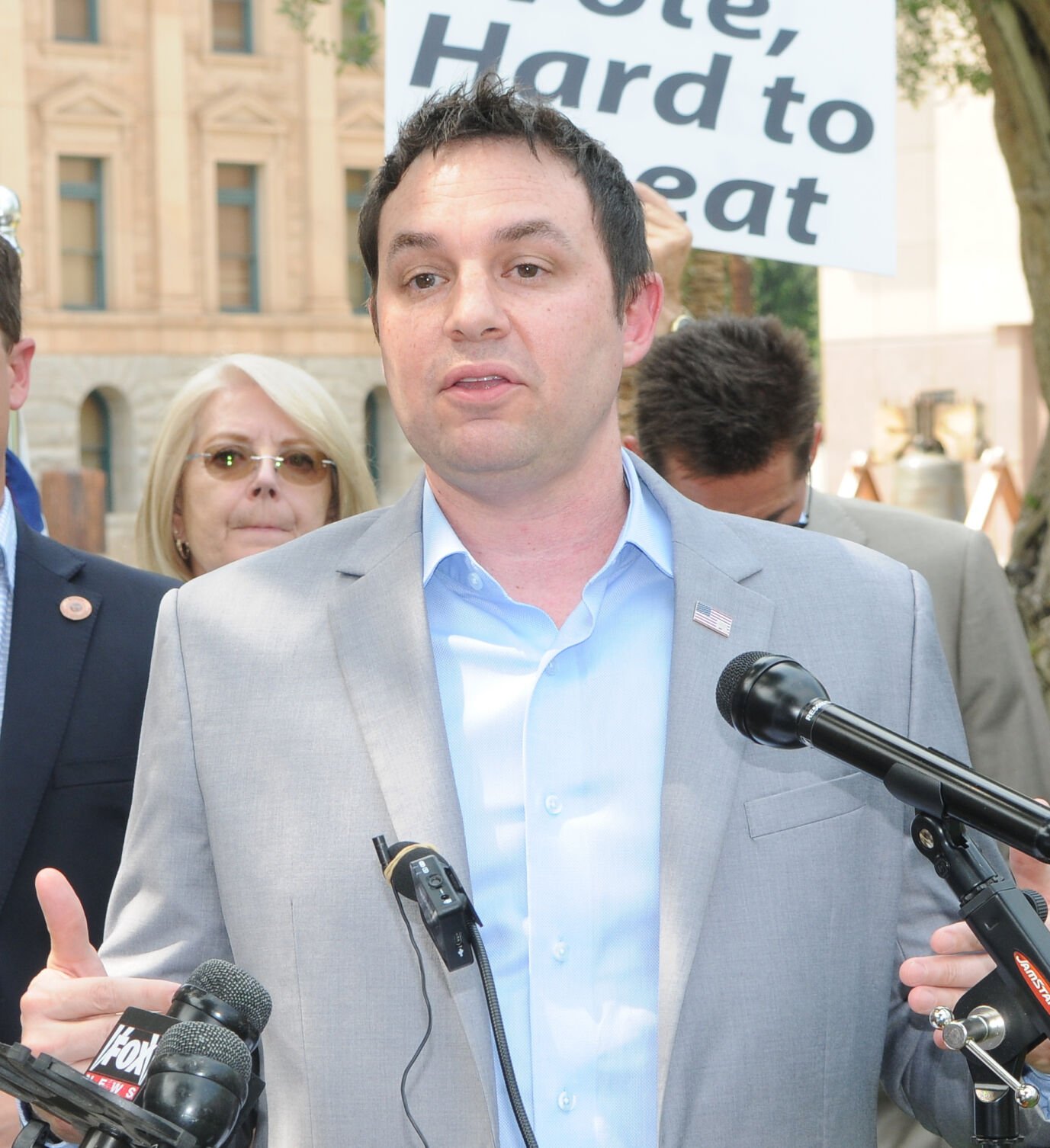
And now Sen. J.D. Mesnard, a Chandler Republican, wants voters to reaffirm that limit — and to stop some of the forms of creative financing lawmakers have used for years to get around it.
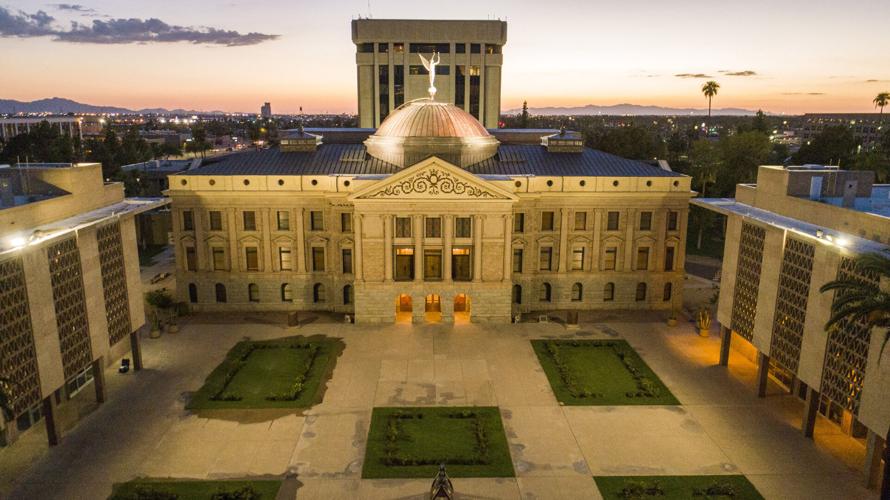
His Senate Concurrent Resolution 1033 proposes to add specific strings to the $350,000 debt limit so that lawmakers could no longer simply find gimmicks to borrow money during financial downturns. That’s what happened more than a decade ago when then-Gov. Jan Brewer and state lawmakers, facing a $3 billion shortfall, agreed to sell off some state buildings and then lease them back until they owned them again.
Lawyers said it really wasn’t “borrowing,’’ as the state could have theoretically stopped payments and let the lenders keep the buildings. But that was never a realistic option, as the list included everything from state prisons to where the House and Senate meet.
People are also reading…
Also off-limits under Mesnard’s plan would be a similar scheme now used to finance the construction of new state buildings. The state would have to have the cash upfront.
And gone would be the financial sleight-of-hand of putting off payment of one year’s obligations into the following fiscal year, a maneuver still being used to comply with the constitutional requirement that the books be balanced each year on June 30.
That last prohibition, if approved by voters, would have immediate implications. It would mean the $800 million “rollover’’ of state aid owed to public schools that began a decade ago — and is still on the books — would have to be paid off immediately.
SCR1033 would not impair the power of universities to float bonds for projects, nor the ability of the Arizona Department of Transportation to borrow money for road-construction projects as long as the debt was paid from future gasoline taxes and vehicle registration fees.
But everything else above $350,000 would become illegal going forward.
Big difference in today’s dollars
One question is whether a debt ceiling set in 1912 — the one Mesnard wants to make enforceable — is appropriate in 2024 and beyond, in perpetuity.
He conceded that Arizona’s population is much bigger now than at the time of statehood when only about 217,000 people lived here. The latest figure is close to 7.5 million, a growth factor of nearly 35.
Add to that the fact that what was $350,000 in 1912 calculates to about $10.5 million now.
But Mesnard said he wants to return to the original intent of the frame, whom he insists had to know what they meant when they put in the $350,000 debt cap with no allowance for either population growth or inflation.
The problem is that the constitutional provision has become “meaningless,” he said.
“Eventually, we’re going to wind up in a situation where people are going to be tempted to incur more debt to finance government,’’ Mesnard said.
His proposal would leave state lawmakers with fewer tools the next time the bottom drops out of the economy, however.
That’s what happened in 2009 when the state found a $3 billion gap between a $9 billion expense plan and anticipated revenues.
Lawmakers, at the behest of Brewer, cut spending by $1 billion and got voters to approve a temporary one-cent sales tax to raise another $1 billion a year.
The balance was made up by selling off a variety of state buildings to private investors in the form of “certificates of participation’’ and then making regular lease payments until the debt was paid off.
All that came with a price tag in the form of annual interest payments the state had to make well into the administration of Gov. Doug Ducey before it was all paid off. But it prevented the state from making even deeper cuts in spending.
That option to salvage the budget with borrowed money would be off the table the next time revenues tank. But Mesnard said that’s not a bad thing.
“In the moment, it could seem like this is the right thing to do,’’ he said.
“But what we’re sort of ignoring is all that debt we’ve incurred, someone is going to have to pay for,’’ Mesnard said. “So I would say, that’s the worst option, actually incurring debt that we’re kicking down the road.’’
‘Create greater incentive’
SCR1033 contains no exceptions other than what was put into the constitution in 1912: to repel invasion, suppress insurrection or defend the state in time of war.
And if the choice is even larger cuts in state services? Mesnard said that won’t be necessary — if future legislators do better planning.
“It does create greater incentive to make sure you are a little bit restrained, especially if you’re seeing that on the horizon you’re going to have a downturn coming,’’ he said.
“I think it incentivizes responsibility,’’ such as making regular deposits into the state’s “rainy day fund,” Mesnard said.
He acknowledged that fund is equal to just 10% of the state budget — far less than the 33% deficit the state faced in 2009. But, just as happened more than a decade ago, there are other options, like getting voters to approve a tax hike, he said.
“But this idea of incurring ongoing debt on a one-time basis, that is the worst option,’’ he said.
‘We need to be able to take out loans’
Senate Minority Leader Mitzi Epstein had a different take on Mesnard’s plan.
“This is nuts,’’ said the Tempe Democrat during floor debate on the measure. “This would mean, basically, that the state cannot take out any loans.’’
She said it ignores the financial reality that businesses understand: Sometimes borrowing makes sense.
“If we want government to run like a business, then we need to be able to take out loans,’’ Epstein said.
And it’s not just businesses. When purchasing a home, most Arizonans don’t wait until they have accumulated the cash. Instead, they take out a mortgage, similar to how the state has constructed several new buildings.
Mesnard rejected the comparison.
“The average person also doesn’t have to buy a new home or homes every single year as the state does,’’ he said. And each new “mortgage,’’ Mesnard said, adds to the state debt.
The measure cleared the Republican-controlled Senate on a party-line vote earlier this month and awaits House action.
Approval there would send it to the 2024 ballot; the governor gets no say on such referrals.
Get your morning recap of today's local news and read the full stories here: tucne.ws/morning
Howard Fischer is a veteran journalist who has been reporting since 1970 and covering state politics and the Legislature since 1982. Follow him on Twitter at @azcapmedia or email azcapmedia@gmail.com.


 Koch brothers group sues to overturn law passed by Arizona voters


