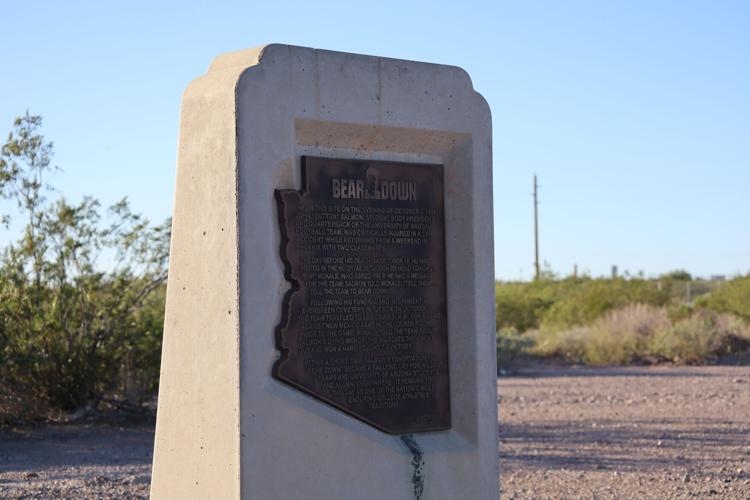
From a young man’s death a legend was born 100 years ago today.
On Oct. 18, 1926, University of Arizona football player John “Button” Salmon succumbed to injuries he suffered in a car accident, but not before delivering an enduring, deathbed message to his teammates: "Tell the team to bear down."
A century later, Salmon’s final rallying cry remains a central part of the U of A’s identity.
People are also reading…
So what else is there to say about one of the best known stories in Wildcat history?
As homecoming week gets underway at the U of A, here are a few tidbits you might not know:

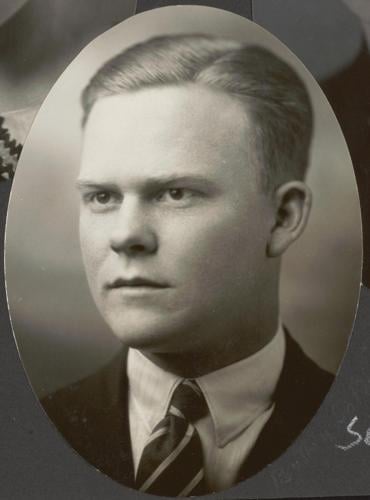
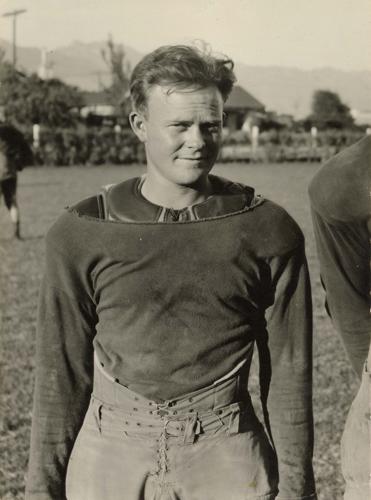
University of Arizona student-athlete John “Button” Salmon in his 1924 yearbook photo from the scrapbook of U of A graduate Bill Bowers.
Tucson was still a small town back then, and the Arizona Daily Star was a small-town newspaper.
Federal census records place the Old Pueblo’s population at around 30,000 in 1926. The growing city was home to 8,787 registered automobiles and 7,320 children in kindergarten through high school, according to a monthly magazine put out by the Tucson Chamber of Commerce.
Roughly 1,600 students attended the University of Arizona during the 1926-27 school year, which saw the completion of a brand new gymnasium on campus.
The race for U of A student body president qualified as front page news in the Star in those days. The paper also regularly printed notices about the everyday lives of local residents, including their travel plans and out-of-town visitors.
The Aug. 29, 1925, edition included a two-sentence report about a student-athlete from Bisbee named “John (Buttons) Salmon,” who had committed to returning to the U of A for another year despite several offers from professional baseball clubs.
It would be the last time the paper got his nickname wrong.

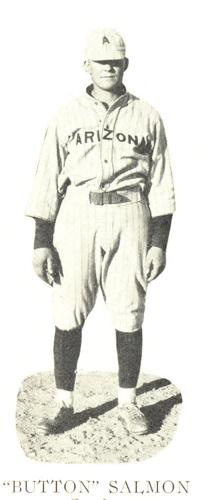
John Byrd “Button” Salmon in his University of Arizona baseball uniform.
Though small in stature, Salmon was a big man on campus.
At the time of his death, he was student body president and the starting quarterback for the football team. He was also an active member of the Sigma Nu fraternity and several honorary campus clubs.
Salmon starred in football, baseball and basketball at Bisbee High School, where he also performed in plays, served on the student council and handed out presents at the school at Christmas while dressed as Santa.
The way he threw himself around the college gridiron with his shock of strawberry blond hair prompted his teammates — and the newspaper — to call him “The Leaping Tuna.”
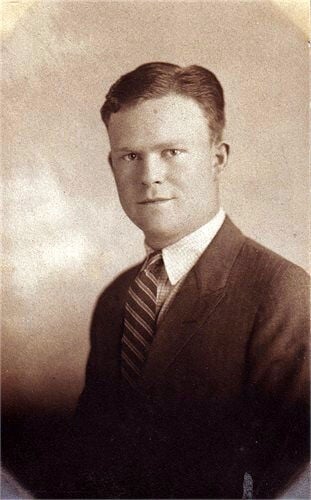
John Byrd “Button” Salmon in his U of A yearbook photo from 1925.
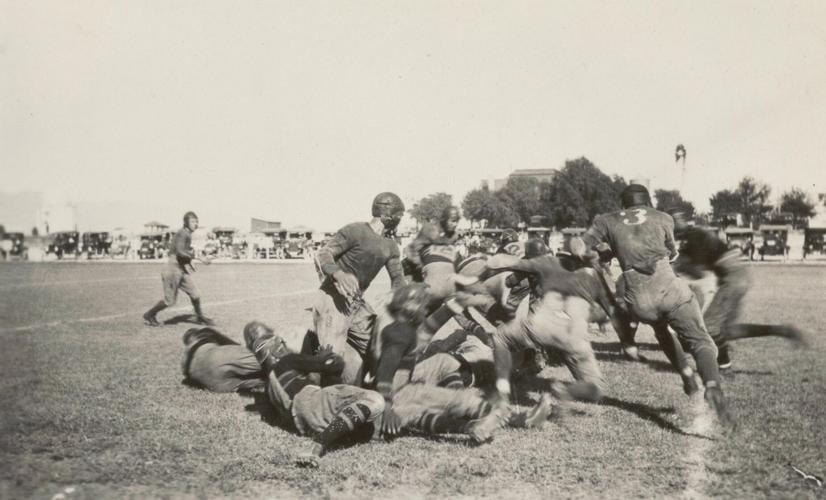
During the 1925 season, the Star singled out Salmon as the Wildcats’ lone bright spot in a rout by USC, then credited his defensive play and “educated toe” on punts for helping Arizona secure a scoreless tie against the University of Nevada.

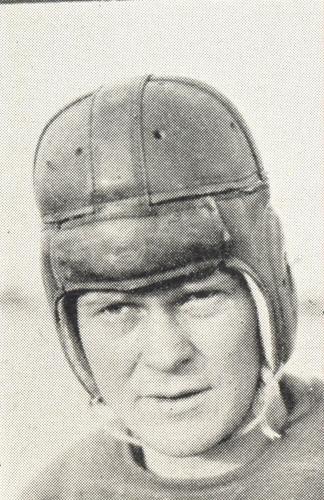
John Byrd “Button” Salmon in his football helmet
But baseball may have been his true calling. He started at catcher for the Wildcats for three seasons — minus an early dismissal from the team by coach J.F. "Pop" McKale in 1924 for violating “training rules” — and played with touring club teams during the summer. He reportedly turned down a contract from the Double-A Arkansas Travelers in 1926 to return to the U of A for his senior year.
Not bad for a 5-foot-8-inch Arizona kid who weighed less than 150 pounds.

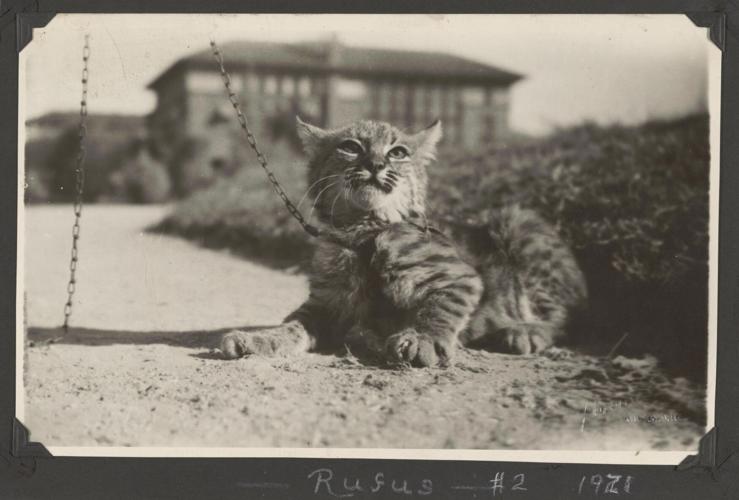
Rufus II, the live bobcat used as a mascot at the University of Arizona, is shown in a 1921 photo from the scrapbook of U of A graduate Bill Bowers, who went on to serve in the U.S. Navy and is credited with rescuing the USS Arizona bell that hangs at the Memorial Student Union from a Navy scrapyard.
The U of A had an actual bobcat as its mascot during Salmon’s time.
Arizona’s first live mascot was a bobcat purchased by the freshman football team for $9.91 from a U.S. Army blacksmith stationed in Douglas. The animal was introduced to the student body at an assembly on Oct. 18, 1915, and was soon named Rufus Arizona in honor of then U of A President Rufus B. Von KleinSmid.
Rufus (the cat, not the president) died by hanging six months later when his chain became tangled in the branches of a tree he was tied to.
His replacement, Rufus II, was still around when Salmon was in college, and live mascots continued to be kept off and on until Nov. 7, 1959, when the costumed human Wilbur the Wildcat made his debut at a football game between the U of A and Texas Tech.

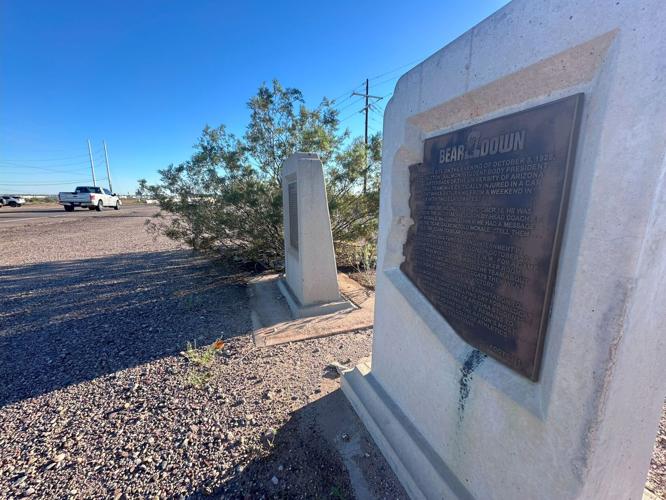
The University of Arizona’s “Bear Down” legend is memorialized on a historical marker along Arizona Highway 79 in Florence, just north of the Gila River.
The precise location of Salmon’s fatal car crash seems to be lost to history.
On the night of Oct. 3, 1926, he was headed back from Phoenix with teammate and fraternity brother Ted Diebold and classmate Betty Monaghan when their car left the road and overturned.
The crash occurred somewhere just north of Florence on the Phoenix-Tucson highway, a gravel road that has been largely erased by present-day Arizona Route 79.
News accounts of the accident varied. The Arizona Republic reported that the trio was rushing at high speed to get back to the university, with Monaghan at the wheel. The Star said the car left the road at a sharp turn three miles outside Florence. And the Wildcat campus newspaper described how the Dodge roadster swerved out of control after hitting a patch of loose sand at the bottom of a long hill.
The rollover damaged Salmon’s spine and left him paralyzed from the chest down. He would die from his injuries two weeks later.
The other occupants of the car were not seriously hurt, though Diebold sustained what the papers called a “wrenched ankle” that threatened to sideline him for the U of A’s next game but would not keep him from serving as one of Salmon’s pall bearers.
In 2001, the Arizona Department of Transportation placed a historical marker along Route 79 just north of the Gila River in Florence to commemorate the crash and the “Bear Down” legend that grew from it. The marker states that the fateful accident occurred “near this site” but offers nothing more specific than that.

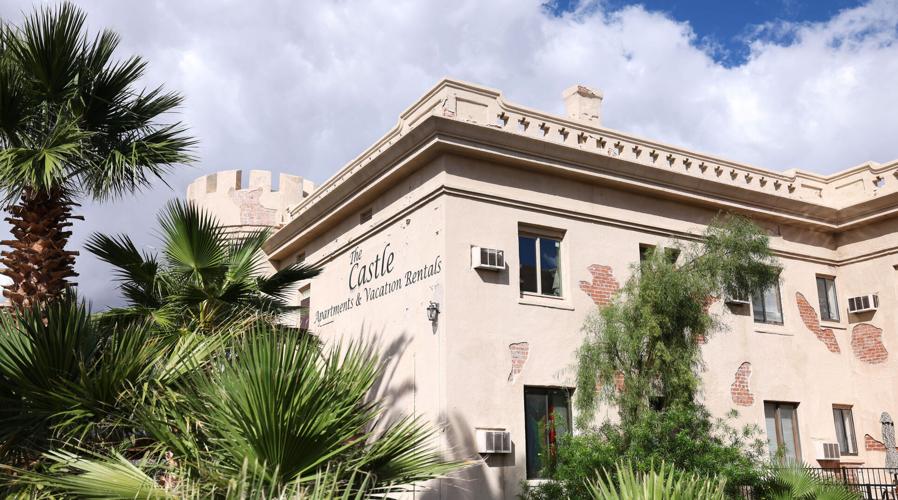
The Castle Apartments, 721 E. Adams Street in Tucson, photographed on Oct. 13, 2026. In the 1920s and 1930s, the building operated as Southern Methodist Hospital.
The hospital where "Button" Salmon died is now a castle-themed apartment complex.
The critically injured 22-year-old was picked up from the crash scene by a passing motorist and driven to Florence for treatment. The following day, an ambulance transported him to Tucson, where he underwent surgery and showed some initial signs of improvement at Southern Methodist Hospital, about a mile north of the U of A.
The medical facility at 721 E. Adams St. opened in 1906 first as Whitwell Hospital, then Whitwell Hospital and Sanitorium, before taking on the Southern Methodist name right around the time Salmon was a patient there.
According to detailed accounts in the Star, Salmon was X-rayed and examined by a team of doctors, then operated on to remove a hemorrhage thought to be pressing on his spinal cord. He reportedly regained some movement in his arms and hands, but doctors said it was unlikely he would ever walk again.
Coach McKale is said to have visited the young man daily over the next two weeks, as Salmon suffered a series of what the newspaper called “sinking spells” that finally took his life four days before his 23rd birthday. According to legend, it was during the last of those visits that McKale asked his quarterback if he had a message for the team.
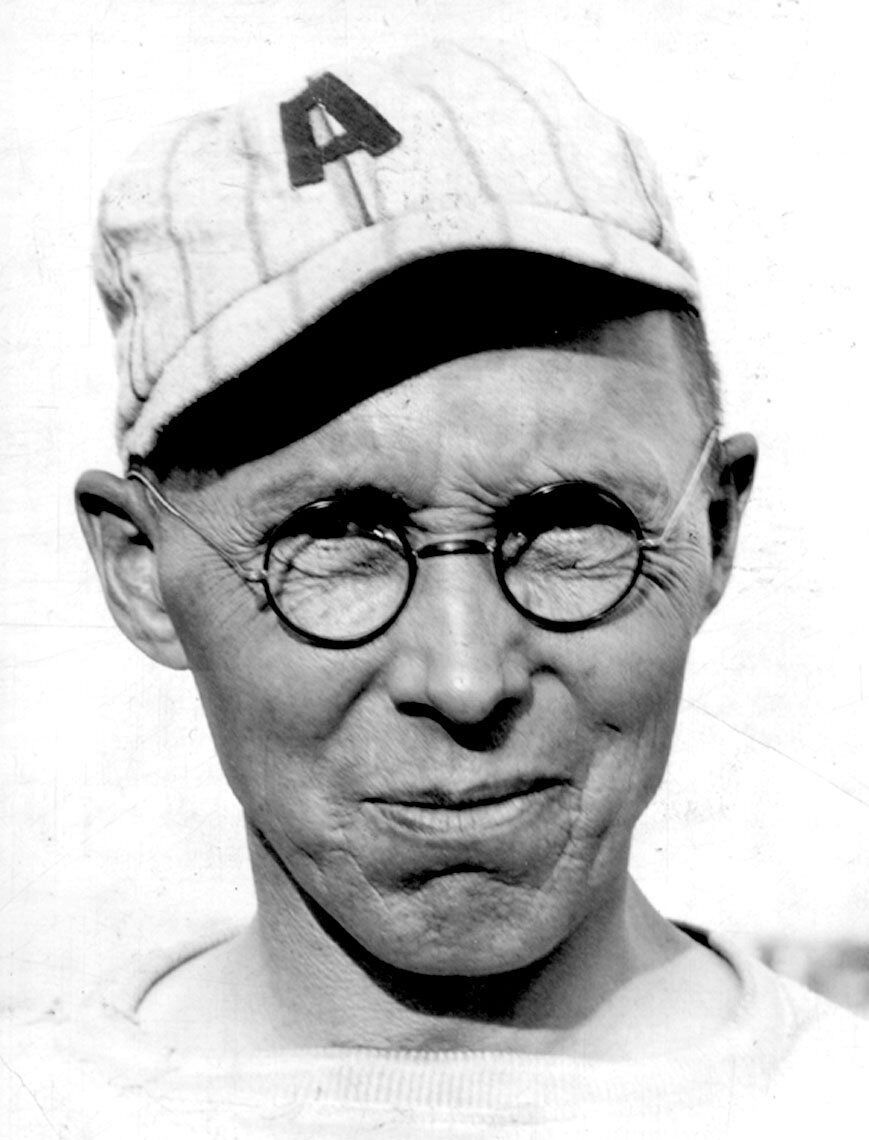
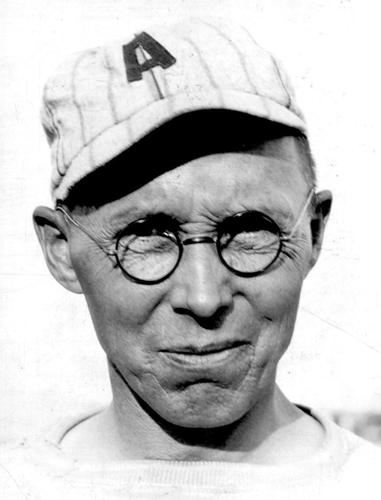
University of Arizona multisport coach James F. "Pop" McKale in 1936.
Southern Methodist Hospital closed for good in 1938. Since 1999, the building on Adams just west of Euclid Avenue has operated as the Castle Apartments, complete with a turret at one corner and a suit of armor in the lobby.

Bear Down Gym, circa 1929, took its name from ex-QB John “Button” Salmon’s last words. Salmon was killed in an car crash three months before it opened.
"Bear Down" caught on fast.
Coach McKale delivered Salmon’s message to the team before their game against New Mexico A&M in Las Cruces on Oct. 22, 1926, but the result was not the stuff of inspirational Hollywood sports movies.
According to a report the next day in the El Paso Herald, the undefeated Cats struggled to beat the winless Aggies 7-0 on a sloppy field in a blinding hailstorm.
In an interview with Star sports columnist Greg Hansen almost 60 years later, Martin Gentry, a U of A lineman who played in the game, recalled that the players were uptight, consumed with thoughts of Button and nearly lost a game “we should’ve won very easily.”

Undated Arizona Daily Star file photo of Pop McKale.
Nevertheless, news of Salmon’s words soon spread in Tucson.
At Gentry’s suggestion in January of 1927, “Bear Down” was adopted as the university’s official slogan for its athletic teams after a unanimous vote at a student body assembly.
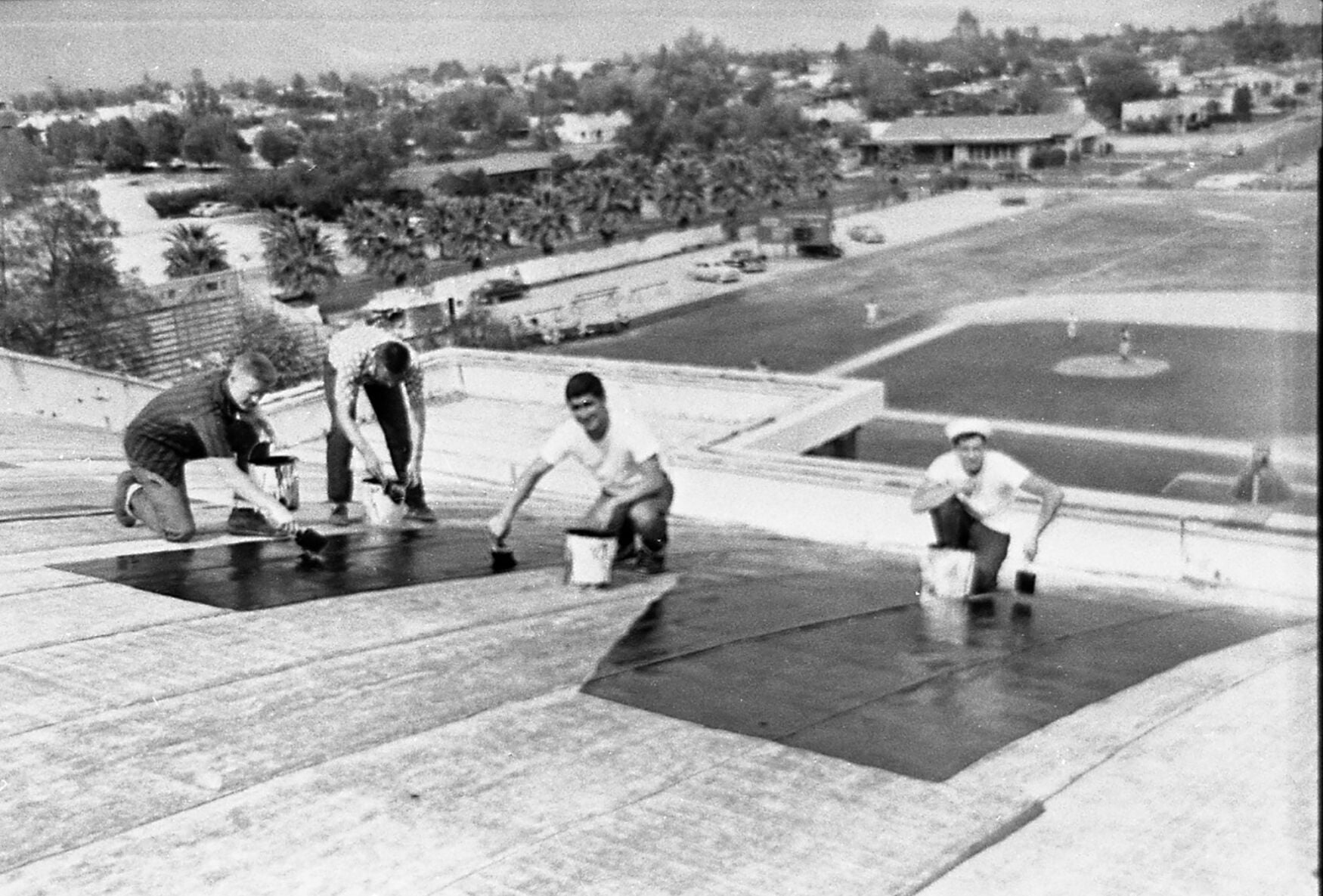
By May of that year, the words had been painted on an interior wall of the U of A’s new gymnasium and in giant block letters on the roof. The Chain Gang and similar campus organizations would organize dances and other fundraisers to cover the cost of repainting the slogan atop Bear Down Gym every few years.
Legendary U of A marching band director Jack Lee famously wrote the school’s fight song, “Bear Down, Arizona,” on an airsickness bag in 1952, after seeing the words on top of the gym during his flight home from his job interview at the university.
For the 70th anniversary of "Bear Down, Arizona,” in 2022, the University of Arizona took a look back at the origins of its fight song.
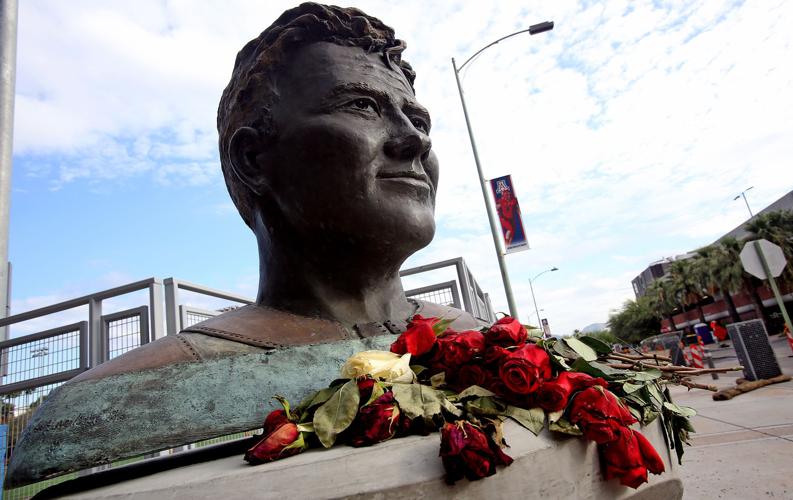
Button Salmon’s younger sister, Clyde “Babe” Lockie, and several of his former teammates showed up in 1986, when a bronze bust on a marble-clad pedestal was dedicated outside the McKale Center in honor of the fallen athlete.
The statue was moved to its current location in front of the Lowell-Stevens Football Facility outside Arizona Stadium in 2013, literally touching off a new tradition of players and coaches putting their hands on Salmon’s larger-than-life head on their way into the locker room on game days.

Roses rest at the base of the bust of John "Button" Salmon at the University of Arizona, possibly in memory of Zach Hemmila, a Wildcat football player who died in his sleep on Aug. 10, 2016, the week this photo was taken.
Carter Toole, chief communications officer for Arizona Athletics, said the statue faces southeast so Salmon can look out toward Hi Corbett Field, home of the U of A baseball team, and his hometown of Bisbee.
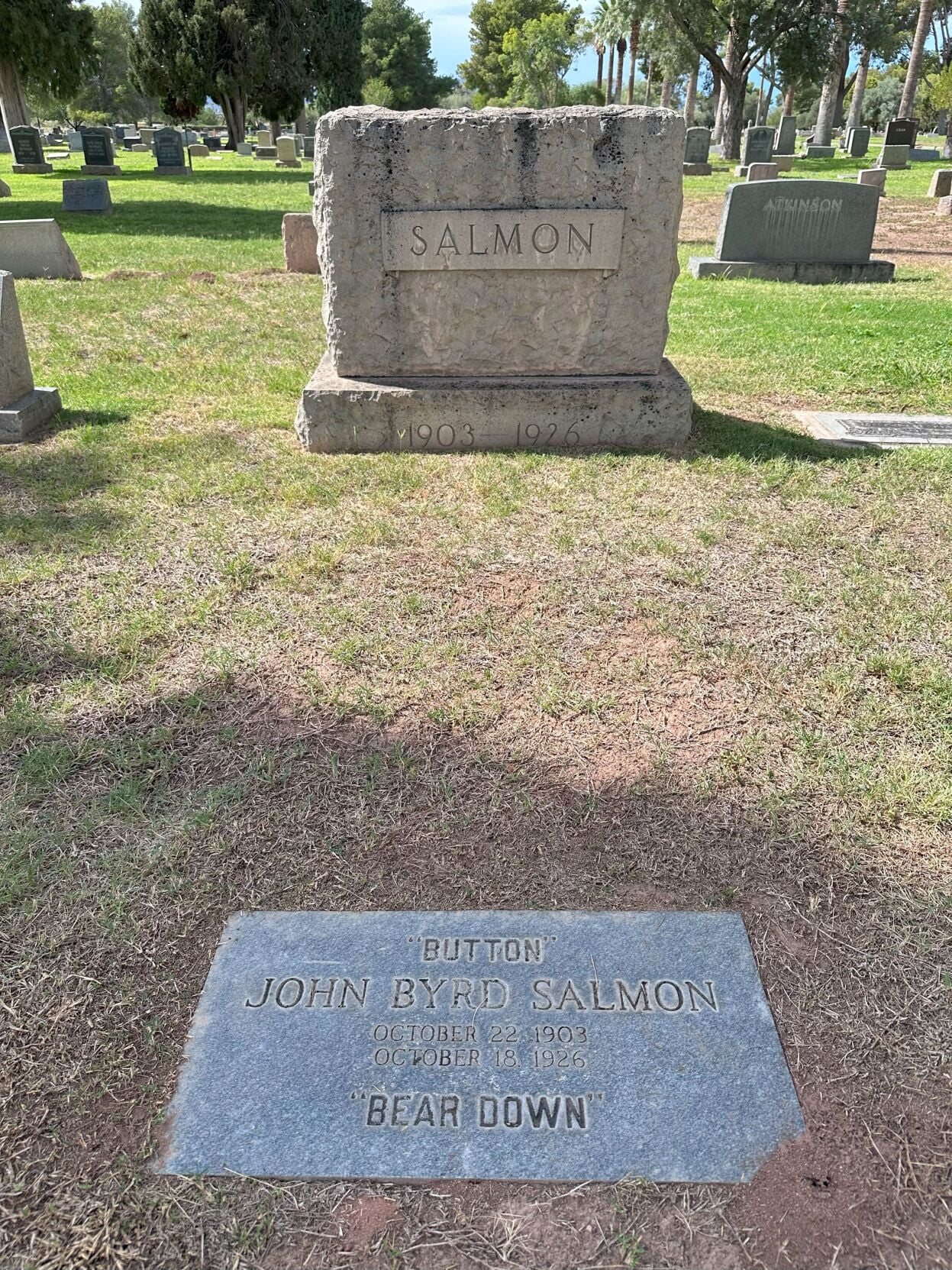
John Byrd “Button” Salmon’s grave at Evergreen Cemetery in Tucson.
Salmon, his parents and his coach are all buried in the same Tucson cemetery.
Scores of people crowded into the U of A auditorium for an assembly in Salmon’s honor on Oct. 19, 1926, and his funeral there the following afternoon.
For the 24 hours in between, his body lay in state inside the auditorium, with an honor guard of fraternity brothers and campus club mates standing watch over the flower-banked coffin.
After formal Episcopal services, conducted by a Bisbee pastor and a Tucson minister, Salmon was buried at Evergreen Cemetery.

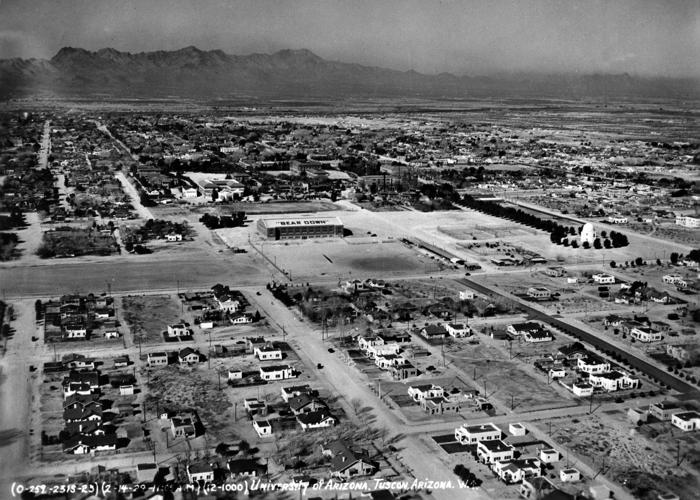
This aerial was taken in 1929 by an unknown photographer and/or pilot in the Tucson area. Spotted in it are Bear Down Gym and Steward Observatory on the right. You can see a line of trees circling Steward Observatory.
The cars lined up for the funeral procession were said to stretch for three of the four miles between the university and the cemetery.
When Salmon’s mother, Kathryn, 57, died in Bisbee in 1936, “Pop” McKale helped carry her coffin, just as the coach had done for her son 10 years earlier.
Though she never lived in Tucson, Kathryn Salmon was buried at Evergreen, a few sections away from her youngest boy. She was joined there in 1956 by Button’s father, Frank, 81, who drove a stagecoach in Texas before moving his young family to Bisbee a few years before Arizona became a state in 1912 to work as a watchman at the Copper Queen Mine.
“Pop” was the last to arrive at Evergreen. After more than 40 years as athletic director and multisport coach at the U of A, McKale passed the reins to his successor in 1958 but continued on as the athletic department’s historian and director emeritus until his death on June 1, 1967, 11 days shy of his 80th birthday.
If you know where to look, you can see the coach’s headstone from Button Salmon’s grave, no more than a 50-yard Hail Mary away.