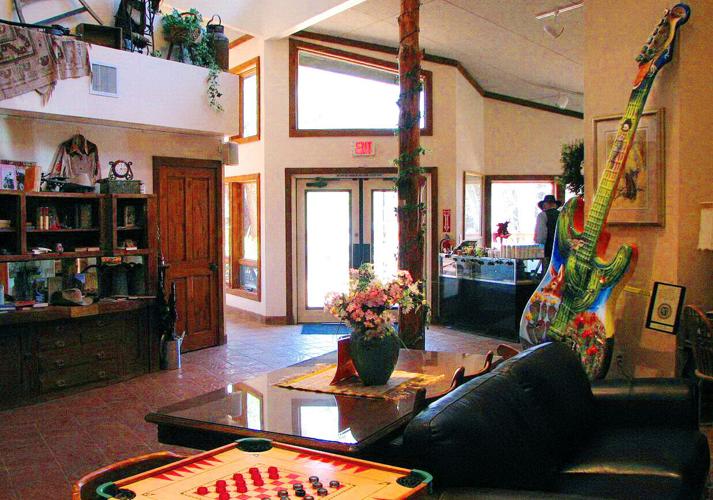
The University of Arizona has reversed its decision to sell the property that houses the Arizona Folklore Preserve, a performance venue nestled in Ramsey Canyon near Sierra Vista, now saying it will hold on to the site for five years and lease it out for continued performances.
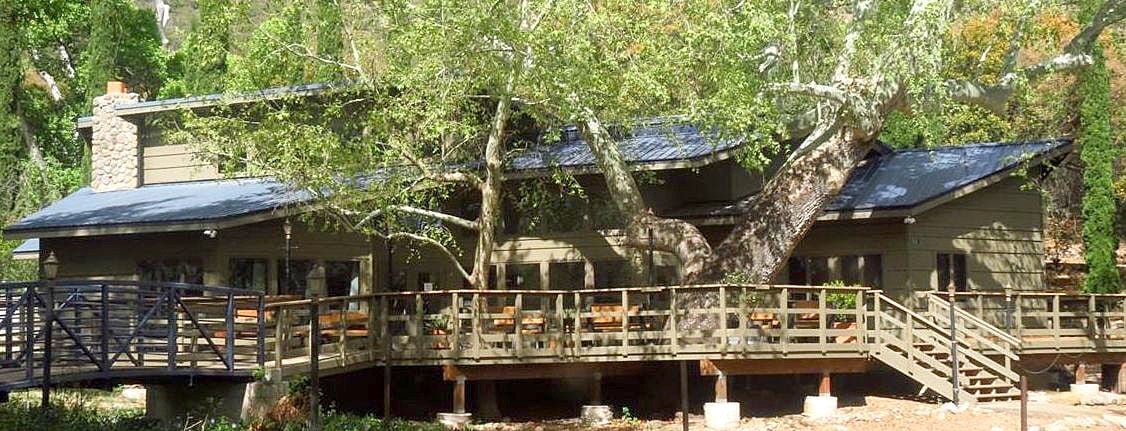
The Arizona Folklore Preserve, a nonprofit performance venue nestled in Ramsey Canyon near Sierra Vista.
“University leadership completely understands the strong desire, on the part of many, to continue Folklore Preserve performances. Thus, the university is prepared to offer an option that does not involve selling the property at this time,” said Richard Cate, UA’s senior adviser to the president for operations, in an email sent Wednesday to Arizona Folklore Preserve board members.
Cate said the UA is offering to lease the property to Arizona Folklore Preserve, or AFP, for five years for $300 a month. The preserve would be responsible for all costs related to “operating the property, including utilities, repairs, third-party services, and deferred maintenance.”
People are also reading…
AFP would also need to provide a certificate of insurance, naming the UA as an additional insured party, “with a minimum of public liability of $2,000,000 and property insurance of at least $250,000,” Cate wrote.
The change came after AFP board members and Dolan Ellis, Arizona’s Official State Balladeer and the driving force behind creation of the Folklore Preserve, spoke out against the sale. Ellis said the spirit of the gift when the AFB board donated the property to the UA decades ago was for the folklore center to be there “for generations and generations” to come.
The preserve, a nonprofit performance venue, has been dedicated to holding live performances of songs, stories, poetry and traditions of Arizona and the American West.

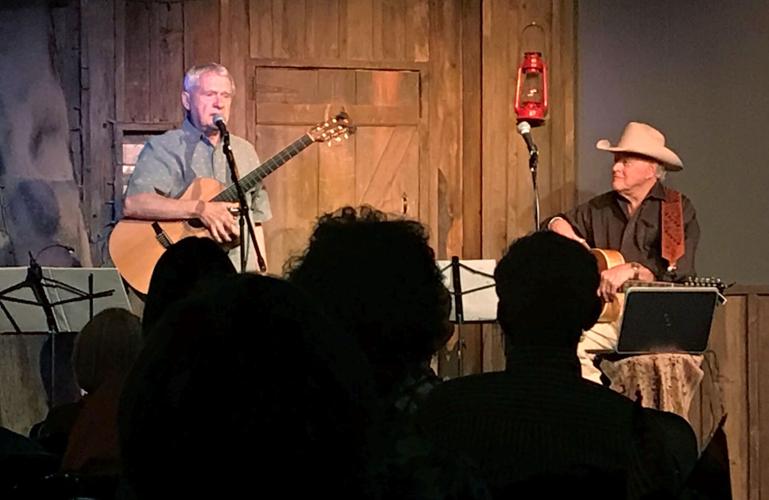
Dolan Ellis, left, an original member of The New Christy Minstrels and a nationally acclaimed singer/songwriter as well as Arizona’s Official State Balladeer, performing at the Arizona Folklore Preserve.
Cate’s email Wednesday came more than a year after the UA, in a meeting with AFP on July 30, 2025, first discussed its intent to sell the property due to the university’s “financial difficulties,” AFP posted on its website.
UA representatives told the AFP board then that they would sell the property after July 2026. As a result of that initial decision, the preserve stopped taking bookings for performers, which it would typically book a year in advance. The preserve held what were thought to be its final performances on July Fourth weekend this year and announced on Facebook that it was closing.
“This is not just a building that’s sitting empty,” Ellis told the Star. “This is a building that was built with thousands of dollars of community funds that have been donated to us to build this building and run this building and pay for our expenses.
“Tens of thousands of dollars, not of the university, but of the public. It has been run entirely by volunteerism. We have not, we do not pay a single soul. So, hundreds of volunteers have spent their time, efforts and their soul donating to this Arizona Folklore Preserve. This is more than just another building that they want to sell off. And it was not the spirit of the gift to begin with.”
In recent years, the UA also decided to sell other properties that had been donated to the university for specific uses, including the Al-Marah ranch property along Sabino Creek on the Tucson area’s northeast side, bequeathed to the university to be used as an equine center; and the late Gov. Raúl Castro’s family home in Nogales. The Castro family sued after the university abandoned plans to turn the home into an academic space. The family was awarded a six-figure settlement from the Arizona Board of Regents, which oversees the UA, in 2023, and got the house back.
UA spokespeople did not respond to the Star’s questions in the last week about the Folklore Preserve decisions, including what led UA to consider selling the property and what authority it would have to sell the donated property.
But Mike Rutherford, president of the AFP board, said it turns out there are no legal stipulations against the university selling it, much to the disappointment of the board members.
Cost concerns
Ellis said he’s “thrilled” with the UA’s offer to not sell the property immediately and to lease it to AFP for five more years. “I think it’s a sign that maybe the university is coming to their senses and wanting to cooperate with us in some manner, and I find it a very positive thing,” Ellis told the Star Friday.
But while he said it’s a good starting point, he also said he doesn’t think it’s fair that the UA will charge AFP to use a property that was donated for the Folklore Preserve in the first place.
“I’m not sure that we will be prepared to meet that offer, but that remains to be seen. I’m just anxious to see where this is going to lead. But no, I don’t think it’s fair,” Ellis said. “At least we’re talking. At least they have contacted us, because they’ve been very silent and have not contacted Mike (Rutherford). They were supposed to contact him quite a while ago on some financial statistics of the property and he’s not heard back from them. So, they’ve been kind of ignoring us, but it’s nice to see that they’re no longer ignoring us for now.”
Rutherford said he’ll consult with his board of directors on how to proceed on UA’s offer, at a meeting tentatively set for early October.
However, he said that to meet UA’s offer of paying $300 every month as a leasing fee, as well as taking care of other costs, the Folklore Preserve would have to raise ticket prices, and that isn’t something he wants to do.
“My opinion or feeling right now is that we (currently) charge $20 a person, and at the end of the year, without paying lease payment or utilities, we ended up with about $3,000. We keep the price down so people can afford to come in,” Rutherford told the Star Thursday.
“If we have to pay $300 a month lease payment, plus cover utilities and home maintenance plus an additional insurance policy, we would have to raise the prices at the door,” he said. “With gas prices as high as they are, a lot of our guests from Green Valley and Tucson wouldn’t be able to add that dollar value of gas to an increased price at the door, and I believe that it would end in a failure.”
Rutherford said he also doesn’t think the UA should ask them to pay a lease fee on a property that was donated.
The Arizona Folklore Preserve, a nonprofit performance venue nestled in Ramsey Canyon near Sierra Vista.
“We gave them a building that, at the time, cost us a million dollars, and now they’re wanting us to pay a lease on it. Of course, I don’t agree with it,” he said, “but the only positive thing about what they’re offering us is there’s a potential there if somebody stepped up and gave us a $100,000 grant or something (and) we could agree to complete performances for another year, and then renew at that time.”
History of the preserve
Ellis has been the state's first and only official balladeer since then-Gov. Sam Goddard created the position in 1966. The Folklore Preserve was born of his vision.
Dolan Ellis, left, an original member of The New Christy Minstrels and a nationally acclaimed singer/songwriter as well as Arizona’s Official State Balladeer, performing at the Arizona Folklore Preserve.
“Ellis dreamed of establishing a permanent home where the songs and stories of Arizona and the American West could be performed for contemporary audiences and preserved for future generations,” AFP said on its website.
Ellis told the Star he purchased the property that houses the preserve to break off four acres of it and start a folklore center. He said this was a dream of his because he felt the songs, stories, myths and legends of Arizona were in jeopardy of being lost and forgotten.
The preserve opened in June 1996 inside the historic Moffett House, a modest Ramsey Canyon farmhouse dating back to the 1920s, when Ellis began presenting live folk and acoustic music there. Eventually, the preserve obtained a nonprofit status, and its board members, volunteers and supporters began raising funds to establish a permanent performance center.
“In that farmhouse, in which I put about $30,000 of my own money to make it safe for the public and such, we made that our first facility — Arizona Folklore Facility,” Ellis said. He added that he collected all the earnings from the ticket prices and refreshment sales and started the new building of Arizona Folklore Preserve.

The Arizona Folklore Preserve has been dedicated to holding live performances of songs, stories, poetry and traditions of Arizona and the American West.
“We were gaining more momentum and we had gotten some very important people on our board of directors — one of them was the dean of students at the University of Arizona South as it was called then,” he said. “In our meetings, we suggested and presented the idea that maybe the university might be interested in joining us, that we were looking for safety and a home for this folklore center. We were looking for a larger entity, and we thought that the University of Arizona would be a wonderful entity to have to become our partners in this.”
In 1999, AFP’s board of directors voted unanimously to donate the Moffett House and approximately four acres of land in Ramsey Canyon to the University Foundation of Sierra Vista, Inc., after which the property was deeded to the UA.
“Representatives of the University and the Arizona Folklore Preserve also entered into a Memorandum of Understanding addressing the continued presentation of live music at the Preserve,” AFP said on its website after the UA’s decision last year to pursue a sale. “The historical documents should speak for themselves as to the precise language and obligations contained in that agreement. That history matters because the people who donated property, money, labor and other resources did so for a particular purpose. They were building and supporting a cultural institution devoted to preserving and presenting music, stories, poetry and folklore.”
The Arizona Folklore Preserve has been dedicated to holding live performances of songs, stories, poetry and traditions of Arizona and the American West.
Ellis said that in the last 25 years the preserve has hosted hundreds of Arizona and Southwestern folk artists, singers and storytellers and held about 80 shows each year. He said the UA hadn’t really done a lot of the things the board expected it to, but the members were still proud to be part of the university.
He said UA representatives informed them out of the blue that they wanted to sell the building because of university financial trouble. The board members were very upset, he said.
Rutherford told the Star last week that when they entered the memorandum of understanding with the UA, they thought it had “clout.” But when university representatives indicated they were going to ignore the MOU, he studied it more and found it wasn’t a signed contract and if they wanted to ignore it, they could. The UA has the legal right to sell, he said.
Until last year, the UA selling the property “was the farthest from our mind,” Rutherford said.
“We’ve had over 300 artists. They all feel like this is a diamond in the desert, because it was built specifically for acoustical music, live music, and the people that come there," he said. “Everybody is totally focused on the entertainment that’s broadcasted to them, because all of these artists are award-winning artists, top of the line in Western music.”
Reporter Prerana Sannappanavar covers higher education for the Arizona Daily Star and Tucson.com. Contact her at psannappa1@tucson.com or DM her on Twitter.

Prerana Sannappanavar
Higher Education Reporter