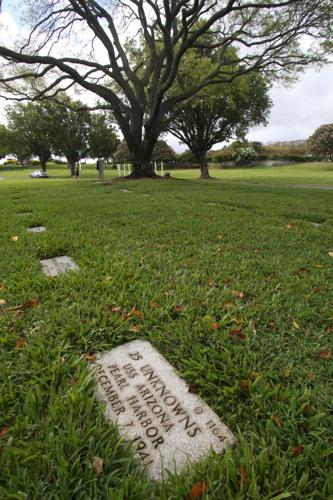
On the 85th anniversary of the Pearl Harbor attack later this year, military forensic investigators plan to launch a new effort that could lead to the identification of dozens of unknown casualties from the USS Arizona.
Defense officials have set a tentative Dec. 7 start date for the disinterment and reexamination of as many as 141 servicemen who were buried without being identified, some in mass graves, at the National Memorial Cemetery of the Pacific in Honolulu.
Spokesman Sean Everette from the Pentagon’s Defense POW/MIA Accounting Agency, or DPAA, said the investigation is expected to last at least a year and involve graves thought to contain 86 sets of commingled remains associated with the battleship Arizona and another 55 sets of remains with no known ship affiliation.
And all of it is happening thanks to a civilian-led campaign with a Tucson connection.
People are also reading…
Three years ago, Virginia real estate agent Kevin Kline launched USS Arizona Operation 85 in honor of his great-uncle, Robert Kline, a 22-year-old gunner’s mate second class who died in the Pearl Harbor attack.

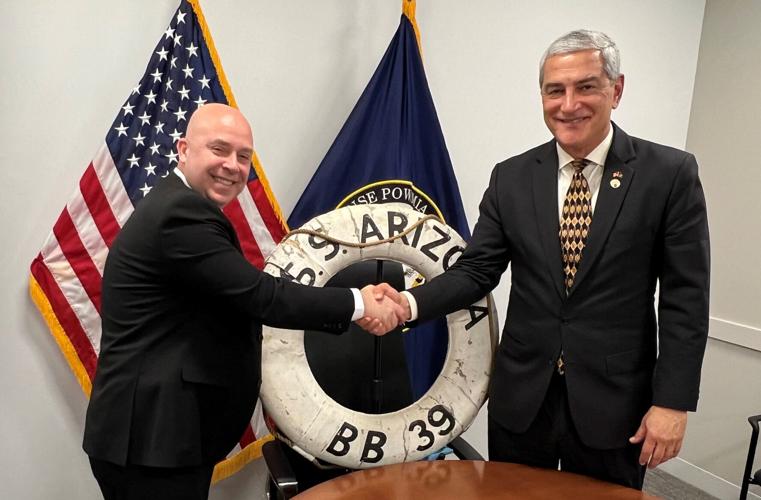
Operation 85 executive director Kevin Kline, left, meets with Defense POW/MIA Accounting Agency director Kelly McKeague in front of a life preserver from the USS Arizona battleship.
The goal of the all-volunteer project was to track down living relatives of the battleship’s crew and collect enough DNA samples from them to prompt the government to reexamine the unidentified servicemen buried in Hawaii.
Kline’s crusade got a huge boost early on from former Arizona Daily Star Editor Bobbie Jo Buel, who spent more than five years compiling profiles of every sailor and Marine who died on the Arizona. Buel’s exhaustive research helped Operation 85 track down the family members it needed, and the project’s website has become the permanent home for her profiles.
DPAA required family reference samples from at least 60% of the ship’s unrecovered crew before they would consider disinterring remains for possible identification. Kline and company surpassed that mark in late 2025, though the agency didn’t officially confirm it until last month.
Of the 1,177 crew members killed when the Arizona exploded and sank on Dec. 7, 1941, most were entombed inside the ship. Only about 200 bodies were recovered, and roughly half of them could not be identified before they were buried.
Kline is glad to know that could soon change.
“It feels great,” he said. “I think the best feeling of all is knowing how supportive and appreciative the families all are.”
The battleship itself will not be disturbed as part of DPAA’s upcoming forensic work. The sunken wreckage is managed by the National Park Service as a memorial to the more than 900 sailors and Marines who went down with the ship.

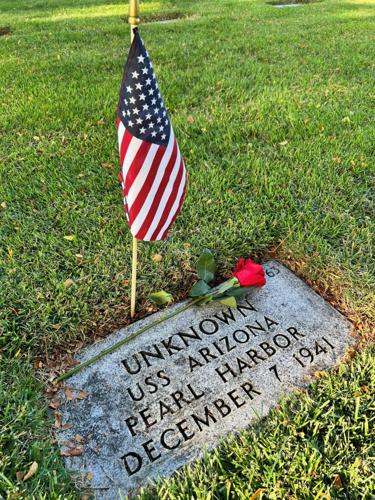
Some of the unidentified remains of USS Arizona casualties are buried commingled in mass graves at National Memorial Cemetery of the Pacific, also known as the Punch Bowl, in Honolulu.
Everette said DPAA plans to hold a ceremony for family members at the cemetery in Hawaii on Dec. 7 to mark the honorable transfer of the first bodies set to be exhumed.
Family members will also be invited to tour the agency’s lab and other facilities at Joint Base Pearl Harbor-Hickam, he said.
“As far as how long an ID takes, it can range anywhere from a couple of months to several years,” Everette said. “For these IDs, which may be heavily commingled like many other Pearl Harbor burials, it will likely take a year or more.”
Kline said one of the first graves set to be reopened could contain the remains of a 20-year-old seaman first class from Montana named Earl Leroy Morrison. During their research, Operation 85 volunteers uncovered compelling evidence that Morrison could be the man buried as “Unknown X-51,” including historical documents, chain-of-custody records, eyewitness accounts and genealogy information.

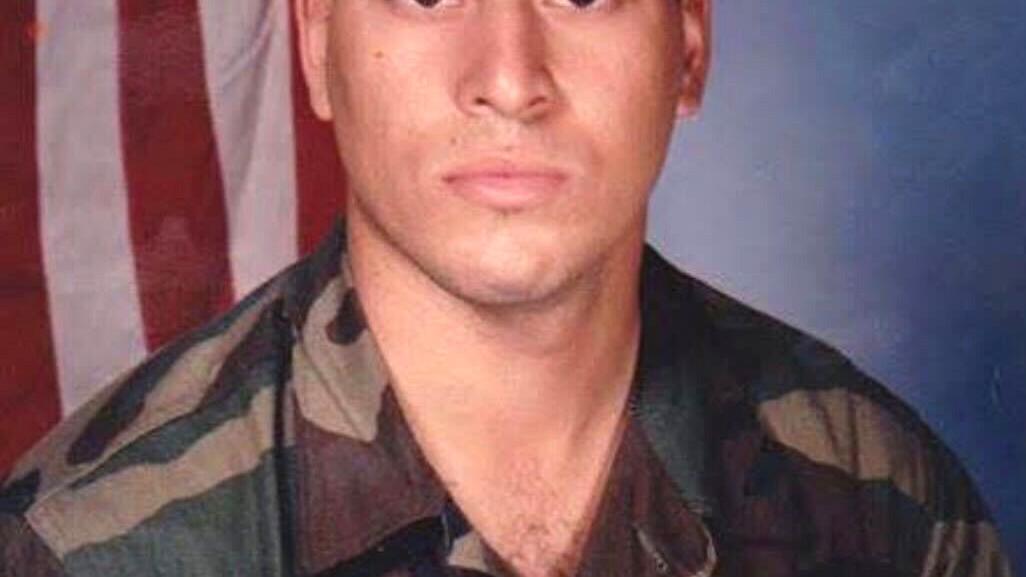
Gunner’s Mate Second Class Robert Edwin Kline was killed on the USS Arizona on Dec. 7, 1941. Like most of the 1,177 sailors and Marines who died on the battleship that day, his remains were never recovered and identified.
The fully documented identification case was submitted to the Defense Department in December, along with a formal request from Morrison’s family for further investigation.
To date, Kline and company have tracked down 1,571 family members and convinced them to submit DNA reference samples to the Armed Forces Medical Examiner System for 653 different USS Arizona crew members.
Kline said he isn’t sure how seriously Defense officials took Operation 85 at first. “I think when we hit 600 is when it started to turn for us in a good way,” he said.
On May 11, Kline was invited to DPAA headquarters in Arlington, Virginia, to give a speech in front of the agency’s entire staff of about 800. During the event, DPAA Director Kelly McKeague pinned a public service medal on him for his “herculean accomplishment.”

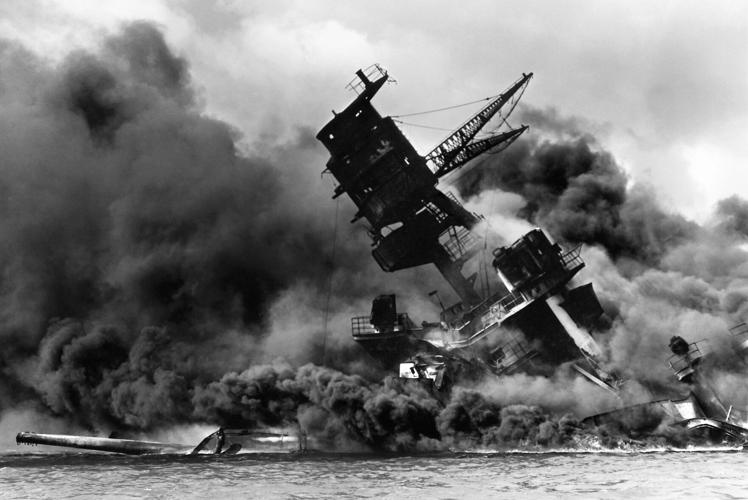
The USS Arizona (BB-39) burns after the Japanese attack on Pearl Harbor on Dec. 7, 1941.
The Air Force general described Kline as “the Op 85 force of nature, and I say that very affectionately.”
Kline is already making arrangements to be in Hawaii for the Dec. 7 disinterment ceremony at the military cemetery commonly known as the Punch Bowl, and a lot of other descendants of the battleship’s crew are planning to be there, too. He said close to 400 people have committed to making the trip or are considering it so far, including relatives of 17-year-old Seaman Second Class James Van Horn, Tucson’s only USS Arizona casualty.
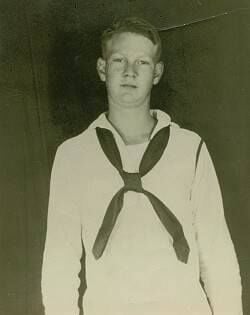
James Van Horn, 17, was the only USS Arizona crewman from Tucson to be killed in the Japanese attack on Pearl Harbor on Dec. 7, 1941.
“There’s going to be an immense amount of family members going to Hawaii and attending the ceremony,” Kline said. “I’m very happy that they’re doing something nice for the families.”
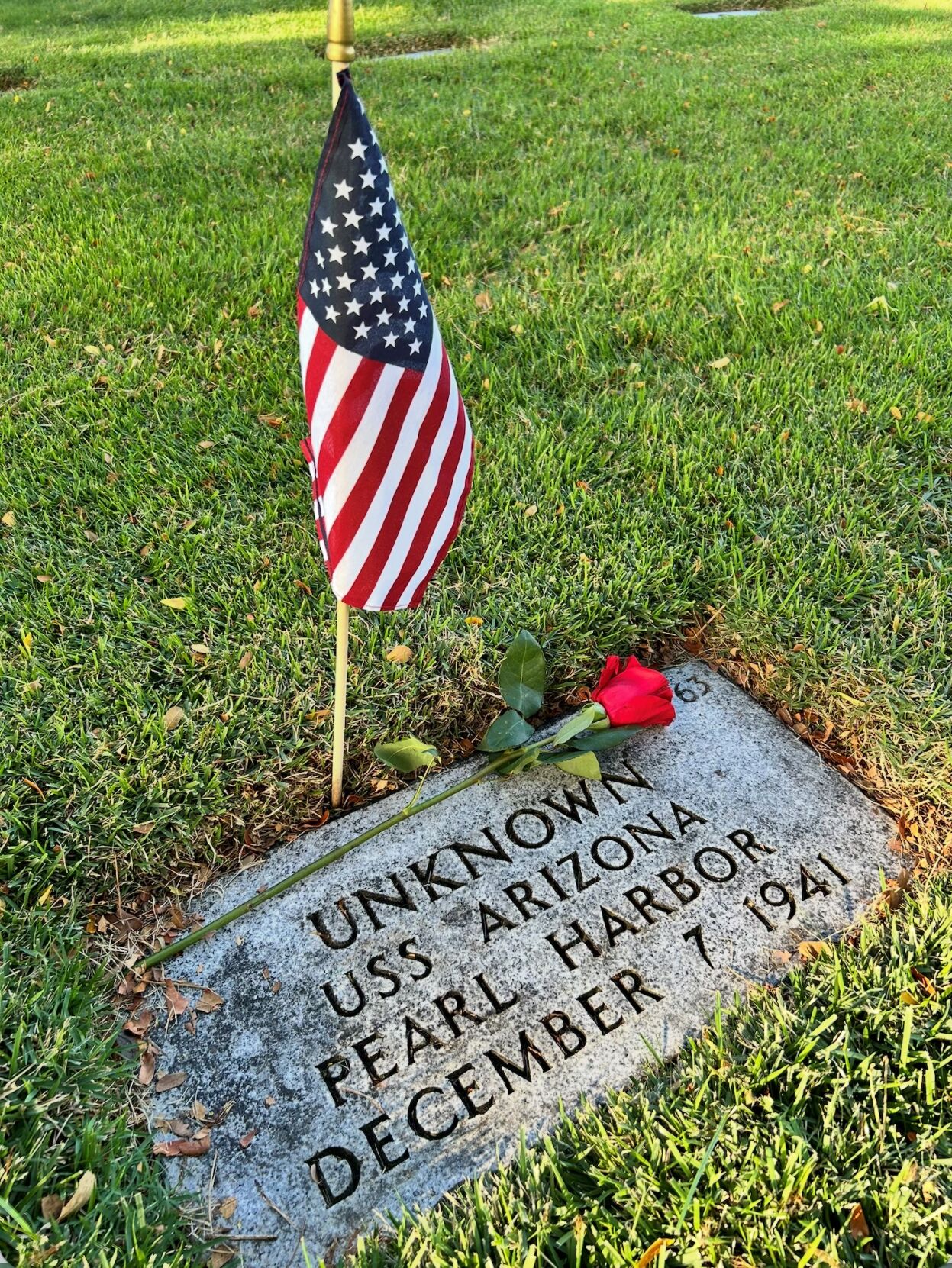
A flag and a flower mark the grave of an unknown casualty from the USS Arizona at the National Memorial Cemetery of the Pacific in Honolulu. The Defense POW/MIA Accounting Agency has confirmed plans, starting on Dec. 7, to exhume the Arizona unknowns in an effort to identify them.
Until then, Operation 85 will continue searching for more relatives and trying to drive up the percentage of crew members with family reference samples on file with the Pentagon. As of May 10, that total stood at 61%. “I would love to have 80, 90, as close to 100 percent representation as we can,” Kline said.
After all, the goal is to identify everyone.
“I don’t want to put anyone back” in an unknown grave, he said. “I want to make sure all these guys have names again by the time this is done.”



 Civilian campaign to ID unknowns from USS Arizona reaches milestone