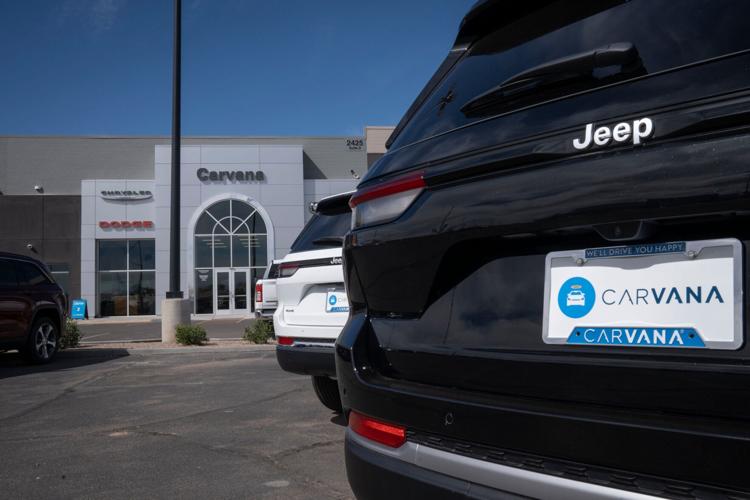
Used car juggernaut Carvana Co. has rapidly grown its business selling new cars over the last few months, data shows, using an established nationwide logistics system to ship Chrysler, Dodge, Jeep and Ram vehicles to customers who often live hundreds of miles from its nearest dealership.
Since last year, Carvana bought seven Stellantis NV dealerships spread across the country for a combined $200 million. But similar to its existing used car operation — long known for a streamlined no-haggle online buying process and home delivery — the company has been shipping its new cars to customers who live all over the country, not just near its stores.
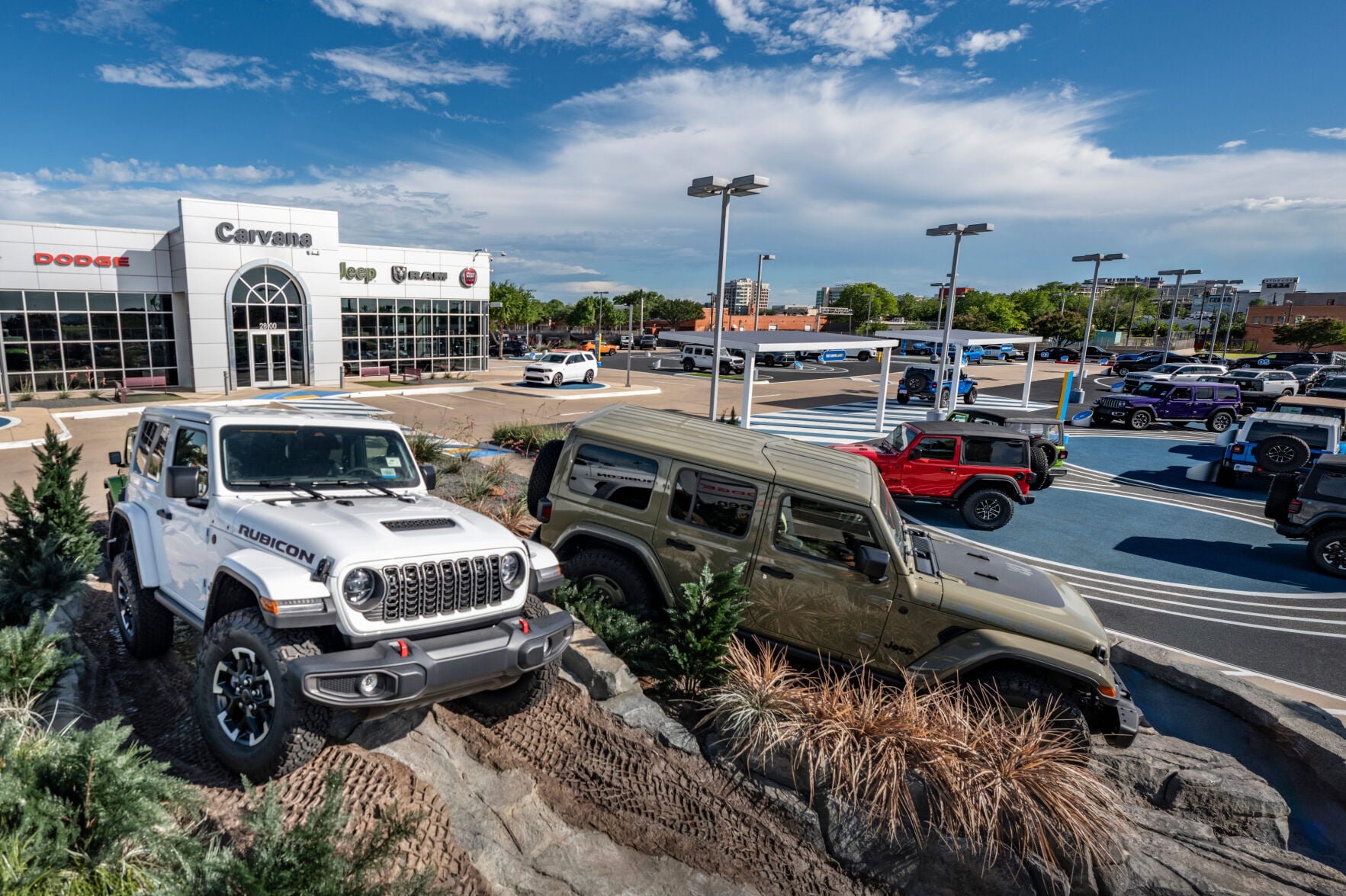
Carvana's Dallas location is a "test drive center," which includes various themed areas to check out vehicles. But customers can't show up and buy a car off the lot. The process still runs through the company's streamlined website and financing operation.
In June, for example, 1,378 new Carvana-purchased vehicles were registered in 1,205 ZIP codes across 37 states, according to an analysis by Chris Wood, vice president of automotive client strategy for USA TODAY Co.'s LocaliQ Automotive. He said Carvana has steadily opened up online ordering in more cities and states this year, from New York to Wisconsin, though Michigan shoppers still aren't able to use the company's new-car purchasing feature. Carvana often advertises free shipping and next-day delivery for the new vehicles listed on its website.
People are also reading…
Carvana's aggressive entry into the new car world has rattled some Stellantis dealers and is being closely watched by other industry insiders who wonder how it might impact an overall U.S. franchised dealership system that counts 16,990 retailers who did $1.3 trillion in sales last year.
The company hasn't publicly reported its new car sales or discussed in detail how that side of its business is performing, but the vehicle registration data compiled by Wood's research indicates Carvana is rapidly gaining steam. From March to June, its new car registrations surged by 65%, and its market share doubled — growing even as overall new Chrysler, Dodge, Jeep and Ram registrations declined. In all, more than 4,300 new vehicles purchased from Carvana were registered over those four months, surpassing such big retailers as AutoNation Inc.
"They're going to continue to grow," Wood said of Carvana's new car business. "We've seen it each month, the numbers keep ticking up. I don't see a ceiling for them at this point."
Dealer sales figures obtained by The Detroit News confirm the growth. In June, Carvana's CDJR store near Phoenix sold nearly 1,000 new cars — three times the next-closest Stellantis retailer in the automaker's 2,400-member dealer network. Before Carvana bought the dealership last year, it typically sold a few dozen new cars each month. The same Phoenix-area store continues to lead the rankings by a wide margin so far in August.
Stellantis dealers have grown concerned that Carvana could upend their dealer model and siphon away sales from their stores. They've questioned whether the automaker is treating Carvana the same as its other dealers, on rules such as website standards, allocation of vehicles, and the ability to freely ship new cars all over the country. They've also raised concerns about whether Carvana is taking care of customers, including with vehicle maintenance and repairs, at the same level their own dealerships must.
"Dealers welcome the challenge, so long as it's fair," said Sean Hogan, a Los Angeles-area retailer who heads the national Stellantis dealer council.
Hogan said Stellantis leaders have assured retailers in recent meetings that there has not been preferential treatment for Carvana. But concerns remain, especially over Carvana's service capacity and whether the company can handle customers who need assistance after the sale. Carvana says its franchises are fully operational and can support customers however they need, including with vehicle service.
Stellantis, for its part, said it's committed to treating all its dealers fairly and in line with its various dealer agreements and policies.
"Maintaining the confidence of our dealers in the fairness and integrity of the franchise system is critically important to us," a statement from spokesperson Ann Marie Fortunate said. "We remain focused on building a healthy, competitive dealer network that provides exceptional service for our customers with the brands and products they love and trust."

The Carvana Chrysler Dodge Jeep Ram dealership in Arizona, where Carvana is also headquartered, has led the CDJR nationwide dealer sales rankings for several months.
For Carvana, the entry into new cars — which CEO Ernie Garcia previously described as an "experimenting and learning" process — is made easier by its existing used car sales infrastructure. That includes its streamlined online purchase process, its existing sites for vehicle storage and reconditioning already scattered around the country, and a beefy digital advertising presence.
And unlike typical CDJR dealers, Carvana is sending its new cars all over the place: From April to June, just 27% of its new car sales were registered in the same market as one of its seven dealerships, Wood's report found. That's compared to 86% of vehicles staying in the home market for the average CDJR dealer.
While a handful of CDJR dealers also specialize in shipping new vehicles long distances to the customer's door, often out of state, it's difficult to compete with the size and scope of Carvana's existing logistics system that's already set up to sell used cars, Wood said.
Another advantage for Carvana as it quickly grows its new car sales is the company's in-house financing operation, said Kevin Tynan, director of research at the Presidio Group, an investment banking and advisory firm that works with dealers. That gives Carvana flexibility to finance a wider variety of customers, including those with lower credit scores, who a traditional dealer might not be able to serve due to more restrictive terms of the banks it works with.
“If I were looking at it through their lens, I’d be pretty happy with how things have gone," Tynan said of Carvana's foray into new vehicles, adding he'll be watching for if the company seeks to sell other brands beyond the Stellantis stable of Chrysler, Dodge, Jeep and Ram.
The new car side of Carvana's business is profitable, Garcia said on a recent earnings call where he described positive customer feedback so far. In June, the company unveiled a new concept for in-person new car shopping at its Dallas CDJR dealership that includes "playgrounds" for customers to experience various vehicles.
At the Dallas "test drive center," customers are encouraged to use their smartphones to explore Jeep Wranglers, Chrysler Pacificas or Ram 1500s on the lot in a self-directed way. But just like with Carvana's used-car business, all purchases must take place online. Carvana hasn't yet discussed plans to roll out additional test drive centers at its other Stellantis dealerships, which are located in Ohio, Massachusetts, Georgia, Arizona and California.
"I think it's still very early days," Garcia said of the company's new car business, declining to go into detail with analysts. "The operational implications of new cars are very different than used cars. In used cars, we need to kind of remanufacture those cars. In new cars, you are outsourcing manufacturing to somebody else. It's a simpler operational problem for us."
Ralph Mahalak Jr., who owns CDJR dealerships in Michigan, Ohio and Florida, said Carvana's popularity is a reminder to dealers that customers appreciate a streamlined and simple online car buying process. Many dealers already offer options to buy online or over the phone, to ship cars and do trade-in appraisals in customers' driveways. But he said dealers don't always do a good job of communicating those flexible options to customers.
"If you want this quick, easy Amazon experience," he said, "we can give that to you."