Jennifer McMullen had two brothers fighting during World War II, so she was happy when she landed a job as a riveter at a California Lockheed factory.
"I worked the night shift," she told USA Today via video call from her home in Whittier, California, her son Tim by her side. "I was 18 and I lived on my own, and I felt like I was contributing to getting my brothers home."
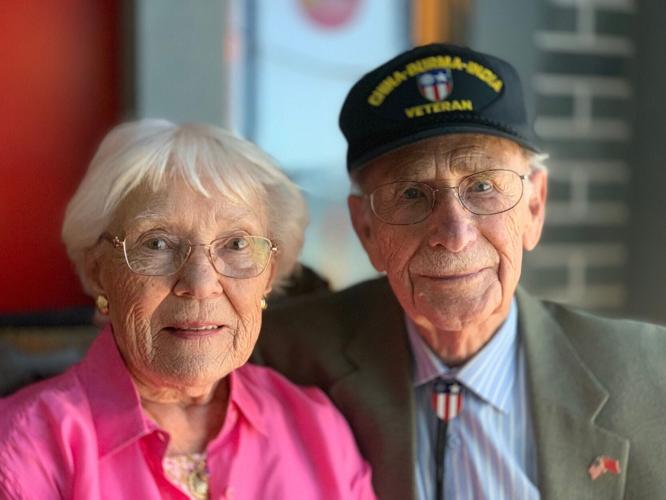
Her brothers both did come home safely, and McMullen, now 101 years old, celebrated her 80th wedding anniversary this month with her husband, Mel, at the National World War II Museum in New Orleans as it hosted 31 real-life "Rosie the Riveters."
"Rosie the Riveter" started from a song, the Library of Congress says on its website. At 19, Rosalind Walker worked as a riveter at an aircraft manufacturer in Connecticut, and two songwriters, inspired by a newspaper account of her work, penned a song called "Rosie the Riveter."
People are also reading…

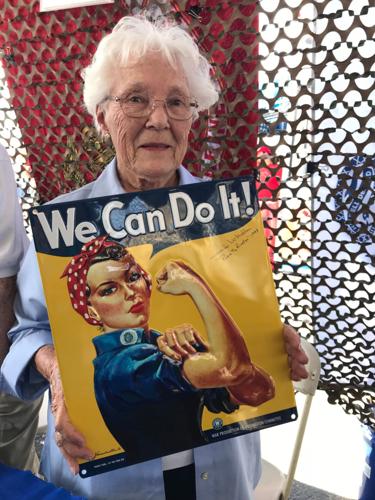
Jennifer McMullen holds a "Rosie the Riveter" poster at an air show in 2018. She was an 18-year-old riveter during World War II.
The song, and the idea, quickly caught on, and Rosie became a symbol for women who'd gone to factories and manufacturing facilities to help with the war effort. Norman Rockwell's Saturday Evening Post cover image of a woman in dungarees, holding a sandwich and wearing goggles, a riveting gun resting on her lap, and J. Howard Miller's image of a woman flexing her arm with the slogan "We Can Do It" helped solidify the idea of a strong, capable and hard-working woman.
McMullen is one of many women whose wartime work helped the Allied effort as they took on the homefront work — not just with their homes and families but also in the factories and offices that kept the country running — and changed the role of women in the workforce.
'They had to prove themselves'
A common misconception is that women stepped seamlessly into factory work while all the men went away to war, said Kim Guise, senior curator and director for curatorial affairs at the World War II Museum.
"Women were filling jobs left by men who were in the military, but there were still men working alongside them," Guise said. "Women were stepping into the workforce, many for the first time, and they were learning new skills, learning trades, and the men they worked with were sometimes OK with working alongside women."

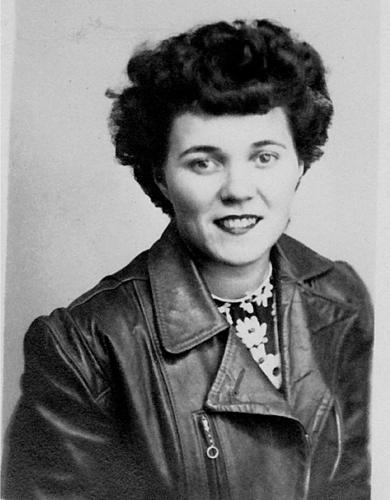
Jennifer McMullen, shown in a 1944 photo, was a riveter at Lockheed during World War II.
But sometimes, the men were not OK with women doing what until then had been viewed as men's work, she added.
Women "had to prove themselves," Guise explained: "They were not immediately always welcomed with open arms even as they were fulfilling an essential role."
Women did prove themselves, as welders and riveters, assembly line workers and in myriad other jobs.
"And there was a lot of pride in that," Guise said. "They are still very proud of what they did, what they learned and all of their contributions to the war effort."
Working under a camouflage tarp
Jennifer Conaway, born in Ohio in 1924, worked as a legal secretary after high school, and then her family moved to Arizona.
At 19, she met a young airman stationed at a nearby airfield. The two began dating, though he often talked about his younger brother, telling Jennifer, "You'd be good together."
In 1944, a friend offered her an opportunity to meet Gene Kelly, the actor, dancer and entertainer. She traveled to California and liked it there enough to stay, finding a job at a Lockheed aircraft factory. The entire area, she recalled, was covered by a tarp, painted with houses, trees and other fixtures of the suburbs, meant to conceal the factory from potential enemy surveillance or targeting.

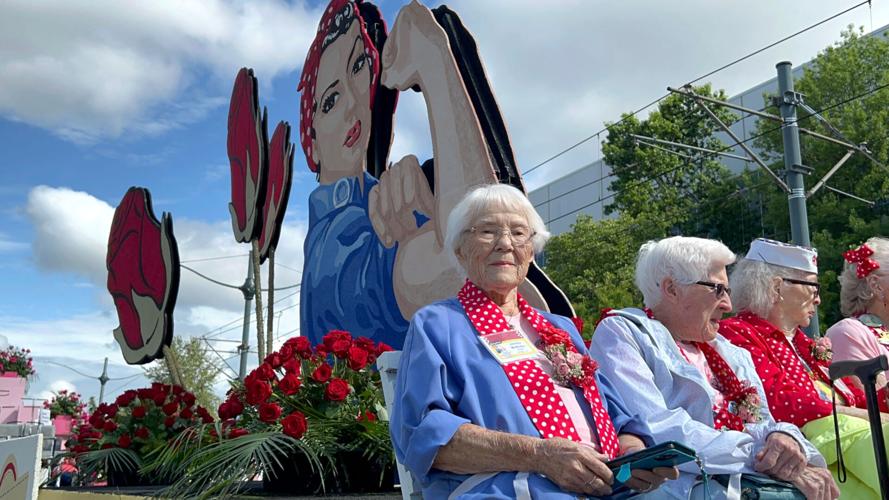
Jennifer McMullen rides on a float in 2023 marking the contributions of women like her, whose work during World War II helped the Allied war effort.
Employees worked on the planes in sections, and to preserve secrecy, they never saw the planes in their entirety. McMullen later learned she'd worked on the Lockheed XP-58 Chain Lightning, a long-range fighter plane made to improve on the P-38 Lightning.
After several months, she went back to work as a legal secretary and rented a room at the home of that young airman, since he and his brother were both still away at war.

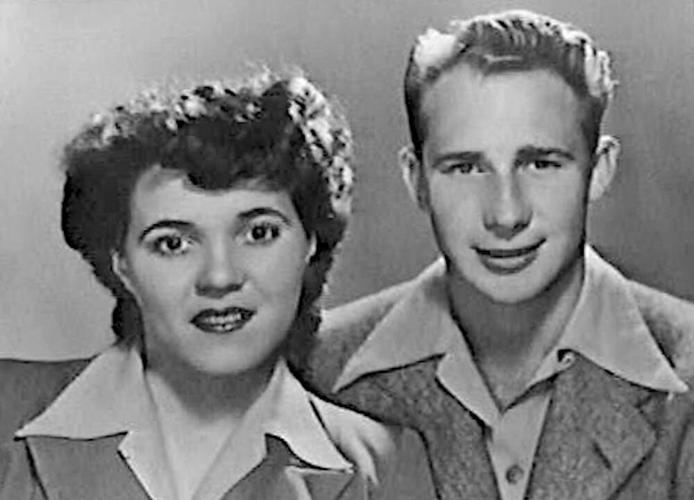
Jennifer and Mel McMullen, shown in a 1945 photo, celebrated their 80th anniversary this spring at the National World War II Museum in New Orleans.
Mel McMullen, the younger brother she'd heard so much about, returned in 1945, and within six weeks, he and Jennifer were engaged. Meanwhile, her friend and roommate hit it off well with the older brother, so they had a double wedding at Fort Douglas Air Force Base in Salt Lake City on May 13, 1946.
'Supplying the arsenal of victory'
More than 6 million American women took jobs in factories, and another 3 million volunteered with the Red Cross, while more than 200,000 women joined the military, primarily in auxiliary branches like the Women's Army Corps, Women Accepted for Volunteer Emergency Service and Women Airforce Service Pilots.
Guise noted that because the U.S. entered the war later and was geographically isolated from the frontlines, Americans were in a better position to manufacture the guns, munitions, aircraft and ships needed to fight. Much of Europe's manufacturing infrastructure had been depleted by years of warfare, and American factories were operating 24/7.
"It was an all-out effort," Guise said. "And those jobs were not always easy — welders, burners, riveters, all worked within very confined spaces, like within the holds of ships. Some jobs were dangerous and required not only skill but also physical strength."

Jennifer and Mel McMullen have been married 80 years. She was a riveter during World War II and he served in the Army Air Corps as a nose turret gunner/assistant engineer.
When the war ended, many women left the factories and turned their energy toward home, raising families and settling into domestic life. McMullen and her husband had three sons, and she was a stay-at-home mother while they were growing up. After that, she worked as a secretary at an intermediate school and later, at California State University's San Bernardino campus.
McMullen looks back on her time as a riveter with a mixture of pride and humility.
"The women jumped in and did all the things the men weren’t there to do," she said. "We enjoyed the work, but we missed the men in our lives. ... We did what we had to do."