“Diamonds are forever,” as the expression goes, and few gems embody that idea more powerfully than the Koh‑i‑Noor.
The famed diamond returned to the spotlight after New York City Mayor Zohran Mamdani said he would “probably encourage” King Charles III to return the diamond during the monarch’s recent U.S. visit. The comment reignited global debate over the gem’s origins, its transfer to British hands during the colonial era and decadeslong calls from countries across South Asia for its repatriation.
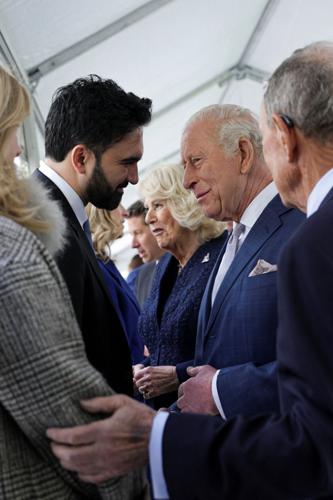
Mamdani, who is Indian American, and Charles briefly exchanged words at the 9/11 memorial on April 29 but did not meet privately during the visit. Neither Buckingham Palace nor Mamdani’s office responded to a request for comment from USA Today, and it remains unclear whether the Koh‑i‑Noor was discussed during the monarch's trip.
Still, Mamdani’s remarks were enough to put the Koh‑i‑Noor, whose name translates to “Mountain of Light,” back into headlines, renewing public scrutiny of its violent history and how it ultimately became part of the British royal family’s Crown Jewels.
People are also reading…
From India to UK

Britain's King Charles, standing next to Queen Camilla, interacts with New York City Mayor Zohran Mamdani on April 29 during a visit to the 9/11 Memorial in New York City.
Found centuries ago in the Golconda mines of southern India, though its exact discovery date remains unclear, the Koh‑i‑Noor is wrapped in allure and mystique. Originating in the Indian subcontinent, modern day Pakistan, India, Bangladesh, Nepal, Sri Lanka and Bhutan, the diamond’s story went beyond borders, eras and empires, continuing to captivate the world, according to Britain’s Historic Royal Palaces.
The jewel previously was owned by India's Mughal emperors, shahs of Iran, emirs of Afghanistan and Sikh maharajas, according to the Historic Royal Palaces charity.
Britain's then colonial governor-general of India — James Broun-Ramsay, Lord Dalhousie — arranged for the huge diamond to be presented to Queen Victoria in 1850 after the East India Company annexed the region of Punjab in 1849 and took the diamond from a deposed Indian leader.
The British colonization of India and widespread atrocities committed against Indians during that period remain sensitive issues in the country. India previously said the diamond was a "valued piece of art with strong roots in our nation's history." Many Indians see British possession of the gem as a symbol of colonial atrocities during British rule.
India obtained independence from British rule in 1947.
Is it cursed?
Rumors about the Koh-i-Noor and its “curse” circulated since the gem arrived in England.
However, there is no concrete evidence that points toward the stone bringing ill fortune to its wearer. Interestingly, media reports at the time suggested the queen was immune from the curse because she was a woman.
Lord Dalhousie, in one of his diary entries, blamed the rumors of the curse on the British press. He even suggested Her Majesty return the diamond to him so he could get to the bottom of it. But Queen Victoria and the royals were reluctant to part with it because of the gem’s value and glory.
The royals eventually had the diamond restyled to suit a more European palette, effectively reducing it from 186.1 carats to 105.6 carats — a loss of more than 40% of its weight and mass.
The diamond subsequently was used by Queen Victoria and her successors in various settings, including in a brooch and bracelet, before being set in the crown of Queen Elizabeth the Queen Mother, where it remained since, despite calls from countries in the Indian subcontinent to return the jewel.
Dr. Nadhra Shahbaz Naeem Khan, associate professor at the Lahore University of Management Sciences in Lahore, Pakistan, and founder of Sikh Virsa Pakistan, dedicated to showcasing Sikh-period antiquities such as the Koh-i-Noor, described the gem as "a mnemonic of South Asian grandeur," which is "forever a reminder of the unappreciative British eyes.”

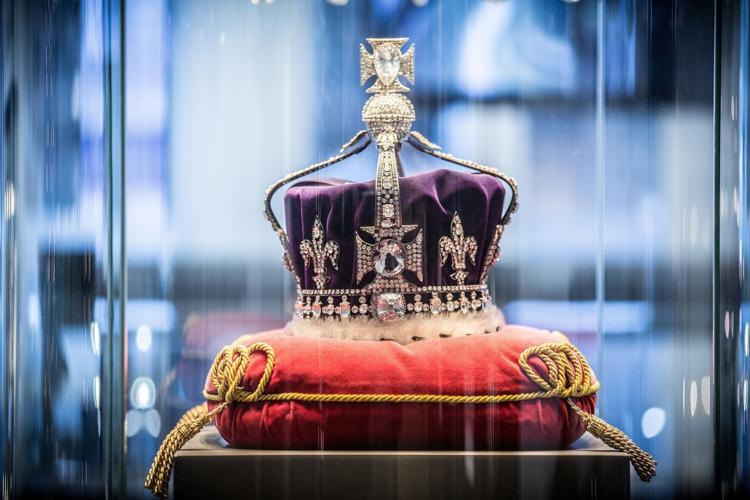
Crown of the Queen Mother replica at Royal Coster Diamonds exhibition
What is its value?
It is hard to ascertain the value of the Koh-i-Noor, given its history, power and significance.
Lord Dalhousie, while describing it, wrote:
“When Runjeet Singh seized it from Shah Shoojah (the Doorani Emperor) he was very anxious to ascertain its real value. He sent to the merchants at Umritsir, but they said its value could not be estimated in money. He then sent to the Begum, Shah Shoojah’s wife. Her answer was thus: 'If a strong man should take five stones, and should cast them, one east, one west, one north, and one south, and the last straight up in the air, and if all the space between those points were filled with gold and gems, that would not equal the value of the Koh-i-noor.'”