

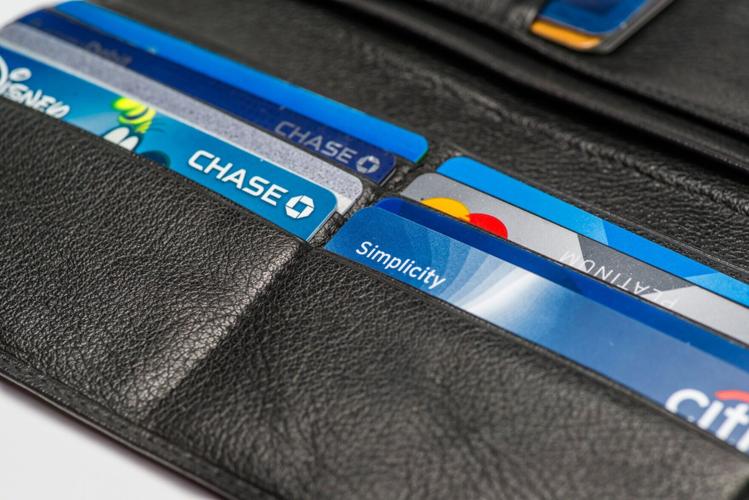

Americans hold roughly $1.25 trillion in credit card debt, with the average consumer carrying $6,595 in balances. Delinquency rates are at their highest level in 15 years. Much of that debt is incurred by people just trying to manage everyday expenses in an era of rising prices.
If you’re carrying a huge balance on your credit card, you already know you’re digging yourself into a deeper hole every month. Paying only the required monthly minimum guarantees that the accumulating interest will overwhelm your ability to make a dent in your debt.
It’s not just the higher interest rates on credit card debt, which now average 21.5%, that can get you in trouble. The way some card issuers calculate the minimum monthly payments, it could take decades to pay down that balance. And along the way you could easily pay interest totaling three times the amount you originally charged.
People are also reading…
This is debt quicksand. The more you struggle, the more you are entrapped. You can find the formula your bank uses to calculate the minimum payment — and an illustration of how long it will take you to pay off your debt — in the fine print of your credit card statement.
Or, to see a specific example of how your own debt prison is overwhelming you, go to the credit card calculator at Greenpath.com, and search for “credit card minimum payment calculator.”
You can enter your outstanding balance, the interest rate, and the current minimum monthly payment. It will instantly calculate how long it will take you to pay off the balance — and how much interest you will pay along the way.
Dealing with debt
I’ve often warned about taking money out of a retirement account to pay off credit card debt. You’ll have less money, and less flexibility when you’re retired. But do the financial calculations. It’s unlikely that your retirement investment gains will outpace your debt finance charges.
But you must calculate the tax and penalty impact of withdrawing from your retirement savings. If you are younger than age 59 1/2, there is a 10% penalty on early withdrawals. Plus, the amount you withdraw is added to your income — your taxable income. So, you’ll need to set aside extra money for taxes. And if you’re a senior, that taxable withdrawal could push you into a higher tax bracket for Medicare premiums.
The alternative is figuring out how you could possibly bring in more money. Is there something you could sell to pay down your balances? Could you rent out a room in your house to a carefully vetted member of your church or community? Do you have a way to earn extra money — such as pet sitting or driving a neighbor on errands.
Or could you lower your monthly expenses by moving back home with your parents, or moving in with a friend, or offering to do household chores in exchange for room and board with a senior citizen?
Paydown strategies
If you can earn just a bit more every month, there is one simple strategy for reducing the time and interest to pay down your credit card debt. Just pick one card and write down the current minimum monthly payment. Then pay double that amount. And every month after, continue to pay that original “double” amount. Don’t charge another penny. The card balance will be paid off in less than three years — and you’ll save a fortune in interest.
Another strategy is to transfer your balance to a card with a grace period of from 12 to 21 months with zero interest. You’ll pay a steep fee for the transfer, typically 3-5% of the amount you transfer. But it may be worth it. If you keep paying the lower required minimum on that balance transfer card, it frees up cash to use the “double payment” strategy on your other cards.
A word of warning: At the end of the zero-interest grace period, your interest rate will skyrocket to as high as 28%! You must use the breathing room period to pay down your overall debt.
Find a balance transfer card at Bankrate.com. Look for a card that not only has the longest grace period, and lowest transfer fee, with no annual card fee. Check details because one missed payment could invalidate the deal.
Using balance transfer cards is like a game of musical chairs. When the music stops, you’ll still owe the balance at even higher rates. So be sure you are dealing with your debt in the interim.
Get trusted help
If you’ve run out of strategies to deal with your debt, contact the National Foundation for Credit Counseling (800-388-2227). Getting advice from their non-profit member agencies doesn’t impact your credit score.
They also offer debt repayment programs, working with your creditors to lower interest rates and reduce penalties. Creditors agree to accept a lower monthly payment made directly through the agency. As a last resort, they may recommend bankruptcy.
The worst thing you can do with credit card debt is ignore it. It’s not just going to go away. It’s going to keep piling up unless you attack it. And that’s The Savage Truth.
(Terry Savage is a registered investment adviser and the author of four best-selling books, including “The Savage Truth on Money.” Terry responds to questions on her blog at TerrySavage.com.)
©2026 Terry Savage. Distributed by Tribune Content Agency, LLC.


