ISLAMABAD — Iran said it tightened control over the Strait of Hormuz on Saturday, warning mariners the vital energy route again was closed, but President Donald Trump said Tehran could not blackmail the United States by shutting the waterway.
Tehran said it responded to a continued U.S. blockade of Iranian ports, calling it a violation of their ceasefire, while Supreme Leader Mojtaba Khamenei said Iran's navy was ready to inflict "new bitter defeats" on its enemies.
Shipping sources said at least two vessels reported that they came under fire and were hit as they tried to transit the waterway. India later said it summoned the Iranian ambassador in New Delhi and expressed deep concern to him that two Indian-flagged ships came under fire in the strait.

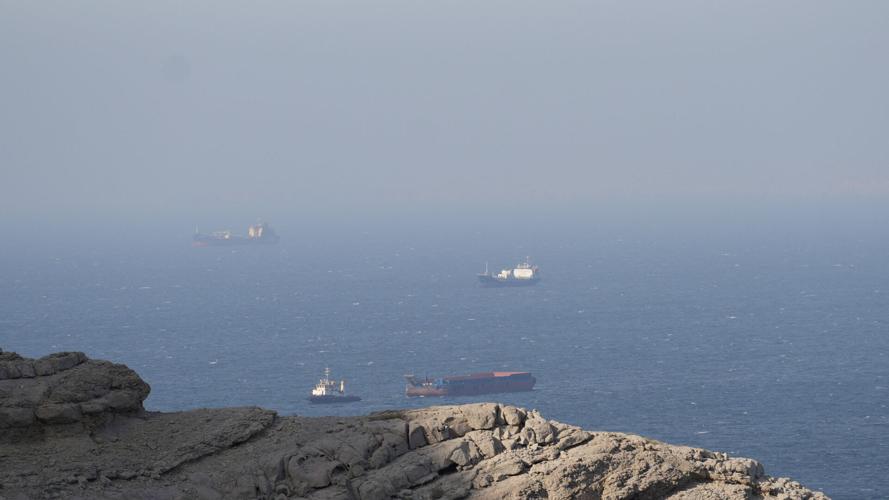
Ships and tankers are seen Saturday in the Strait of Hormuz off the coast of Musandam, Oman.
State media in Iran quoted the Supreme National Security Council as saying Iranian control over the strait included demanding the payment of costs related to security, safety and environmental protection services.
People are also reading…
State television also quoted the council as saying the U.S. put forward new proposals after talks mediated by Pakistan in recent days. Tehran was considering them but had not yet responded, it said.
There was no immediate sign of direct U.S.-Iran talks taking place over the weekend, despite Trump saying Friday that negotiations would take place.
Tehran’s renewed tough messaging caused fresh uncertainty around the conflict, raising the risk that oil and gas shipments through the strait could remain disrupted just as Washington weighs whether to extend the fragile ceasefire.
Trump said the U.S. was having "very good conversations" with Iran but Tehran wanted to close the strait again.

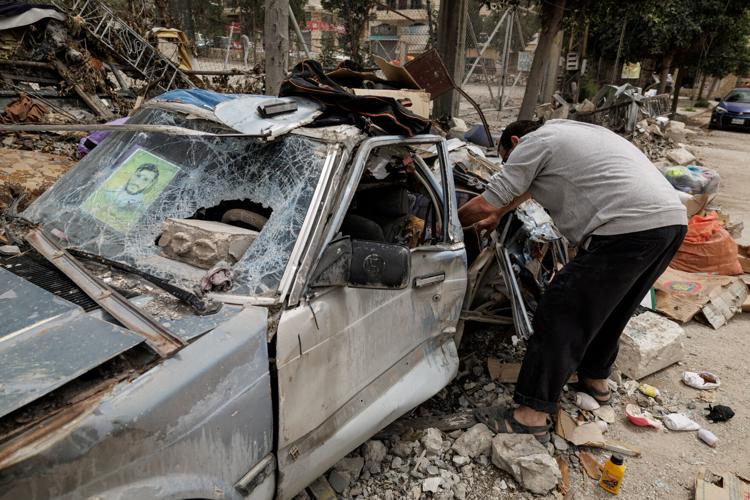
Displaced resident Hussein Kouhail retrieves belongings from his car, which he said was damaged by a March 28 Israeli strike that forced him to flee to Sidon, after he returned home in Nabatieh, Lebanon, during a 10-day ceasefire between Lebanon and Israel.
Maritime security and shipping sources said some merchant vessels received radio messages from Iran’s navy saying no ships were allowed through the waterway, reversing Friday's signs that traffic might resume.
Maritime trackers earlier showed a convoy of eight tankers transiting the narrow passage in the first major movement of ships since the U.S.-Israeli war on Iran began Feb. 28.
Iran announced it temporarily reopened the Strait of Hormuz after a separate U.S.-brokered 10-day ceasefire agreement Thursday between Israel and Lebanon. Israel invaded parts of Lebanon after the Iran-allied Hezbollah militant group joined the fighting in March.
But on Saturday Iran's armed forces command said transit through the strait reverted to strict Iranian military control, citing U.S. violations and acts of “piracy” under the guise of a blockade.
The spokesperson said Iran earlier agreed, “in good faith,” to the managed passage of a limited number of oil tankers and commercial vessels following negotiations, but said continued U.S. actions forced Tehran to restore tighter controls on the strategic chokepoint, through which about a fifth of the world's oil supply typically transits.

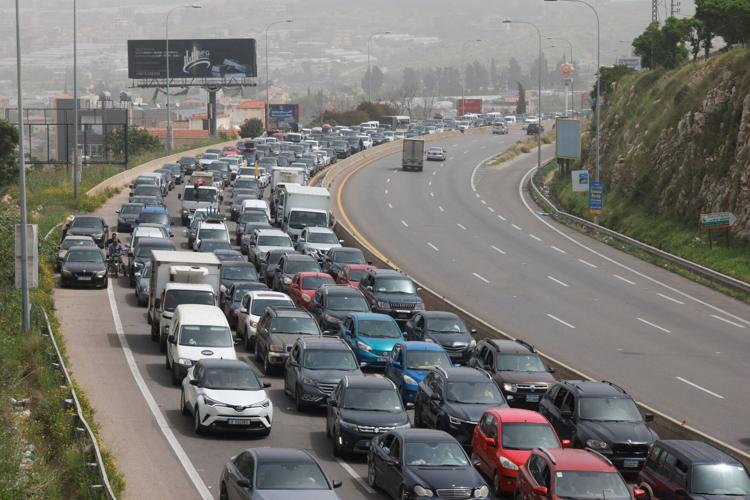
Vehicles line up Saturday in Sidon, Lebanon, as displaced people make their way to their homes after a 10-day ceasefire between Lebanon and Israel took effect.
U.S. Central Command said American forces were enforcing the maritime blockade of Iran but did not comment on the latest Iranian actions.
Citing U.S. officials, the Wall Street Journal reported the U.S. military is preparing in coming days to board Iran‑linked oil tankers and seize commercial ships in international waters.
The war began with a U.S.-Israeli attack on the Islamic Republic. It killed thousands, spread to Lebanon and sent oil prices surging because of the de facto closure of the strait.

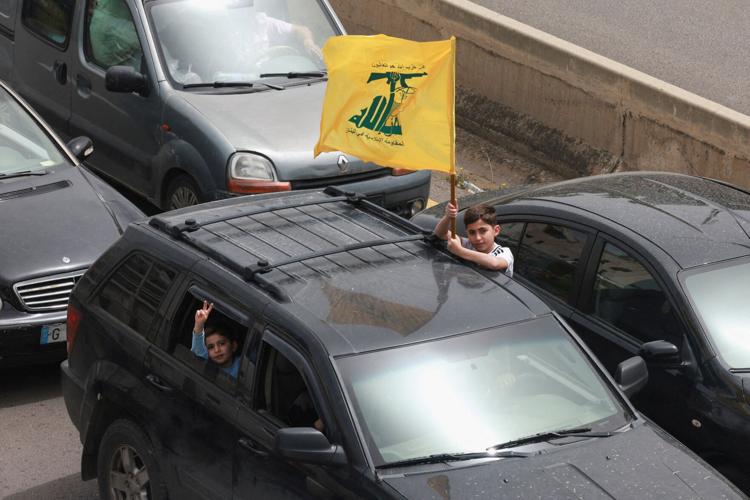
A child waves a Hezbollah flag from a vehicle Saturday on a choked highway in Sidon, Lebanon.
Pressure for a way out of the war mounted as Trump’s fellow Republicans prepare to defend narrow majorities in Congress in the November midterm elections with U.S. gasoline prices high, inflation rising and his own approval ratings down.
"The main thing is that Iran will not have a nuclear weapon. You cannot let Iran have a nuclear weapon, and that supersedes everything else," Trump said Friday.
Trump also said he might end the ceasefire with Iran unless a long-term deal to end the war was agreed before it expires on Wednesday, adding that a U.S. blockade of Iranian ports would continue.
There were no signs of preparations early Saturday for talks in Pakistan's capital, where the highest-level U.S.-Iran negotiations since the 1979 Islamic Revolution ended without agreement last weekend.

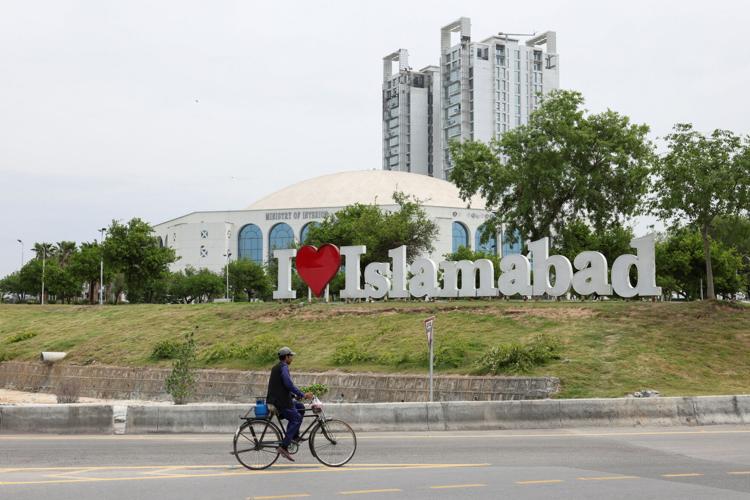
A man rides a bicycle Saturday in Islamabad, Pakistan, as the country prepares to host the U.S. and Iran for a second round of peace talks.
A Pakistani source aware of mediation efforts said a meeting between Iran and the U.S. could produce an initial memorandum of understanding, followed by a comprehensive peace agreement within 60 days.
Separately, a senior Iranian official said Tehran hoped a preliminary agreement could be reached in coming days.
Oil prices fell about 10% and global stocks jumped Friday on the prospect of marine traffic resuming through the strait. Despite that, hundreds of vessels and about 20,000 seafarers remain stranded in the Persian Gulf awaiting passage through the waterway, shipping sources said.

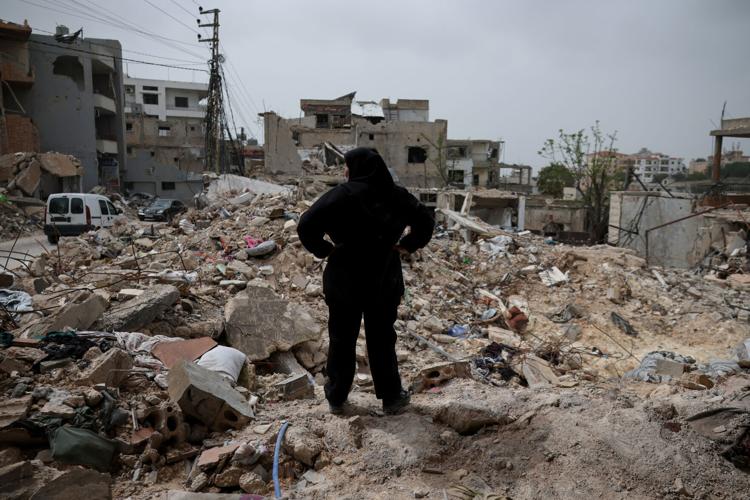
Zahra Eid, 60, looks Saturday at the rubble from her her house that was destroyed by Israeli strikes, after returning to her village, Tayr Debba, Lebanon, during a ceasefire.
At last weekend's talks, the U.S. proposed a 20-year suspension of all Iranian nuclear activity, while Iran suggested a halt of three to five years, according to people familiar with the proposals. Two Iranian sources said there were signs of a compromise that could remove part of the stockpile.
The head of Russia's state atomic energy company, Rosatom, Alexei Likhachev, said Saturday that Rosatom was ready to help with the removal of enriched uranium from Iran.