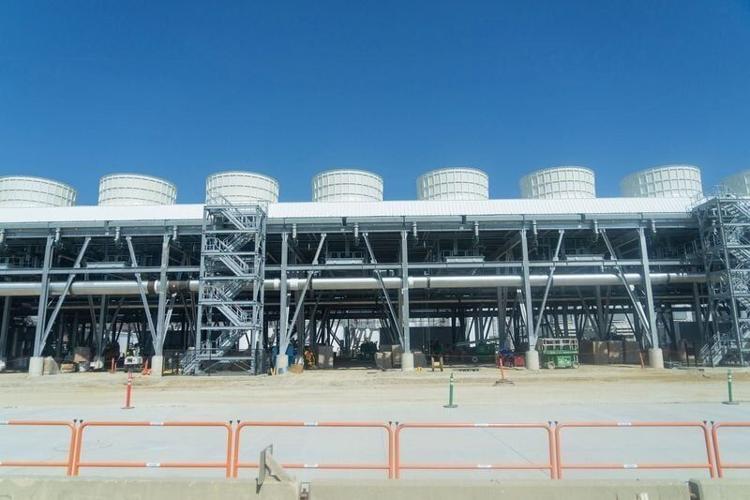
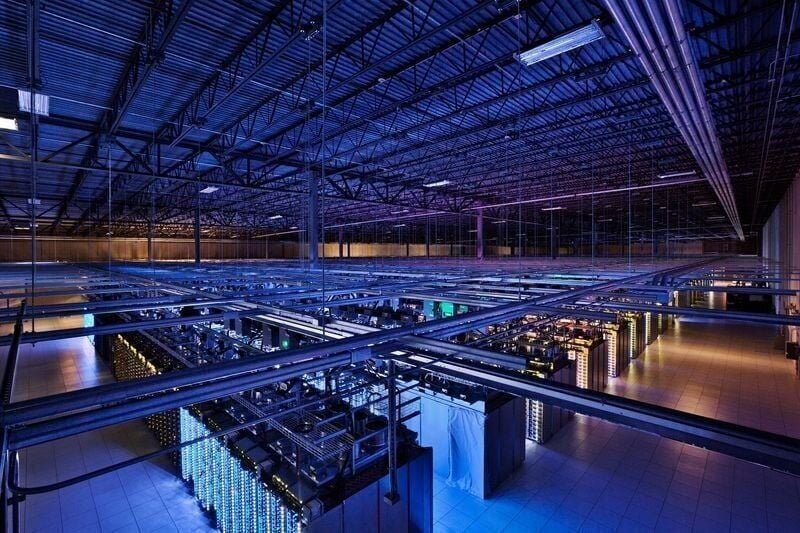
Data centers are expanding across the U.S. at a rapid pace, bringing major investment but also provoking a fierce public backlash.
The electronic hubs aren't new, but the speed and scale of their current growth has drawn national attention. Every time we stream a movie, post a video, pay with an app, save photos to the cloud or ask ChatGPT a question, data centers are humming behind the scenes.
The recent construction boom, fueled in part by the growth of artificial intelligence, has led to debate and, in many communities, organized opposition. Opposition to the projects has centered on topics ranging from the impact on power rates to the use of water.
Supporters say the developments create jobs and generate tax revenue for local municipalities.
Here are some basic facts you need to understand what’s going on.
People are also reading…
What is a data center?
Data centers are buildings filled with powerful computers that keep much of daily life online. They store photos, run apps, process payments, power websites, support cloud services and help run artificial intelligence systems.
These are not the same as the desktop computers we use at home or work. Instead, they are special machines called servers. Servers are kept on racks and are designed to store information, handle requests, and move data quickly.
A typical data center has 2,000 to 5,000 servers, housed in a building that spans as much as a million square feet, according to Pew Research.
Those servers must work incredibly fast. When you type a phrase into Google, your search travels to Google’s computers, which find results and send them back to your screen in less than a second.
A data center also needs a constant supply of electricity, backup power, cooling equipment and fast internet connections to keep the machines running around the clock.
Many data centers look like plain, windowless factories because they are built to protect machines rather than to provide a nice space for office workers. Solid walls help keep them secure, make cooling easier, and improve energy efficiency.
Why are so many being built now?
The short answer: Americans are using more digital services than ever.
For years, data-center growth was driven by the rise of cloud computing, streaming video, smartphones, online shopping and remote work. Instead of companies keeping their own servers in back rooms, more of that work moved to giant facilities run by Amazon, Microsoft, Google and other companies.
A major driver has been the rapid growth of artificial intelligence. Since OpenAI launched ChatGPT in November 2022, the need for advanced computing power has surged. Compared with traditional internet searches, which find sources and leave the user to sort out the answer, AI does the analysis itself, requiring up to 10 times more computing power.
AI adoption has grown quickly. Corporate investment in AI more than doubled from 2024 to 2025, and AI technology has already reached more than half of the public, according to a Stanford University report.
AI systems need significant amounts of computing power, which has led technology companies to search for more land, more electricity and faster internet connections.
Where are data centers being built?
It is estimated that there are about 3,000 data centers across the country, with another 1,500 planned.
They are not evenly distributed. More than a third of them will ultimately be located in three states: Virginia, Texas and California, in that order, according to Pew Research. Other states with a lot of construction planned include Georgia (141), Illinois (123) and Arizona (86).
Pew notes that most new data centers are being built in rural areas, with 67% located there, compared to 87% of existing centers that are in urban areas.
Why do some communities support data centers?
Supporters say data centers can bring billions of dollars in private investment, expand the local tax base, create construction jobs and generate revenue that can support schools and public services. Some communities also see them as a way to attract additional technology investment.
Critics note that the long-term employment impact is often smaller than traditional industrial projects, making the details of incentive agreements and infrastructure costs important.

A look at one part of the air to liquid heat exchange fans at the Microsoft data center in Mount Pleasant, Wisconsin on Sept. 18, 2025.
How many jobs do data centers create?
Compared with the size of the investment, data centers typically require fewer permanent employees than many other large development projects. In announcements reviewed by Lee Enterprises, companies frequently promised thousands of temporary construction jobs but only hundreds of permanent jobs once the data centers were operating.
Microsoft’s Mount Pleasant, Wisconsin, project illustrates the gap. The company has described it as the world’s most powerful AI data center, and construction employment peaked at 3,000 jobs. But the massive facility now employs about 375 people. The company says it plans eventually to employ 500.
CleanArc’s project to build a near-gigawatt campus near Richmond, Virginia, is enormous. But it plans to employ only 50 full-time workers.
Virginia, home to Northern Virginia’s Data Center Alley, the world’s largest data-center market, shows the pattern. A state review estimated that data-center construction supported about 59,000 jobs annually in Virginia, while ongoing operations supported about 15,000. But that includes indirect jobs. About 4,400 were direct employees of data centers.
In Loudoun County, Virginia, near Washington, D.C., data centers total 53.3 million square feet. The industry supports about 15,000 jobs, according to the county Economic Development Department.
Good Jobs First, a group that tracks corporate subsidies, found that 16 of the 36 states with data-center incentive programs did not require companies to create any new jobs. Among states that did have job requirements, many required only a few dozen positions. In one case, a $2.6 million incentive for a Chicago data center created only 36 jobs.

What tax incentives are involved?
Supporters of incentives argue they help communities compete for large technology investments that could otherwise go elsewhere.
At least 38 states offer tax incentives for data centers, according to the National Conference of State Legislatures. One of the most common is a sales tax exemption. Together, these incentives help explain why so many data centers are being built.
That means data-center owners do not pay sales tax on some of the expensive equipment they buy or on construction materials. These tax breaks are valuable because data centers are packed with expensive equipment.
At least 36 states now offer tax incentives specifically designed for data centers, according to Good Jobs First. The watchdog group found that at least 10 states are losing more than $100 million in tax revenue each year to data centers.
Virginia shows how large the numbers can get. A state review found that Virginia’s data-center sales-tax exemption cost the state $928 million in fiscal year 2023. Good Jobs First reported that Virginia’s data-center tax exemptions cost the state about $1 billion in 2024.
Texas is another example. Good Jobs First reported that data-center tax abatements cost Texas more than $1 billion in 2025.
How much electricity do they use?
Data centers account for a growing share of the nation’s electricity use. In 2023, U.S. data centers accounted for about 4.4% of total U.S. electricity use, according to Lawrence Berkeley National Laboratory. By 2028, they could consume 6.7% to 12% of the nation’s electricity.
For comparison, data centers used about 176 terawatt-hours of electricity in 2023 — more than was sold in either Pennsylvania or New York that year, according to federal energy data.
New data centers require significant amounts of electricity. For example, OpenAI and its partners plan to spend $500 billion over four years on the Stargate Project, which aims to build up to 20 AI data centers across the United States. Their long-term goal is about 10 gigawatts of capacity, which is roughly as much power as New York City uses during peak demand. In at least one case, OpenAI plans to generate its own power. In Milam County, Texas, OpenAI and SoftBank are working with SB Energy on a 1.2-gigawatt data center project.
The boom may be contributing to higher electric bills in some regions, although the industry’s Data Center Coalition denies this. Consumer advocates warn the costs could climb sharply.
One challenge for power plants is being ready for the grid’s peak demand, which is the time when everyone is using electricity at once, like on a hot summer day when air conditioners are running. Data centers cannot simply be turned off during these times. Because of this, power companies have to spend a lot to prevent outages. This means adding new transmission lines, transformers, and substations.
Those costs can show up on household electric bills, although it can be challenging to say how much of the increase is due solely to data centers. The Maryland Office of People’s Counsel tried to do that and estimated that, across its 13-state area, data centers would add about $10 to $21 a month to the average residential electric bill. Those charges are only one part of the issue.
The pressure could get worse. Reuters reported that residential electric rates in the PJM region could rise by 30% to 60% by 2030 as data-center demand grows, citing an ICF analysis. PJM serves 13 states and Washington, D.C., including Pennsylvania and New Jersey.
Some increases have already been announced. In New Jersey, state utility regulators said average home electric bills would rise by about 17% to 20%, depending on where people live. That includes South Jersey customers served by Atlantic City Electric.
In central Pennsylvania, PPL customers also saw prices rise. The company’s basic electricity rate went up on June 1, 2025. For a home using a typical amount of electricity, that works out to about $17 more a month.
In Richmond, electric bills are going up, too. The increase is not entirely blamed on data centers. But Virginia regulators are worried that data centers use so much electricity that regular customers could end up helping pay for the extra power lines and equipment they need. To help prevent that, regulators created a new rate class so the biggest power users, including data centers, pay rates based on their own costs.
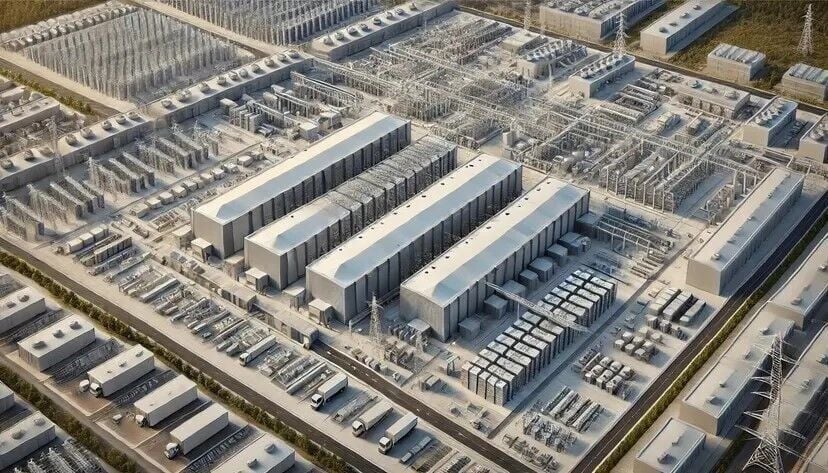
A detailed aerial illustration depicts a proposed CoreWeave US-EAST-11A Data Center as an enormous maze of buildings, transformers, powerlines and other infrastructure.
How much water do data centers use?
Some large data centers can require significant amounts of water, depending on their size, location and cooling technology. In areas where water is already limited, this can become a serious public concern.
Water is needed to cool computer chips because AI servers get much hotter than regular computers. A rack of advanced AI equipment can produce as much heat as hundreds or even over a thousand old-style incandescent light bulbs packed into one cabinet.
That heat must be removed constantly. Otherwise, the equipment overheats and shuts down.
A medium-sized data center can use as much water in a year as about 1,000 homes, according to the Environmental and Energy Study Institute. A large data center can use even more — up to 5 million gallons a day, or 1.8 billion gallons a year. This is similar to the water use of a town with 10,000 to 50,000 people.
Google alone reported using 7.2 billion gallons of freshwater in 2024. The company said it replenished 4.5 billion gallons, or 64% of what it used.

Who pays for infrastructure upgrades?
Large data centers often require new infrastructure, including electric substations, transmission lines, water systems, roads and other improvements.
In some cases, data center companies pay directly for upgrades tied specifically to their facilities. Local governments and utilities may also negotiate agreements requiring developers to cover certain costs.
But the question becomes more complicated when utilities need broader improvements to handle growing electricity demand. New power plants, transmission lines and grid upgrades may serve multiple customers, making it difficult to separate costs connected only to data centers.
Consumer advocates have voiced concerns that some expenses could eventually be shared by other electricity customers through higher utility rates. The data center industry argues that large users pay their share and provide significant economic benefits through taxes and investment.
As more projects are proposed, one of the biggest questions for communities is who benefits, who pays and how those costs are divided over time.
What concerns do residents raise?
Public opposition to data centers has become so fierce that at least 14 states have considered moratoriums on new construction, according to the National Conference of State Legislatures. Yet so far, most of these efforts have failed.
In Michigan, legislation would bar nondisclosure agreements about the developments and strengthen protection for the environment.
Erin Brockovich, the environmental activist whose story was made into an Oscar-winning film and who now maps data centers online, told MS Now recently that she hears concerns from citizens throughout the nation.
“They're very worried about their water quality,” Brockovich said. “They're worried about the water consumption. They're very worried about the electrical grid on an already strained system. Their electric rates are going up. They're worried about their health living next to one of these. And their live reports from their backyard is almost unlivable.”
A recent Gallup poll found that 7 in 10 Americans would oppose an AI data center in their own community. The concern cuts across political lines, with opposition from roughly three-quarters of Democrats and independents and two-thirds of Republicans.
According to the survey, the most commonly cited concern is environmental strain. In an open-ended survey, 46% of those polled told Gallup they worry a great deal about that impact; 24% say they worry a fair amount. This mostly concerns the effects on water and energy.
Other major concerns include the potential for higher energy bills and a lower quality of life living near a center, according to Pew Research. Residents who live near data centers complain about noise. The centers use fans, cooling equipment and backup generators that can create a constant low hum, especially near homes.
Air pollution is another concern. Many data centers use diesel backup generators. Those generators are tested regularly and may run during power outages. They can emit nitrogen oxides, fine particles and other pollutants.
Residents also worry about the basic fairness of the deal. They ask why a large technology company should get tax breaks, use huge amounts of power and water, and leave local customers with higher bills or new infrastructure costs.
Who decides whether data centers get built?
The process depends on local zoning law.
In some communities, data centers are allowed in industrial zones. In other places, the developer needs a rezoning, special-use permit or conditional-use approval. That gives local officials more power to hold hearings, demand studies and attach conditions.
Those conditions matter. Local governments can require noise limits, larger setbacks, landscaping, screening, traffic controls, water-use plans, generator limits, air permits, emergency plans and proof that the electric and water systems can handle the project.
A Pennsylvania data-center ordinance guide prepared for Chester and Montgomery counties recommends using a conditional-use process. That gives local officials more control over the details before a project is approved.
The most important question is simple: Is the data center allowed automatically, or do elected officials get a real vote?
Even after approval, some projects continue to face challenges.
In Virginia, Blackstone-owned QTS announced in July that it was ending its planned Digital Gateway data center project in Prince William County and withdrawing related filings after years of planning, regulatory review, local opposition and litigation.
The project had already been approved by county supervisors. QTS said the development would have brought tens of billions of dollars in investment, generated significant local tax revenue and created thousands of jobs.

Are data centers just warehouses?
No. Data centers run thousands of computers around the clock. They need far more electricity, cooling, backup power and security than ordinary warehouses.
Do data centers create large numbers of permanent jobs?
Not usually. Once they open, many data centers employ a few dozen to a few hundred permanent workers, though supporters point to construction jobs and broader economic impacts.
Do all data centers use large amounts of water?
Not all data centers are alike. Water use depends on the facility’s size, cooling system, climate and water source. But when a large data center uses water-based cooling, the numbers can be significant.
Do renewable-energy purchases solve every power concern?
Not necessarily. A company can buy renewable power and still require new transmission lines, substations, backup capacity and grid upgrades. The local electric system still has to deliver power when the data center needs it.
Do companies always pay the full cost of infrastructure upgrades?
Not always. The company may need new substations, power lines, road work or water upgrades. The key question is whether the data center owner pays for those costs, or whether some expenses are shared by other customers or taxpayers.