Grocery prices are on the rise, but not all foods see increases, according to a new price analysis of some common food staples.
CouponFollow analyzed the monthly Consumer Price Index average food price data by the U.S. Bureau of Labor and Statistics for the past two years to look at what's happening to your food market basket.
Overall, while 11 of the 25 common grocery staples fell in price in the last two years, the food items that climbed offset those savings, the analysis showed. USA Today got an exclusive first look at the data.

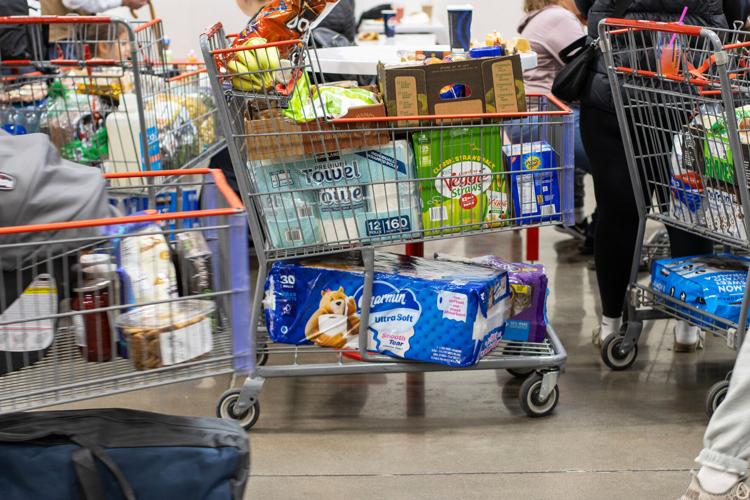
Shopping carts sit full of groceries May 14, 2025, at a Costco store in Tigard, Ore.
What's more expensive?
Proteins and beverages saw the biggest increases, according to the analysis.
Here are the top five products that saw the largest increase from February 2024 to February 2026:
Coffee: The price per pound for ground roast coffee increased 55.2% as it rose from $6.09 in February 2024 to $9.46 in February 2026.
People are also reading…
Lettuce: The price per pound for romaine lettuce went up 38.6% from $2.57 to $3.56.
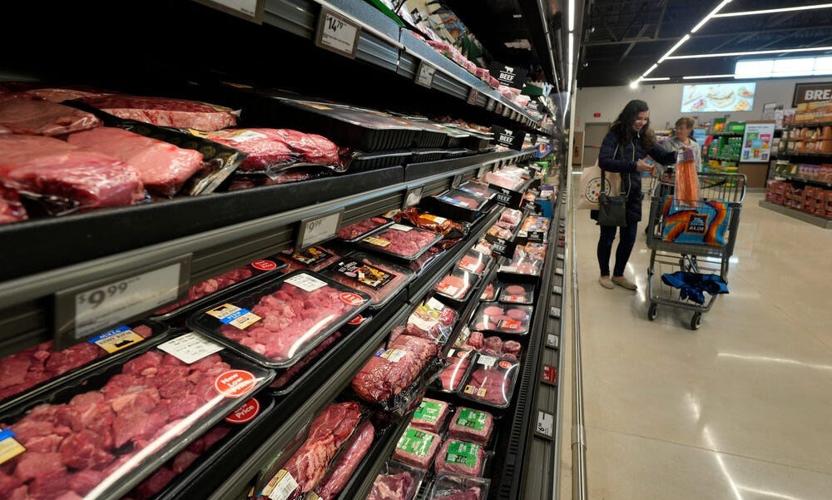
Ground beef: 100% ground beef per pound rose 31.3% from $5.13 to $6.74.
Steak: USDA choice boneless sirloin per pound rose 21.1% from $11.72 to $14.19.
Orange juice: a 16-ounce can of frozen concentrate rose 15.4% from $4.21 to $4.86.

Proteins, specifically ground beef and sirloin, increased in price the most in the past two years, according to a CouponFollow analysis.
There was a high degree of variation in price fluctuation across categories, said David Ortega, a food economist and professor at Michigan State University.
Several "shocks" affected the agricultural and food industry, Ortega said, including bird flu that devastated the egg markets and climate change-driven droughts that hammered coffee and fresh produce production, and tariffs layered additional costs on import-heavy categories.
"These shocks hit products in different ways, which is why you get such a mixed picture when you look item by item," Ortega told USA Today. "But the net result is that families are still paying more at the register."
Coffee and beef prices likely will stay elevated, Ortega said. Average coffee prices are up 55% in two years, driven by consecutive poor harvests in Brazil and Vietnam plus U.S. tariffs on major producing countries, he said.
While Brazil's 2026 harvest is expected to be stronger, it takes months for lower commodity prices to reach store shelves, Ortega noted.
Average ground beef prices are up 31%, and that traces back to the U.S. cattle herd sitting at a 75-year low and strong consumer demand, Ortega said. Beef prices are likely to stay elevated through 2027 or 2028, he said.

The price per pound of field-grown tomatoes dropped 10.8%, from $2.13 in February 2024 to $1.90 in February 2026.
What got cheaper?
Here are the top five products that saw the biggest decrease in price from February 2024 to February 2026:
Eggs: A dozen Grade A large eggs saw the largest decline of any item, down 16.6% in two years, but still costs 73% more than its February 2020 price. It cost $3.00 in February 2024 and $2.50 in February 2026.
Potatoes: A pound of white potatoes is 10.8% cheaper, going from 97 cents to 87 cents.
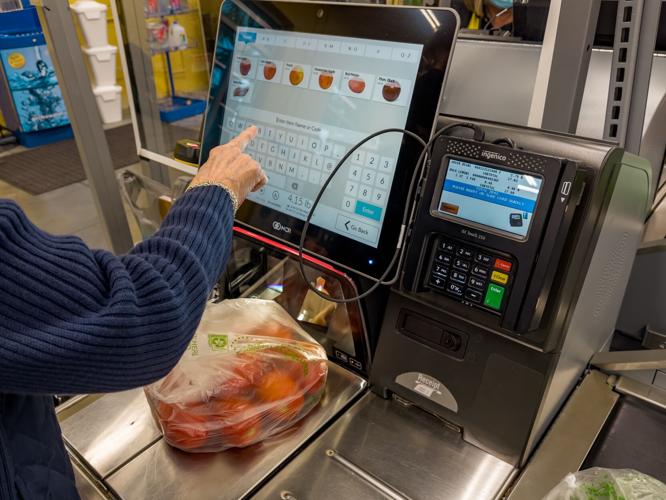
Tomatoes: The price per pound of field-grown tomatoes is down 10.8% from $2.13 to $1.90.
Bread: The price per pound of white bread is down 7.8% from $2.01 to $1.85.
Pasta: The price per pound of spaghetti and macaroni is down 7.6% from $1.43 to $1.32.
Meal choices
Consumers can mitigate some of the price increases by the meal choices they make, said Clay Cary, senior trends analyst at CouponFollow.
For instance, the price of a taco night for a family of four increased 18.6% from $20.79 in February 2025 to $24.65 in February 2026.
"Swapping in a cheaper protein or doing at least one or two meatless meals per week will make a noticeable difference," Cary told USA Today.
An egg and toast breakfast went down 9%, from $5.57 in 2024 to $5.07 in 2026. However, that same breakfast cost $7.48 in February 2025, the peak of the avian flu crisis, before the price of eggs dropped dramatically.
A meal of homemade biscuits is the most affordable and stable meal tracked in the study, with ingredients that cost $2.13, down 7% from $2.30 in 2024.
Besides deciding which foods you want to purchase, stacking savings methods also will be helpful, Cary said.
"Using coupons, purchasing your grocery items with store brands (if they are similar), and buying in bulk (staples) at reduced price levels when available as well as comparing the 'unit price' for each item will assist you in creating a series of small actions that contribute to long-term financial advantages," he said.