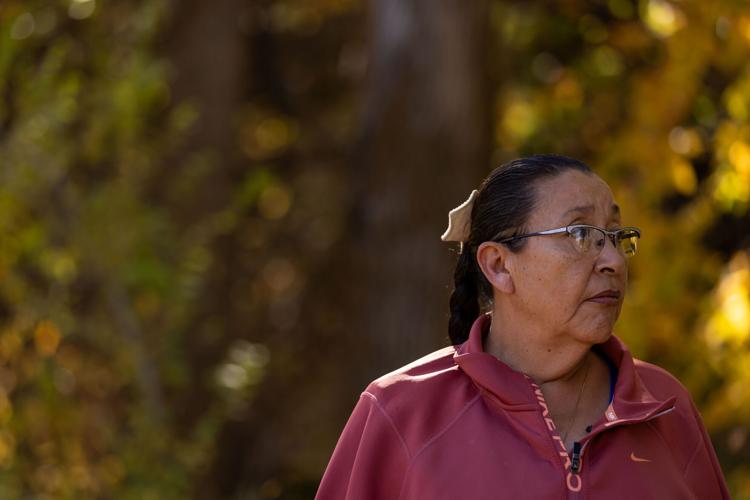
ST. FRANCIS, S.D. – Charlee Archambault says she knew the Rosebud Sioux tribal police were going to kill her son.
People are also reading…
They told her as much, she said.
One day, not long before he was killed, officers came to the door of Archambault’s house on the Rosebud Indian Reservation, she said, searching for her only child, who had been repeatedly arrested, wanted and chased by tribal police over the years.
“The cop had — it wasn’t a pistol,” she said. “It was what I would consider a high-powered rifle, and (the cop) made the comment that those bullets were for Jacob. When you say that to a mother, that will never leave you. So I knew all along, for some reason, they wanted him dead.”
She said police threatened to shoot her son and then, on Jan. 27, 2019, they did.
Fifteen times.
Six of those bullets struck his body, an autopsy found.

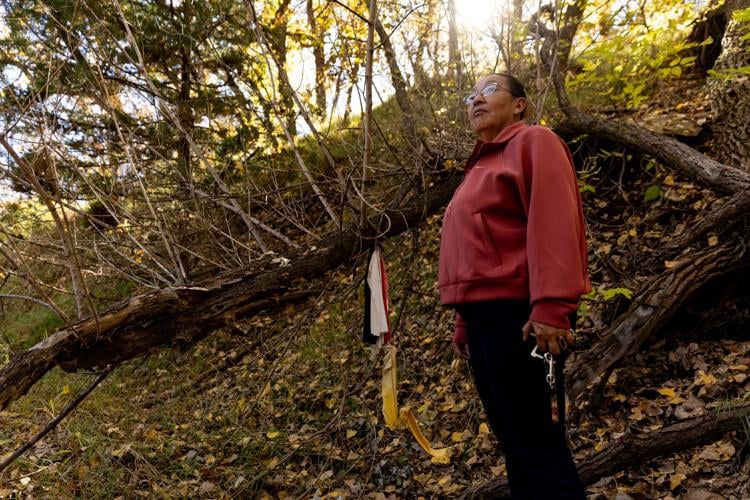
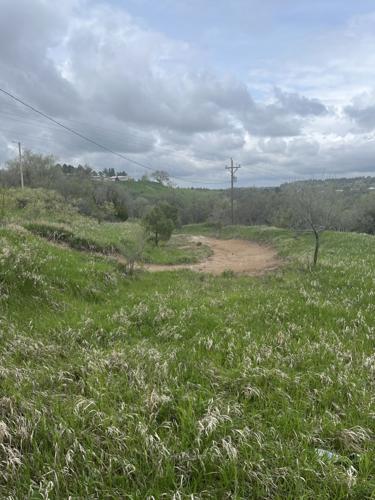
Charlee Archambault visits the site where her son's body was recovered after tribal police shot at him 15 times on the Rosebud Indian Reservation in January 2019. Ribbons with the colors of the four directions mark the location in Rosebud, S.D., on Tuesday, Oct. 17, 2023.
Archambault’s allegation that police targeted her son Jacob is unproved, but she’s not the only one making it.
In addition to Charlee Archambault, four other people claimed in interviews to know of threats tribal officers made against Jacob Archambault before the 25-year-old ended up dead, at the bottom of a ravine, in an SUV riddled with police bullets.
Three of those people said the threats came from Officer Josh Antman, who was named along with Officer Jay Romero in a lawsuit alleging they were the officers who shot Jacob Archambault. Romero has not been accused of threatening Jacob.
A federal judge dismissed some elements of that lawsuit in 2022, while pausing the claims against the tribal police officers to allow them to first be brought in tribal court, which hasn’t yet happened.
The lawyer who represented Romero in that lawsuit declined to comment. But Antman responded to an email request for comment by adamantly rejecting such claims.
“In response to allegations that I threatened anyone,” Antman wrote, “completely utterly false. Quite the contrary, I was always trying to do the best I could to help people any way I could, as the evidence reflected when this incident was investigated by the FBI.”

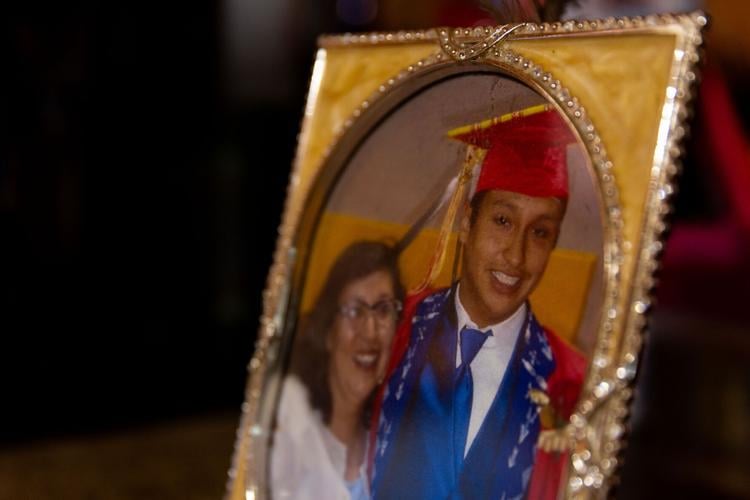
A photo shows Jacob Archambault and his mother, Charlee, at his high school graduation.
That FBI investigation was subsequently referred to the then-U.S. Attorney for South Dakota Ronald Parsons, who found that the tribal officers’ “actions were justified” and declined to charge them with wrongdoing.
Robert Sedlmajer, Rosebud Sioux Tribal Law Enforcement Services' interim chief, did not respond to inquiries about Archambault’s death or whether Antman and Romero are still employed with his department. But he did write that "when there is an incident involving use of deadly force, officer misconduct and civilian complaints," Rosebud police have always "followed the correct processes."
Those processes, Sedlmajer wrote, "include immediately notifying an outside agency to be the lead of the criminal investigation. In these cases the lead investigation agency is the Federal Bureau of Investigations. We also notify the Bureau of Indian Affairs Internal Affairs Division to investigate any policy violations of the employee. We assist and cooperate fully with both agencies. The results of their independent investigations are exactly that, their investigations."
While a spokesperson for the FBI, which investigated Archambault’s death and other officer-involved deaths on Rosebud, responded to a request for comment, she did not directly say whether the bureau has “investigated and/or substantiated allegations of misconduct, including potential breaches of civil rights or color of law, among Rosebud Sioux Tribe Law Enforcement Services personnel.”
In response to a list of questions about allegations of misconduct by Rosebud police, including in the death of Jacob Archambault, Robyn Broyles, a spokesperson for the BIA’s Office of Justice Services, offered few answers.
When asked whether OJS has investigated claims of police misconduct, Broyles did not say whether any such investigations had been completed and wrote that she was “unable to provide comment on any ongoing investigations.”
But when asked if OJS was planning a review or audit of Rosebud police, she wrote that “at the request of the Tribe, the BIA Office of Justice Service will conduct a law enforcement Program Monitoring Review." That review began in July, Broyles said.
Efforts to reach Scott Herman, the Rosebud tribe’s president, and Steve DeNoyer Jr., who served as chief administrator of tribal law enforcement until recently, were not successful.
But many tribal residents, including former tribal officials and law enforcement personnel, spoke on the record as part of this yearlong Lee Enterprises Public Service Journalism Team investigation into officer-involved deaths on the Rosebud Indian Reservation.
They repeatedly alleged that police have used force unlawfully, selectively enforced the law, harassed residents and violated their civil rights.
Murky history

Loved ones, residents, former tribal officials and ex-law enforcement officers repeatedly allege that Rosebud tribal police use force unlawfully, selectively enforce the law, harass residents and violate their civil rights.
Charlee Archambault has had more success than many in Rosebud in accessing documentation of the FBI’s investigation into her son’s officer-involved death.
That’s in part because she filed a lawsuit against the officers who shot her son, seeking damages, in part, for what her complaint claimed was the use of “excessive, unreasonable and unwarranted force during the pursuit.”
While elements of that lawsuit were dismissed and others were paused, she was provided a redacted portion of the FBI investigative file into her son’s death.
Lee Enterprises' Public Service Journalism Team obtained additional documents as part of this investigation.

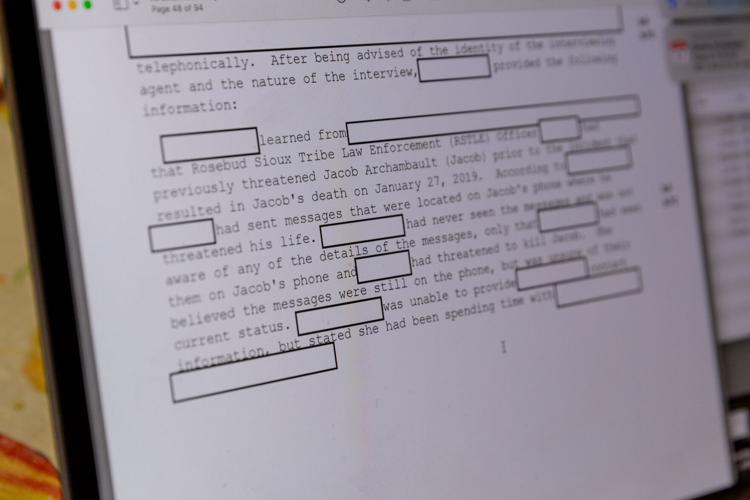
Redacted portions of an FBI report on the January 2019 death of Jacob Archambault are shown on a computer screen in his mother's home in St. Francis, S.D.
Heavy redactions mean large sections, key details and all names have been concealed. What remains sketches a murky picture of Jacob's history with tribal police, including those who shot him.
It’s a history that began as a “cordial” and casual relationship between Jacob Archambault and one of the officers who ultimately shot him, FBI files indicate.
That changed in 2017, the officer said, after he and members of the local drug task force “heard that Jacob Archambault might have been involved in drugs on Rosebud” and that he “carried a gun.”
But the police interactions described in the unredacted portion of the FBI files paint a picture of Jacob as a small-time meth user who was charged with various tribal offenses but who was never convicted of a felony.
A year before Jacob’s death, in January 2018, he was found with a pen containing methamphetamine.
Around the same time, he reportedly “fled” tribal police in a truck, which was found to contain a pistol when police searched it. But police were told it was the vehicle owner’s “personal weapon.”
While the owner’s name was redacted in FBI documents, Charlee Archambault told Lee Enterprises that the truck and the gun were hers — and that her son was never convicted of a gun-related offense.
In fact, it appears Jacob was never convicted of any crime.
A Lee Enterprises search of federal and state court records also did not turn up any criminal history for Jacob Archambault.

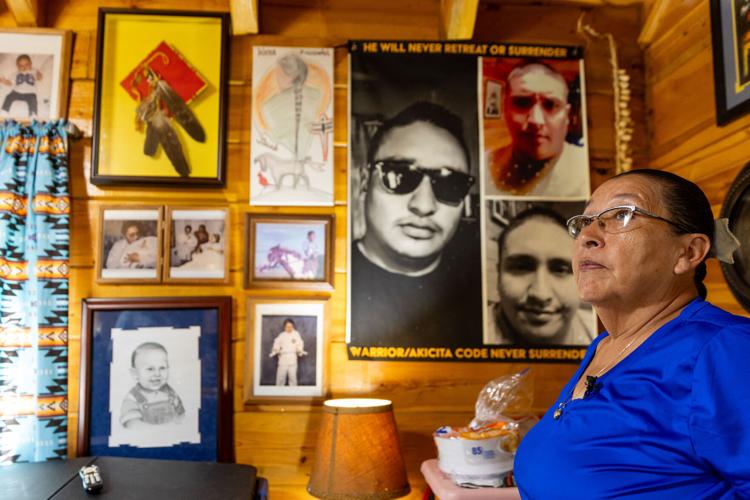
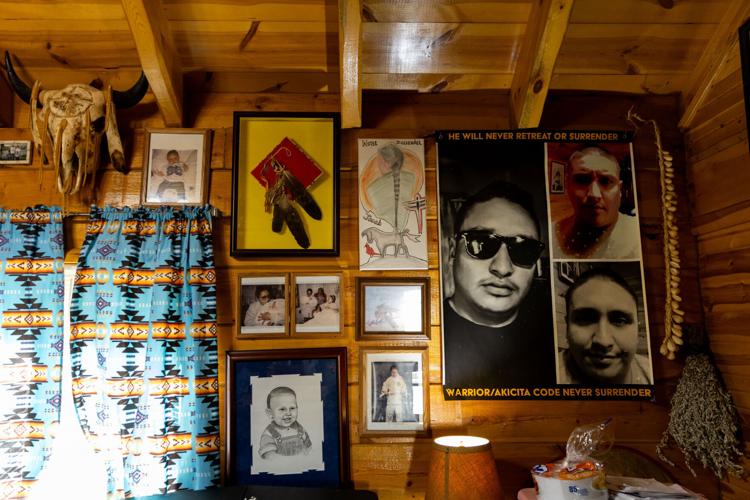
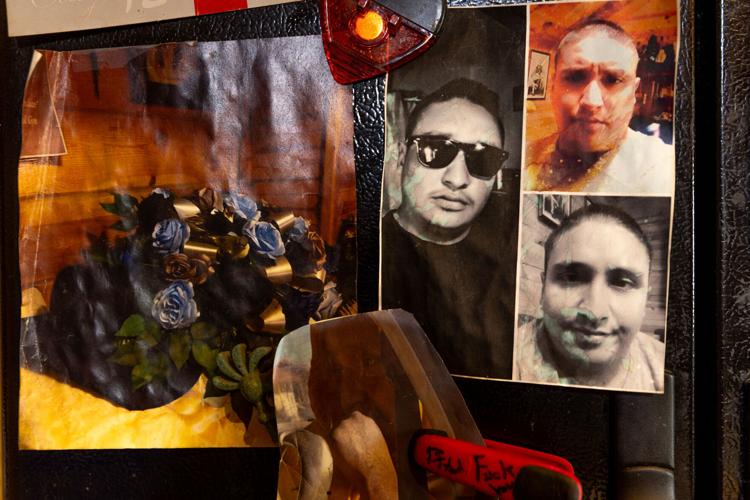
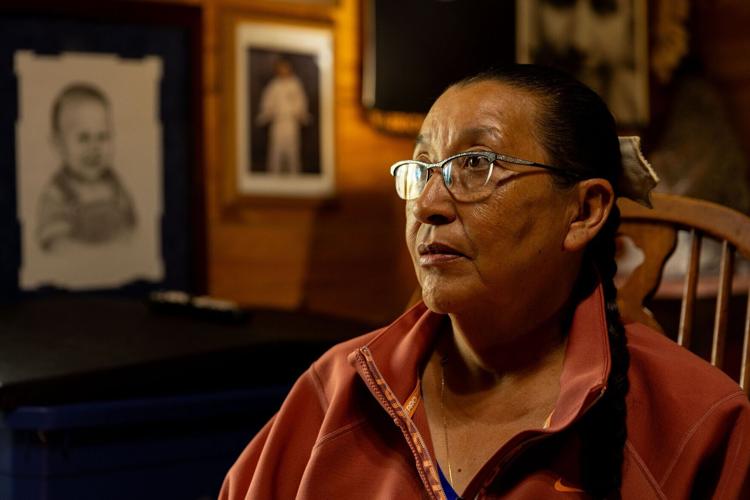
Charlee Archambault's walls are covered in photos and memories of her son, Jacob Archambault, at her home in St. Francis, S.D.
And while a Rosebud Sioux Tribal Court clerk said that Jacob had four pending cases at the time of his death for a range of charges — including failure to appear, discharge of a weapon in a public place, possession of a dangerous weapon while intoxicated, burglary, huffing, possession of a controlled substance and simple assault — she said he was not convicted of any of them because the cases had not gone to trial when he died.
Those tribal court charges stemmed from a series of run-ins Jacob Archambault had with tribal police in the months before his death, according to tribal law enforcement records and other documents that were part of the FBI report .
In September of 2018, a Rosebud officer who reportedly heard gunshots coming from a house in St. Francis found Archambault inside, “asleep and heavily intoxicated.” When police interviewed Jacob Archambault at the tribal jail, records indicate, he admitted to “firing some of the rounds … but not all of them” after he saw “an unknown man standing outside … with a knife.”
Documents do not indicate anyone was injured by the gunfire.
Soon after, in November of 2018, a person whose name is redacted requested that officers come to her house because Jacob was “high on methamphetamines and was trying to fight,” the FBI reports state. Police responding to that call could not locate Jacob.
Officers searched an apartment for Jacob later the same month, but he reportedly fled on foot and was not immediately apprehended.
The unredacted portions of the documents also do not say why officers engaged in multiple vehicle pursuits of Jacob, first when he was driving his mother’s truck and then, a few months later, when he was on a motorcycle.
But the FBI documents do include something else about Jacob Archambault’s interactions with tribal police: allegations that law enforcement assaulted him — and threatened his life.

The Rosebud Indian Reservation spans an area of more than a million square acres in south-central South Dakota.
‘Threatened to kill’
While Archambault was incarcerated in the Rosebud Sioux tribal jail in September 2018 — four months before his death — an interviewing officer noticed “a black eye on his face, which Archambault attributed to a corrections officer,” FBI files say.
In a contemporaneous report, a tribal officer indicated that there was more to this incident, writing: “I asked (Jacob) about the black eye and said that he had been assaulted and stated that there was a video of Jacob being assaulted and shot at by a correctional officer with the Adult Corrections Facility.”
The unredacted portion of the documents do not indicate whether this incident was investigated.
In addition, a redacted source who appears to have been one of Jacob’s family members or friends told FBI agents five days after his death that a tribal officer “supposedly beat Archambault up when he was arrested after” fleeing in his mother’s truck about a year before.
Another redacted source also told an FBI interviewer that a tribal officer “previously threatened Jacob Archambault prior to the incident that resulted in Jacob’s death.”
The agent wrote that this redacted source “had never seen the messages and was not aware of any of the details of the messages, only that (the source) had seen them on Jacob’s phone.” In them, the source claimed, the officer “threatened to kill Jacob.”
FBI agents wrote that a redacted source presented a special agent “with a series of screenshots … that purported to be a text or Facebook Messenger exchange between Jacob and (redacted) at an undisclosed time.”

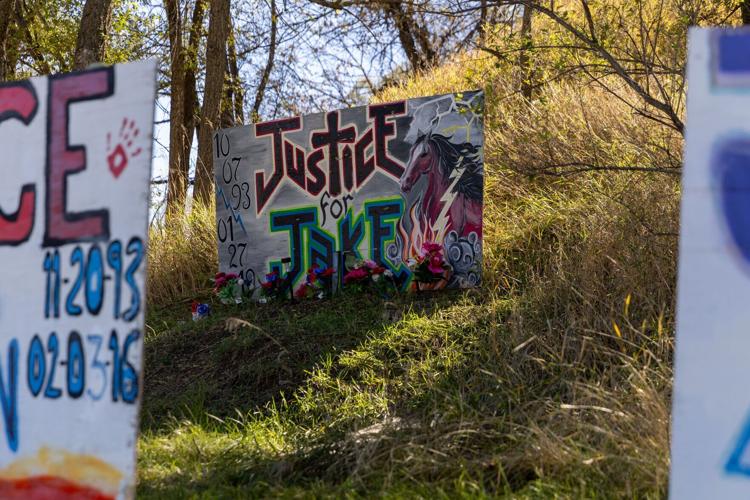
Painted memorial signs for Jacob Archambault and others are posted alongside Sioux Boulevard in Rosebud, S.D.
In those messages, one person “described fleeing from the other and getting away from them,” FBI documents say. The other person responded: “Not very many people that can say they got away from me or (redacted).”
The agent wrote that the FBI conducted a “cursory review of the account of Facebook Messenger username ‘Jake Archambault’” for other messages, but they “did not find any other messages in the conversation pertaining to (redacted).”
While extensive redactions make it impossible to know who the FBI interviewed or what else they discovered, numerous witnesses told a Lee Enterprises reporter that Rosebud police threatened Jacob Archambault.

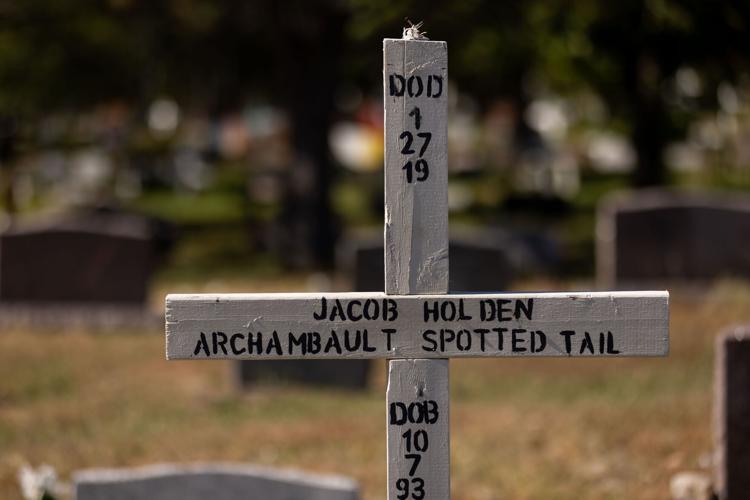
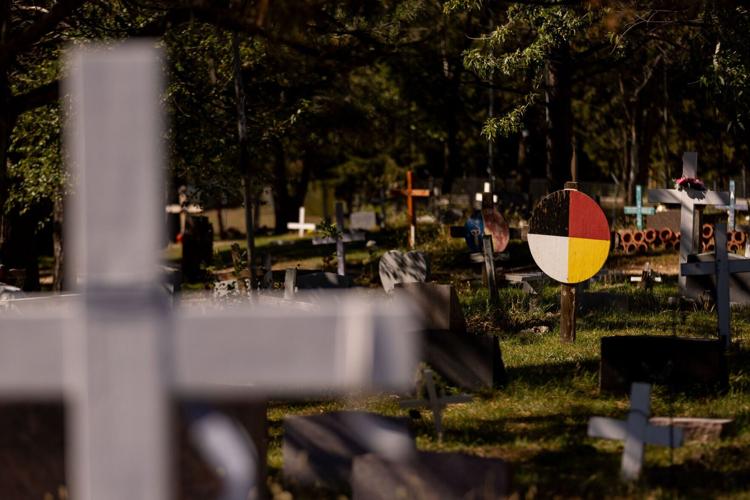
A wooden cross marks Jacob Archambault's gravesite on the Rosebud Indian Reservation.
‘You got away … Lol’
Brianna Clairmont “grew up” with Jacob Archambault, she said. They dated for years, then became friends.
He was fun-loving and outgoing, she said, and “had a lot of friends, knew a lot of people.”
But over the last few years of his life, Clairmont said, the police repeatedly “messed with him,” “pulling him over all the time for any little thing,” searching his car and accusing him of dealing drugs, in part, she suspected, because he drove nice vehicles on a reservation where poverty is endemic. Those vehicles, however, were gifts from his grandparents and mother, Charlee Archambault said.
Then, one day, Clairmont said, Jacob came to her house and told her a tribal officer “is messaging me on Facebook.”
Clairmont said that officer was Antman.
She provided a Lee Enterprises reporter with what she said were those messages.

Brianna Clairmont disputes the law enforcement narrative about the pursuit and shooting of Jacob Archambault.
The exchange includes the message quoted in the FBI file, as well as others.
While the content of the messages make it clear that they pertain to a series of police chases in which the person Clairmont identified as Jacob successfully eluded pursuing officers, the seemingly casual, even lighthearted, tone of both parties makes them difficult to interpret.
“The bike one was fun too,” wrote the person Clairmont identified as Jacob, referring to the chase in which he had eluded officers on a motorcycle.
“Lol,” the person Clairmont identified as Antman responded. “You got away twice!”
Elsewhere, the same person wrote:
"You got away
One of the few
Lol
That was awhile ago."
Clairmont said there was no doubt Jacob interpreted this exchange as “threatening.”
“He was real like — I don’t want to say scared,” she said. “But he, like, couldn’t believe it. He was real excited, kept saying, ‘Look at. See? I told you he was bothering me. Look, he’s messaging me.’”
Brandi King, who was dating Jacob at the time of his death, said she saw more directly threatening and harassing messages from tribal police, including from Antman.
“Josh Antman would message Jake and be like, ‘I’m going to look for you,’ and ‘I’m going to shoot you,’ and basically stuff like that,” King said. “I felt like he was their main target,” she added. “They obviously wanted him dead. There were messages.”
She said Jacob showed her the messages but that she did not receive copies of them. After Jacob's death, King pleaded guilty to assaulting, resisting and impeding a federal officer for spitting on Officer Romero while he was arresting her for public intoxication and an open-container violation.
Travis Leading Cloud, a former tribal correctional officer who alleges police misconduct, said he, too, knew of the messages between Jacob and Antman.
He and Jacob became close friends near the time of his death, and Leading Cloud said he knew of communications on an app “like Snapchat, where the messages would be erased.”
“He said that they were going to get him and that he was in trouble,” Leading Cloud said. “And he had even said something to the fact that if anything had ever happened to him, that it would be Antman.”
Then, about four months before Jacob was killed, Charlee Archambualt said, tribal police came to her house and arrested her son in relation to the September incident in which gunshots were fired at a St. Francis home.
That was when one of those officers showed her a gun and told her the “bullets were for Jacob,” she said. She said the officer who said this was not Antman. Lee Enterprises is not naming this officer because he is not named in any court documents.
Fremount Menard, Archambault’s first cousin, claims he was there when this happened.
“That cop came up to us and said that he had a bullet with (Jacob’s) name on it,” Menard said.
“We told him that was wrong; he shouldn't be talking like that,” Menard added. “But it ended up happening anyway.”

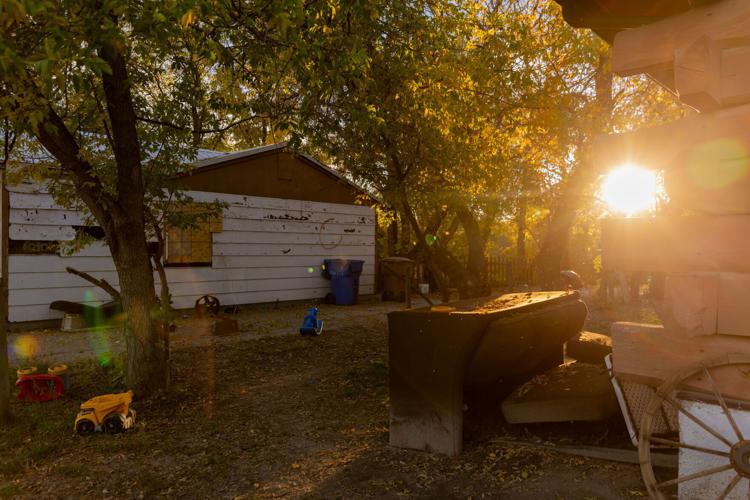
The sun sets over Charlee's Archambault's yard in St. Francis, S.D., on the Rosebud Indian Reservation.
Inconsistencies
Tribal police told investigators the sequence of events that led to Jacob’s death began with a phone call to tribal dispatch on Jan. 27, 2019.
Redactions make it impossible to know who law enforcement claims made that call, but Charlee Archambault is adamant that it wasn’t her and that her son did none of the things that are alleged in FBI documents.
Charlee said her son didn’t commit an “assault,” cause “property damage,” break windows, throw a telephone or take her Chevrolet Tahoe “without permission,” as redacted sources allege in the FBI documents. And she said she didn’t make a “call to 9-1-1 tribal law enforcement … regarding the assault incident,” as those documents describe an unnamed person doing.
“These are all lies,” she said.
While she did suspect her son was intoxicated and knew he was wanted on a tribal warrant for leaving jail to attend a funeral and not returning, Charlee Archambault said, these were reasons she insisted that her son’s friend, Brianna Clairmont, take the wheel when she allowed them to borrow her car to celebrate Clairmont’s recent birthday.
Clairmont remembers it the same way.
She remembers borrowing the Tahoe, putting her infant daughter in her carseat and driving across the reservation that day.

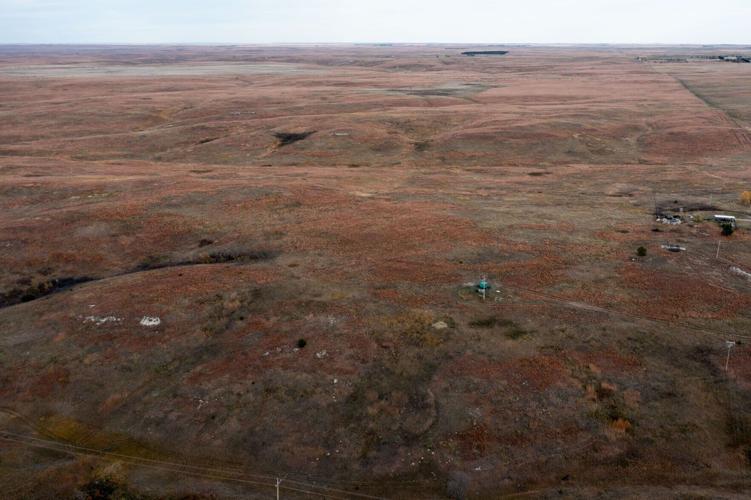
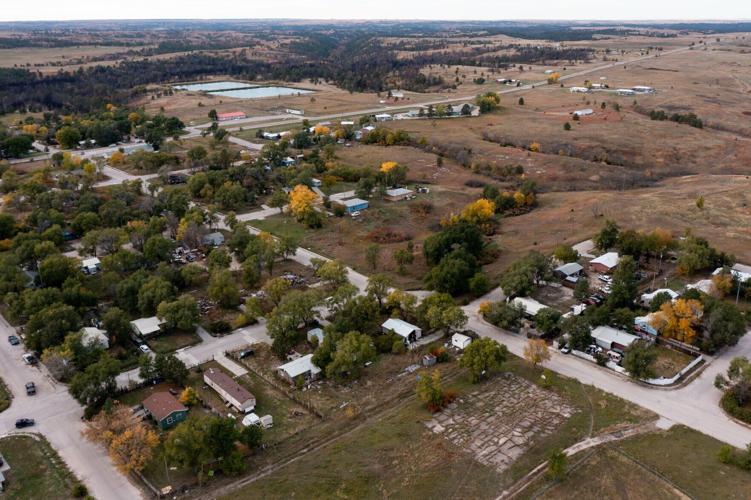
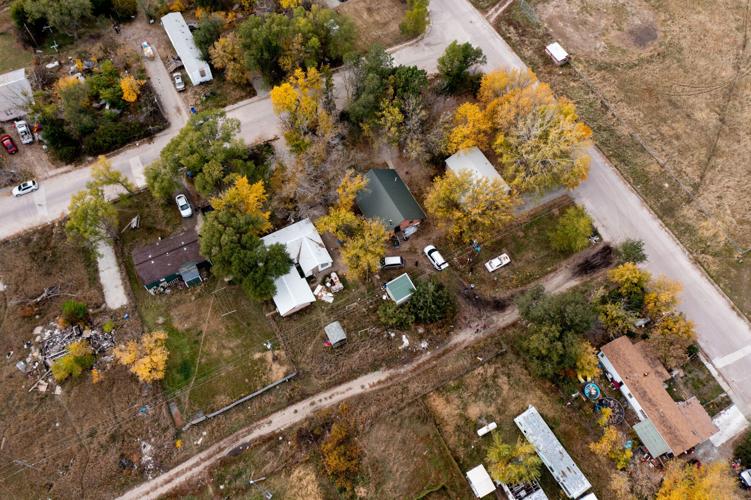
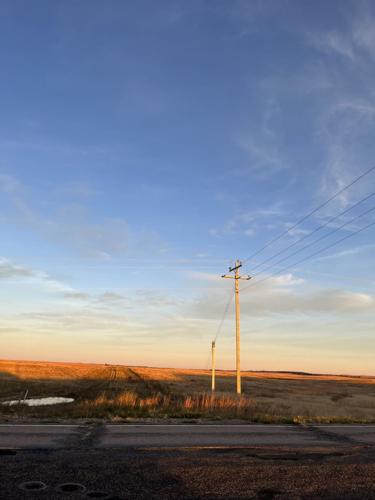
The Rosebud Indian Reservation is photographed on Oct. 16, 2023.
As she drove with Jacob, she recalled, they passed multiple tribal police officers, which made Jacob increasingly nervous.
None of the three officers they passed, however, pulled them over, Clairmont said. It was only when they had gone through the town of Rosebud and looked back to find a blanket for her baby that they saw police lights on a pickup truck driven by Antman, she said.
“And then he was like, ‘Go, Brianna, go,’” Clairmont said. “And I was like, ‘No. What? No, we’re not going nowhere. There’s a cop behind us.’ And he was like, ‘Go, go, go.’ … He was freaking out.”
Before she knew it, Clairmont said, she was outside the car and Jacob was handing her her baby. She didn’t know what would happen next or why, but she said Jacob’s fear of the police was palpable.
“When he hands me my daughter the day he died, he looks at me and just the look on his face and the way he looks at me and the way he was saying it, I knew there was something more, because he was like, ‘I’m so sorry, Brianna. I’m sorry,’” she recalled. “And I was just looking at him like, ‘Sorry for what?’”
Afterward, Clairmont said she was “scared” that the police were going to come and question her.
“I thought the cops were going to come look for me, because I was in the driver’s seat,” she said. “I thought they would’ve said something about me driving and then jumping out with my daughter.”
She’s adamant that never happened, though, and said she “was never interviewed by nobody.”
A May 2019 letter from Ronald A. Parsons, the then-U.S. Attorney for South Dakota who decided not to pursue charges against the officers who shot Jacob, suggests investigators did speak with Clairmont.
Though names are redacted, his letter indicates the person who “agreed to drive” Jacob that day did so in order to help “calm him down” after he punched someone and “broke multiple windows in the house” — an account Clairmont and Charlee Archambault also strongly dispute.
“When the FBI came that night with the Rosebud cops,” Archambault said, “they wanted to know what windows he broke. And I said, ‘He never broke no windows.’”

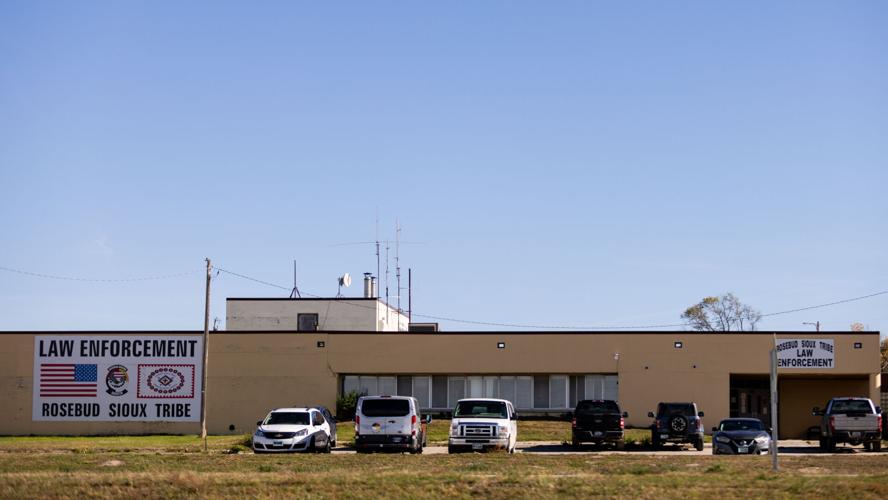
The Rosebud Sioux Tribe Law Enforcement Building on the Rosebud Indian Reservation in South Dakota.
The shooting
What happened after Clairmont exited the Tahoe with her baby, FBI files say, is that an officer in an “unmarked police pickup truck equipped with lights and siren” and an officer in a “marked police car” initiated a pursuit of Jacob Archambault, Parsons’ letter says.
While the BIA Office of Justice Services handbook states that unmarked vehicles “may be used in pursuits,” it stipulates that their use can only occur “if the fleeing vehicle presents an immediate and direct threat to life or property and no marked vehicle is immediately available.”
“As soon as a marked vehicle becomes available,” the handbook says, “the unmarked vehicle will withdraw from the pursuit and serve in a support role.”
It’s unclear if that happened in this case.

The Rosebud Indian Reservation spans an area of more than a million square acres in south-central South Dakota.
When asked whether the officer pursuing Jacob in the unmarked vehicle violated policy, Broyles, the OJS spokesperson, wrote, “Violations of policy are generally addressed through personnel actions. Because the disclosure of specific personnel actions may violate federal law, BIA cannot comment on personnel matters pertaining to individual employees, including law enforcement officers.”
After the unmarked pickup and marked police car chased Archambault’s Tahoe through the town of Rosebud and to the top of a hill, he turned off onto a steep dirt trail, lost traction and began to slide backward, FBI documents say.
When they arrived at the dirt trail, the officers “exited their vehicles and aimed their service weapons at Archambault” and “yelled for him to stop,” Parsons' letter says. But Jacob allegedly “ignored” them and “attempted again to drive up the incline.”
When he couldn’t, Jacob allegedly put the vehicle in reverse.
One of the tribal officers told the FBI that he saw the SUV’s reverse lights going on as the driver “‘gunned’ the accelerator back.” The officer said the Tahoe slammed into a police cruiser and “began pushing it backward and to the side.”
In explaining why he decided to use force, the officer said he “both felt and saw the police cruiser getting pushed close to his own leg” and was concerned about the officer who was “behind his own police cruiser that was being pushed.”
The other officer who fired his weapon at Archambault told the FBI a very similar story, saying he had to “‘back-step’ out of the way to avoid getting run over.” After he fired twice, he said, “the Tahoe started accelerating away from his car.”

Rosebud tribal police fatally shot Jacob Archambault near this dirt road on Jan. 27, 2019.
A pair of South Dakota Highway Patrol troopers who were called to the scene of the shooting described the same sequence of events.
“At some point when the vehicle was traveling backwards toward the officers,” reads the primary narrative of one of the troopers, “they fired at the driver and vehicle to stop it.”
“At an unknown point when the Tahoe was backing toward the officers and their patrol vehicle,” reads a supporting narrative from a second trooper, “both officers fired their weapons at the vehicle and driver to stop the vehicle from hitting them.”
But an FBI analysis of the bullet holes in the vehicle appears to contradict the claim that they fired “when the Tahoe was backing toward the officers.”
Of the 10 exterior impact bullet holes identified in that analysis, five “were on the front of the vehicle,” four “were located in the front passenger side door,” and one “was located on the front driver side door.”
“The aforementioned information is consistent with the vehicle having been shot from the front and passenger sides of the SUV,” the FBI report says.
Parsons' letter stated that Jacob had meth and alcohol in his system at the time of his death and found that the tribal officers "acted in self-defense" and that their “actions were justified.”
Parsons wrote, "Archambault, through his action, escalated this incident into a life-threatening encounter. If Archambault had survived, it would be appropriate to charge him with Assaulting, Resisting and Impeding a Federal Officer and Assault With a Dangerous Weapon."
But Parsons' letter also offers a description of the officers’ actions that disputes the notion that they fired when the car was backing toward them, without explaining why.
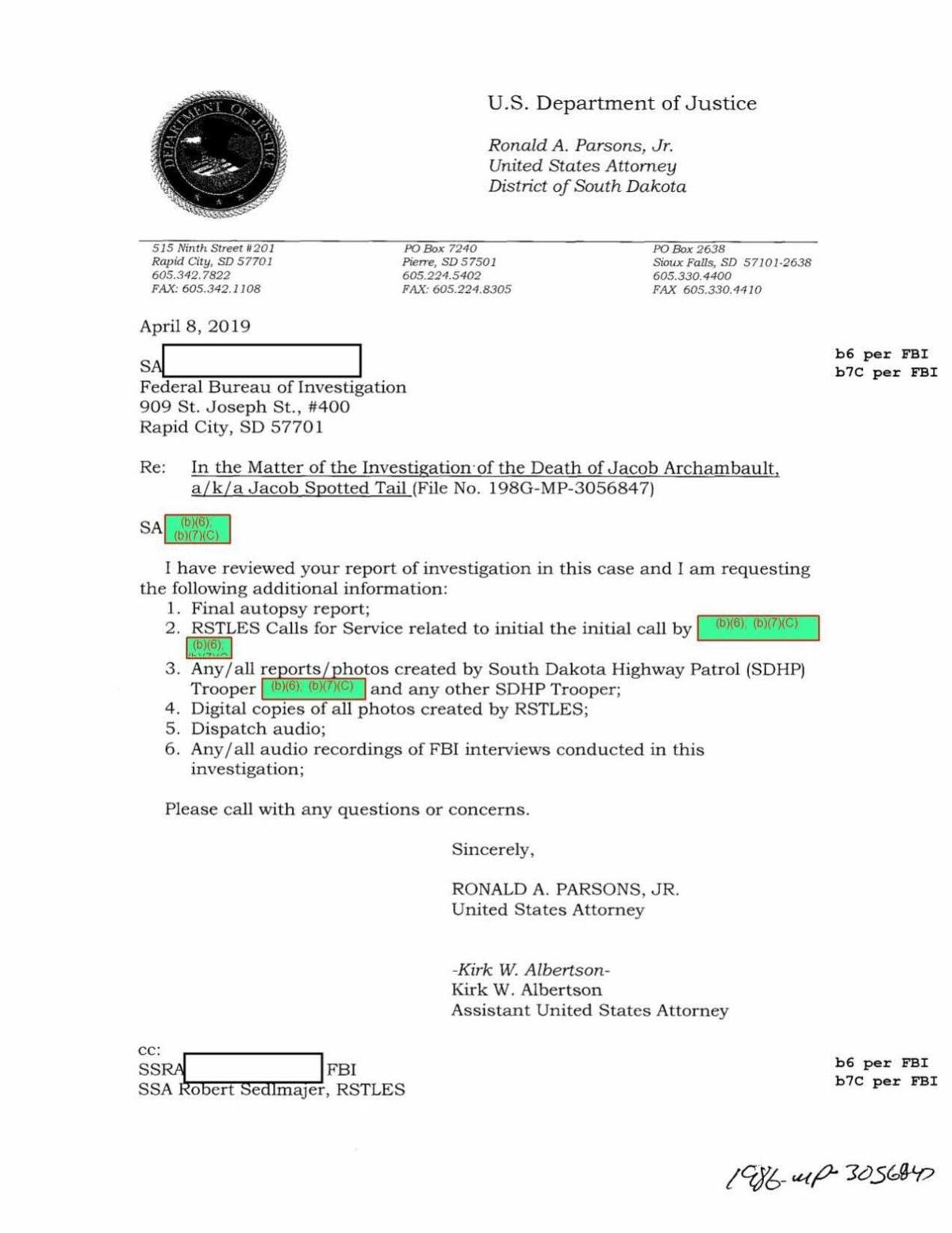
“Officer (Redacted) was positioned to the right of Archambault’s vehicle and was generally firing in the direction of the front passenger door,” Parsons wrote. “Officer (Redacted) was positioned in front of Archambault’s vehicle and was generally firing in the direction of the windshield.”
Parsons’ letter doesn’t describe how the officers ended up beside and “in front of” the Tahoe, but Charlee Archambault’s lawsuit does.
In court documents, her lawyers described Jacob Archambault’s attempts to crest the “snowy incline” and escape the pursuing officers.
After the second attempt, the complaint says, the officers “shot at Archambault through the passenger side door of the Tahoe as it was reversing perpendicular to and past the officers. The Tahoe continued past (one of the officer’s) vehicle, and the officers continued to fire bullets at Archambault through the front windshield of the Tahoe as it was driving away from the officers.”
One of their 15 bullets “went through the left side of Archambault’s chest,” the complaint reads. After the Tahoe “continued down a steep embankment and crashed into a ravine,” it says, Archambault was “partially ejected” but “was alive when (the officers) went to check on him.”
The officers “did not render any medical aid to Archambault,” the complaint alleges. “Archambault died waiting for help.”

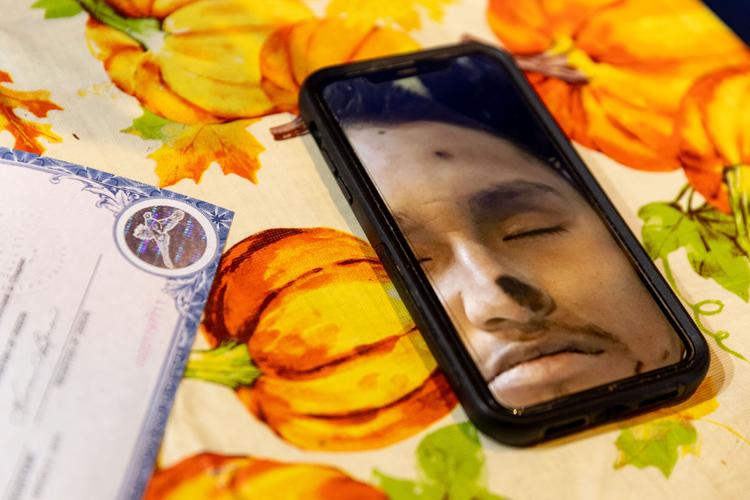
Charlee Archambault shared a photo of her son Jacob Archambault's face, which shows the mark of a bullet fired by Rosebud tribal police, who shot at him 15 times. She asked the funeral home not to cover his wounds with makeup after his January 2019 death.
In an FBI interview, one of the officers expressed his frustration at what he said was the “slow process of reaching Archambault” and “in particular, the slow response of the ambulance, which didn’t have its lights on when it arrived ….”
As the Tahoe began to “smoke,” that officer said, he “tried to rip the windshield off (the Tahoe) in order to reach and help Archambault.”
The other officer told FBI investigators he “hit the windshield with his baton in order to create an opening that would allow him to turn off the car and assist Archambault. He eventually opened a small line in the windshield that he was able to reach through to put the car in park and turn the engine off.”
Both officers said they heard Jacob say, “I can’t breath (sic)” as they waited for help to arrive.
An autopsy found that the manner of death was homicide and that the cause of death was dislocation of the joint that connects the base of the skull to the top of the spine “due to motor vehicle crash due to gunshot wound of chest.”
‘He was scared'
Charlee Archambault didn’t want the mortician to fix the wound from the gunshot that grazed her son’s nose.
“I said, ‘I want the people here to see what they did to him. I want them to see it. No trying to hide it. Don’t try to hide it all.’”

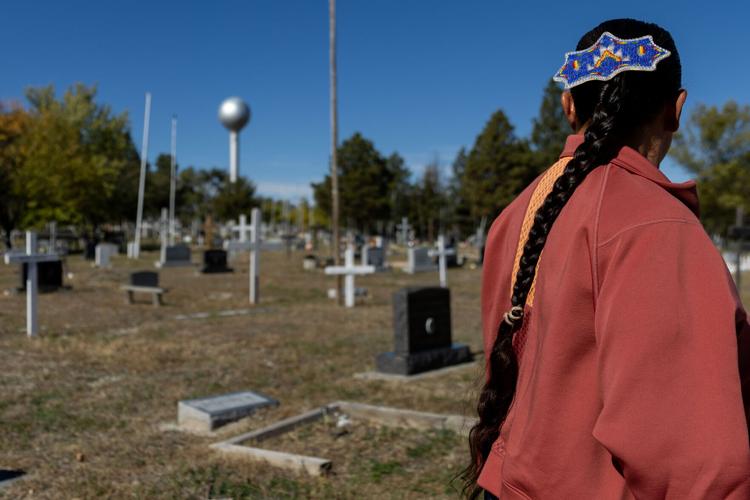
Jacob Archambault is buried in a cemetery in St. Francis, S.D.
But five years later, she believes that much about her son’s death remains concealed.
And Archambault believes in the same kind of widespread police misconduct that some former tribal law enforcement officers and others allege has persisted for a decade or more on the Rosebud reservation.
Clairmont said she thinks Jacob was afraid of police because he suspected the police were engaged in misconduct. While she said Jacob “never gave (her) the specifics” about what he said he knew, Clairmont believes “he was ready to tell on them.”
“I think that’s why they threatened him so much,” Clairmont said, “because somehow he knew things that they didn’t want him to know. Because he was scared. You could tell he was scared.”
When Leading Cloud heard what happened, he, too, thought back to those threats, thought that the cause was Archambault’s “knowledge, and his involvement, with those that were authority figures in law enforcement.”

Charlee Archambault visits the site where her son's body was recovered after tribal police chased and shot him.
Such suspicions and fears have made it difficult for Jacob’s mother to move on.
“Because it’s too hard on me,” she said, “because he was my only child, and every breath I took, I took for him. It didn’t matter if he was drinking or on meth. I was looking at ways of trying to help him get over it. And I told him, ‘It doesn’t matter what you know on the cops. I can help you. You can leave the area, and I can help you.’”
That she couldn’t help him has left Charlee Archambault reliving that day in 2019, searching for some glimpse of solace for herself — but more so, for her son.
“I still have dreams — nightmares, I guess you would call them — about my son being shot, about me being shot,” she said. “In one of my dreams, somebody will knock on that back door, and I’ll open it. And those police officers that shot my son shoot me. In that dream, though, it doesn’t hurt to be shot. It don’t hurt. And I pray that’s the way that my son left.”

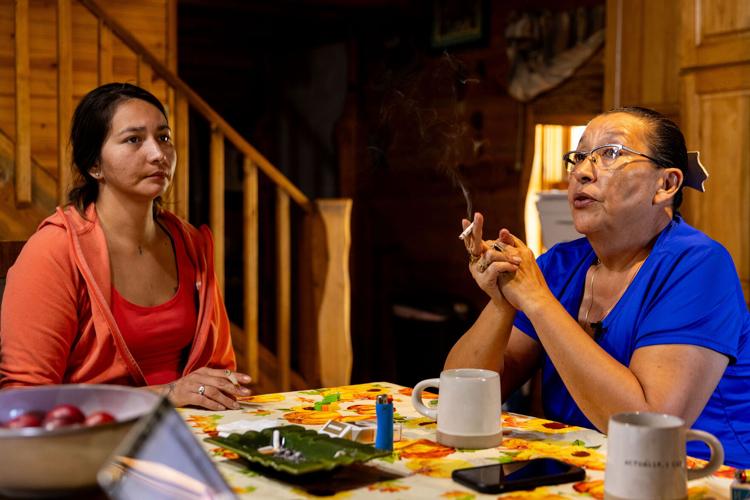
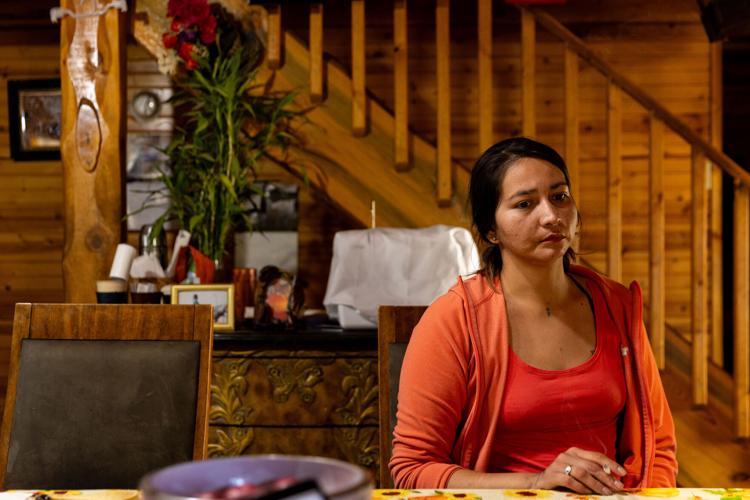
Charlee Archambault, right, and Brianna Clairmont speak in Archambault's home, where Clairmont and her children live now.

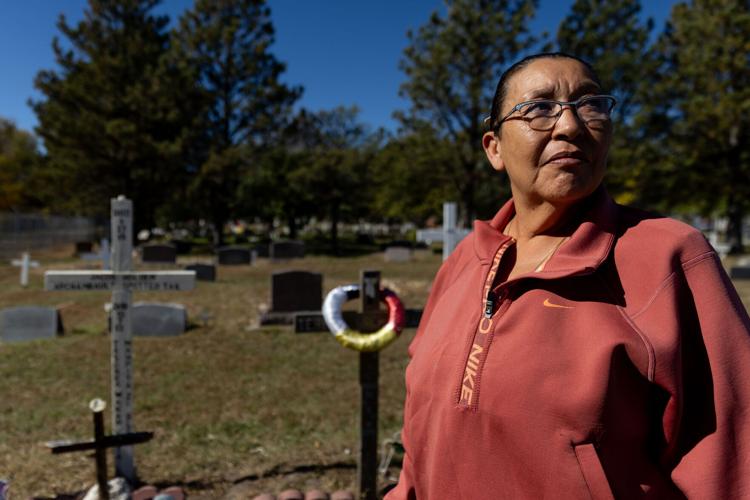
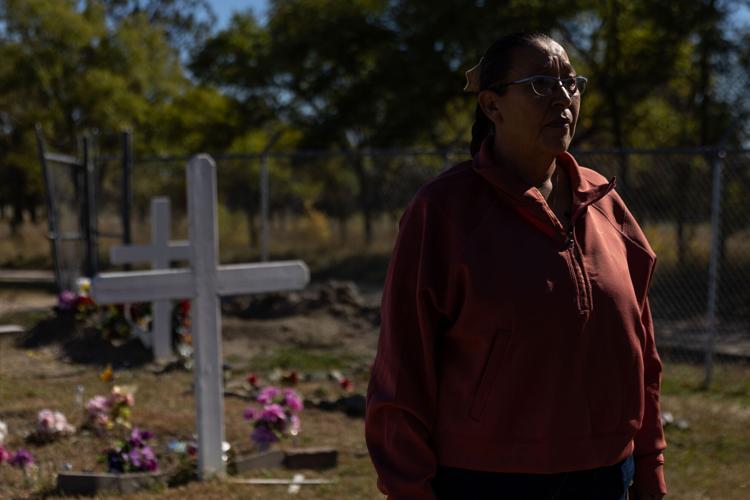
Charlee Archambault visits her son's gravesite in St. Francis, S.D.

The walls of Charlee Archambault's home on the Rosebud Indian Reservation are covered in photos and memories of her son.

Charlee Archambault's walls are covered with photos and memories of her son, Jacob Archambault.

Charlee Archambault visits her son's gravesite.

Charlee Archambault visits her son's gravesite in St. Francis, S.D.

The Rosebud Indian Reservation, photographed with a drone over St. Francis, S.D.

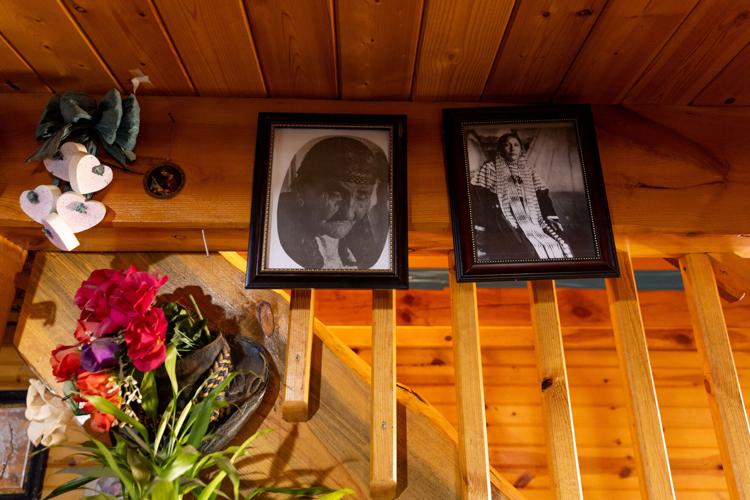
Photos of Jacob Archambault's grandmothers are on display in his mother's home.

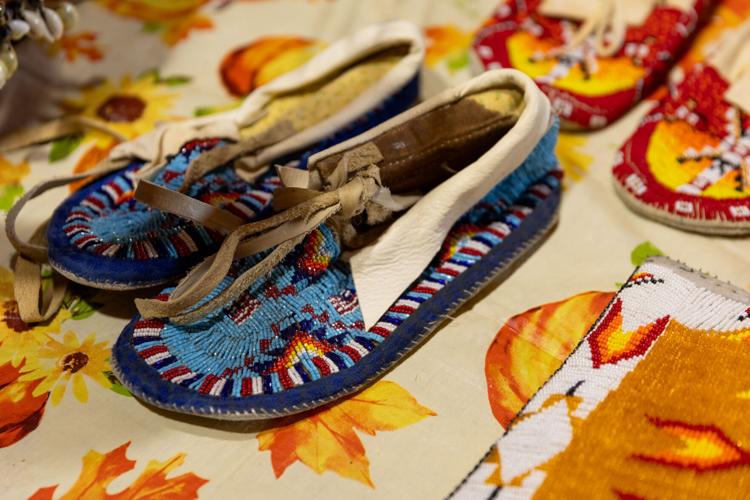
Ceremonial moccasins belonging to Jacob Archambault are shown in his mother's home.

Photos of Jacob Archambault and of his casket covered in flowers are displayed on his mother's refrigerator.