MISSION, S.D. — Van Dean Scott couldn’t believe what the Rosebud tribal police were telling him.
“The cops came to my house from across the road,” he recalled, “and said, ‘Do you have a son named Derrick Scott?’ And I says, ‘Yeah.’ He says, ‘He walked into the police department and had a heart attack and dropped over dead.’ I said, ‘No.’”
And when he saw his son’s dead body all beaten, bruised and “busted up,” Scott said he knew immediately that there was more to the story.

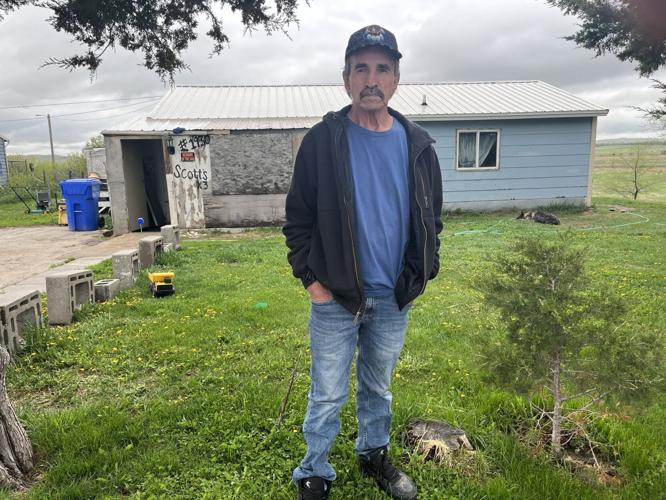
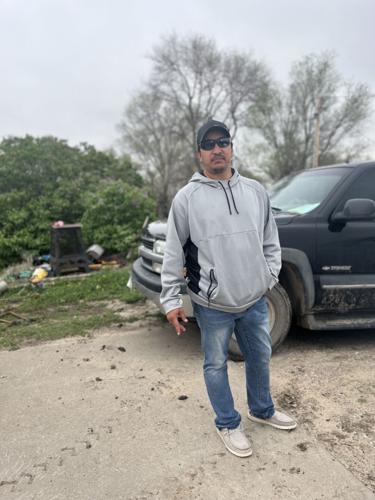
Van Dean Scott believes law enforcement officers killed his son Derrick in the Rosebud tribal jail, but he has struggled to get answers about what happened. He is shown in front of his home in Mission, South Dakota, on the Rosebud Indian Reservation, on May 13, 2023.
In the five years since, Van Dean Scott has been trying to figure out the truth behind his son’s death. But even after enlisting a lawyer, Scott said he still doesn’t know.
“They won’t give me no records at all,” he said. “I asked the police department, and they wouldn’t give me no records.”
People are also reading…
While Lee Enterprises was able to obtain a small batch of FBI documents through a public records request, the results only furthered Scott’s confusion.
According to the unfinished report of a tribal officer, Derrick Scott was “placed in the restraint chair” and was “actively resisting” after assaulting an elderly inmate. The report says a redacted source told the officer that “medics showed up” for unstated reasons and that Scott “was still awake and talking and that he just went limp and stopped breathing.”
“I then went into the emergency room and made contact with the nurses and,” the officer’s report says, trailing off mid-sentence.
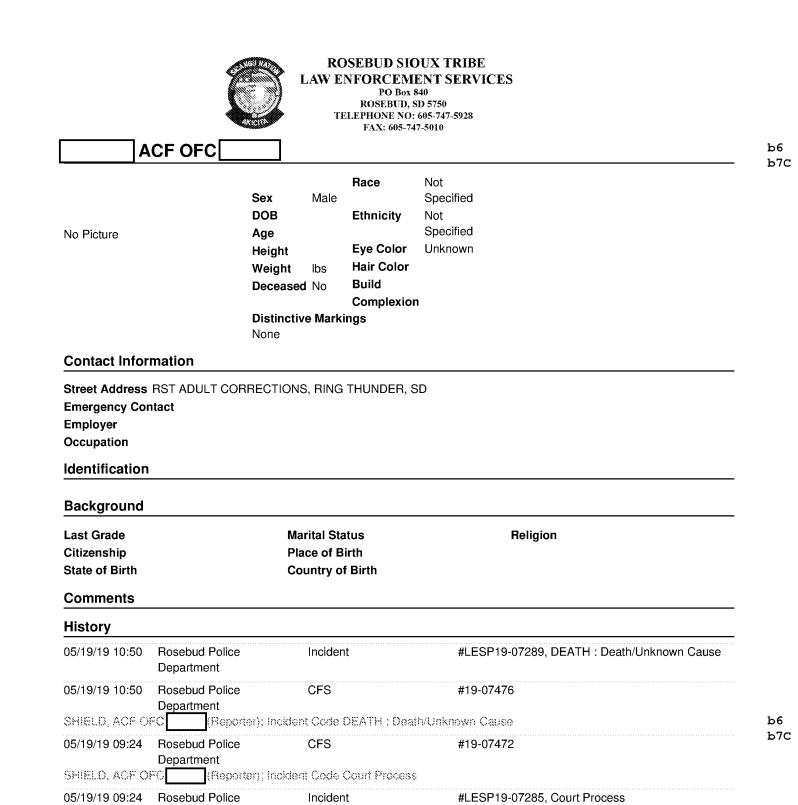
While the FBI file includes mention of an autopsy, surveillance videos and “photos of the scene and the restraint chair,” the bureau did not include those items in its 22-page response to Lee Enterprises.
The response does, however, include a determination that agents found “no evidence of a federal crime” and that “no federal violation or subject exist (sic) to further investigate or charge.”
Meanwhile, Scott has been investigating on his own, asking inmates, correctional officers and others what they knew about his son’s death on May 19, 2019.
“One of the (correctional officers), he came to my house crying, twice,” Scott said.
What that officer admitted, according to Scott, is that law enforcement put his son in handcuffs and “beat him up.”
“They beat the hell out of him,” Scott said.
While Scott can’t prove these allegations, he can take cold comfort in the fact that a yearlong Lee Enterprises investigation found that allegations of mistreatment and malfeasance by law enforcement are widespread on Rosebud.
The loved ones of those killed in interactions with tribal law enforcement are not alone in alleging misconduct.
In over a dozen interviews, residents, former tribal officials and even ex-law enforcement officers said repeatedly that police use force unlawfully, selectively enforce the law, harass residents and violate their civil rights.
And soon after a previous story in this series probed police conduct in one of those deaths — the 2018 shooting of Adam Poor Bear in the reservation town of Parmelee — the chief administrator of the Rosebud Sioux Tribal Law Enforcement Services department, Steve DeNoyer, resigned his position.
Neither DeNoyer nor Robert Sedlmajer, the department’s interim chief, responded to requests for comment for this story. Efforts to reach Melissa Eagle Bear, facilities administrator of the Rosebud Sioux Tribe Adult Correctional Facility, and Scott Herman, the Rosebud tribe’s president, also were not successful.
The Bureau of Indian Affairs’ Office of Justice Services, which refers to itself as the “exclusive federal entity charged with maintaining law and order on Indian reservations,” was offered more than two weeks to respond to a list of questions but did not do so by press time.

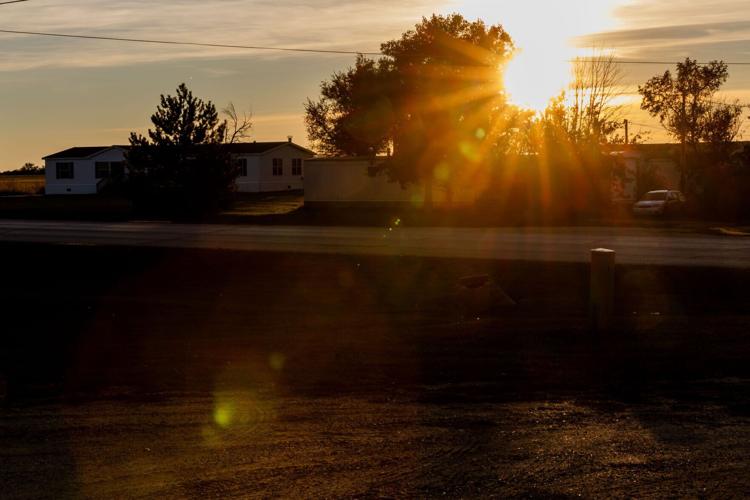
The sun sets in St. Francis, S.D., on the Rosebud Indian Reservation on Monday, Oct. 16, 2023.
Significant numbers
Though some 33,000 Sicangu Lakota people are enrolled in the Rosebud tribe, the U.S. Census says the reservation population is only about 10,000. At least eight people have died in encounters with tribal law enforcement over the past decade on Rosebud Sioux tribal lands.
That’s a significant number, even considering that Native Americans died in law enforcement interactions at a rate of 1.6 per 100,000 in 2020. That rate was five times greater than it was for whites and three times greater than it is for Blacks that year. At Rosebud, the rate is 8 per 100,000 every year for the past 10 years.

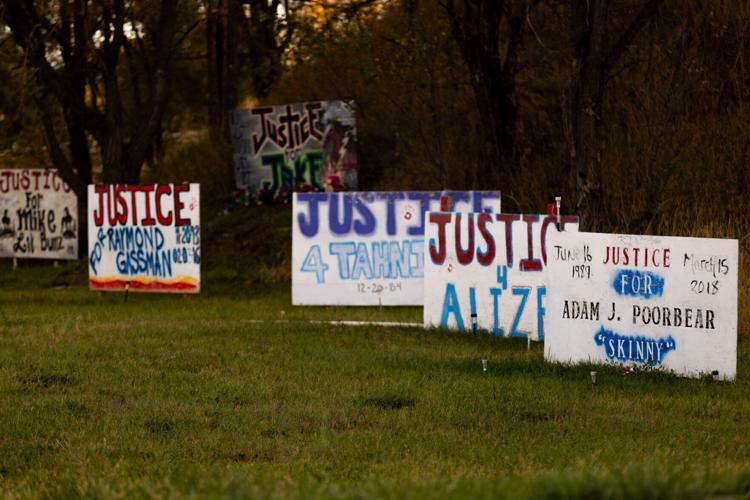
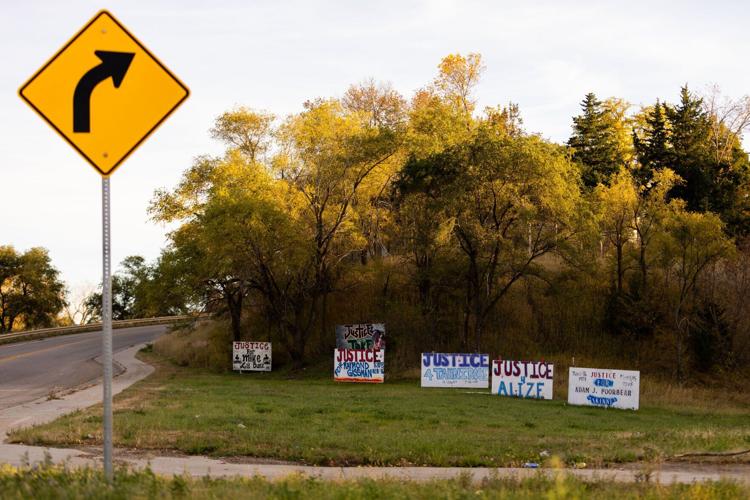
Painted memorial signs for people who were killed are posted alongside Sioux Boulevard in Rosebud, S.D., on the Rosebud Indian Reservation on Monday, Oct. 16, 2023.
On the Pine Ridge Reservation, which borders Rosebud to the west and has nearly double the population, roughly 47,000 enrolled members and major issues with crime, three people have died in encounters with the Oglala Sioux police over the same time period, according to an analysis of three public databases that track such deaths: Fatal Encounters, Mapping Police Violence and The Washington Post’s Fatal Force tracker.
Rapid City — where a previous story in this series found that police killings of Indigenous people have led the Department of Justice to probe possible racial bias in law enforcement — has a similar rate of Native American deaths in law enforcement interactions.
It’s not just the number of deaths at Rosebud that stands out, though.
This Lee Enterprises Public Service Journalism Team investigation found that in every fatal encounter on Rosebud, unanswered questions about what happened and why have festered into fears of law enforcement — and suspicions about their conduct.
Deaths and suspicions
After Feather Colombe — a 20-year-old woman with no criminal history — died in a high-speed chase on May 1, 2014, her family was left searching in vain for answers to a number of fundamental questions, such as why tribal police were chasing her in the first place. As for why she was fleeing, her grandmother has reportedly said that Colombe was “terrified” of the police.

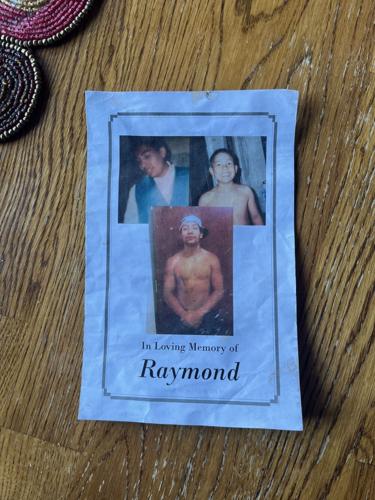
This flyer is from Raymond Gassman's 2016 funeral. He was killed by a Rosebud tribal police officer.
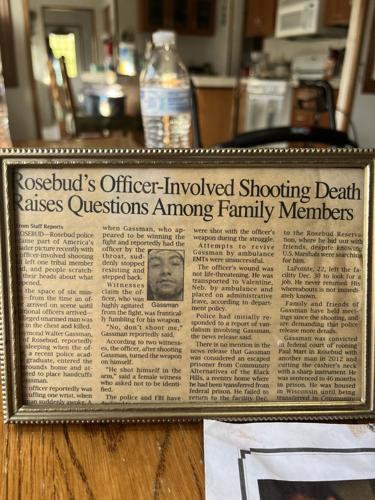
After tribal police fatally shot a halfway-house escapee named Raymond Gassman on the Rosebud reservation on Feb. 2, 2016, his family was also left wondering why. They sought reports from the police and FBI, but never received the documents or answers they were looking for, his brother Lowell Gassman said.
And when Lee Enterprises made a public records request for the FBI investigation into Gassman’s death, the bureau provided 44 pages that included no police narratives or reports about what tribal police say occurred, or what the FBI uncovered.
Without answers about what happened that day, Lowell has come to believe rumors that the tribal officer did not follow protocols and that the bullet wound an officer suffered in the incident was actually self-inflicted.

Lowell Gassman, right, and Darrel Jackson continue to wonder why a Rosebud tribal officer fatally shot their relative Lowell Gassman in 2016. They are shown in Jackson's Rapid City, South Dakota, home on May 7, 2023.
After Adam Poor Bear was fatally shot by Rosebud police on March 14, 2018, his father, Weldon, spent years trying to get documents that would help him understand what happened. But after Lee Enterprises obtained a heavily redacted fraction of the FBI’s investigative file earlier this year, Weldon Poor Bear remained confused about why an officer killed his unarmed son while responding to a disturbance call.
After police shot and killed Jacob Archambault on Jan. 27, 2019, an FBI investigation uncovered allegations that police had assaulted him and threatened his life. A Lee Enterprises investigation identified five witnesses who claimed to know of such threats. While the U.S. Attorney for South Dakota ultimately determined that officers’ actions were justified, Archambault’s loved ones have continued to question what happened — and why.
Jacob Archambault was fatally shot by Rosebud Sioux Tribe Law Enforcement in South Dakota.
After Zechary Arizona died on Sept. 16, 2021 on Rosebud off-reservation trust land, a death certificate said he was “shot by law enforcement officer (sic) on a disturbance call.” But the killing was not reported in the media, and no further information about what happened has ever been publicly disclosed in the years since.
In July 2023, the FBI estimated it would provide up to 50 pages of public records related to Arizona’s death within four months. In June, however, the bureau estimated those records won’t be provided until December of this year.

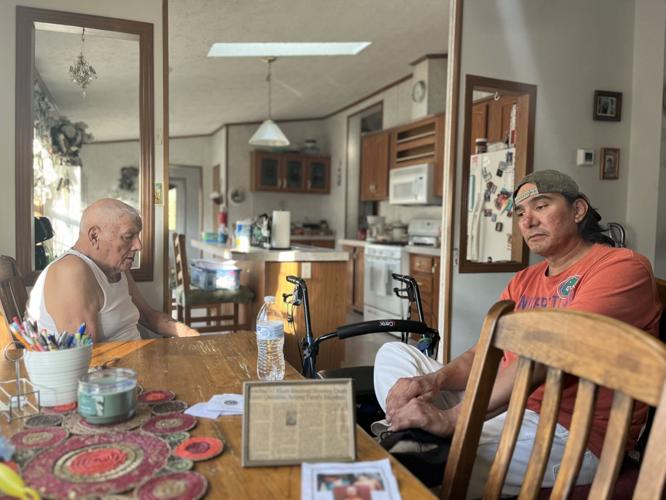
A framed news article reflects Darrel Jackson's lingering uncertainty about why a Rosebud tribal police officer fatally shot his nephew Lowell Gassman in 2016.
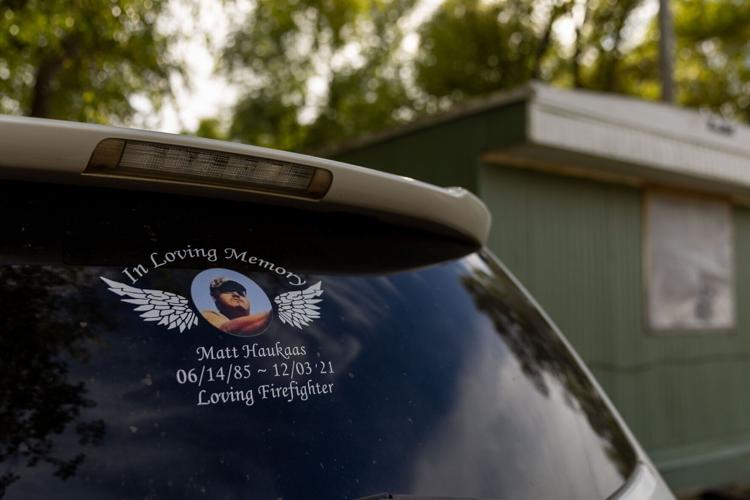
After Matthew Haukaas was found dead on Dec. 3, 2021 in a creek at the bottom of a ravine, near where he was pulled over by tribal police nine days earlier, his sisters and mother began to wonder if his death was truly an accidental “drowning with methamphetamine abuse being a contributory factor,” as the U.S. Attorney’s Office for South Dakota determined. Their suspicions mounted after they say police began harassing and stalking them as they questioned the police account publicly.
After Michael Lee Wright died May 16, 2023, in a high-speed chase with tribal police, his mother, Verna Larvie, heard that police pursued him at speeds of up to 100 mph on a gravel road before putting down a spike strip that caused his fatal crash. But she said she’s never received information from the FBI or tribal police.
In response to a public records request, the FBI declined to provide any documents due to a “pending or prospective law enforcement proceeding.” Without documents or answers from law enforcement about why they were pursuing her son and how he died, Larvie began to believe police targeted her son.
“They’re out of control,” Larvie said of Rosebud tribal police. “They just do what they want. It’s all criminals. It’s all covered up.”
Tribal police ‘failing the people’
Waycee His Holy Horse said he joined the Rosebud police force in 2019 with big ambitions.
“I was ready to change the world,” he said.
But his perspective quickly changed: “It was probably around like six to eight months when I started to get burnt out.”
What wore him down, in part, he said, was that law enforcement “just didn’t have enough resources.”
That’s a problem that tribal law enforcement faces across the country, and His Holy Horse says it left Rosebud law enforcement with an almost impossible task: “patrolling an area of a million square acres and policing roughly around 39,000 enrolled members for Rosebud” with a police force of about 25 officers, only four or five of whom, “if that,” were working each shift.
But His Holy Horse said the Rosebud Tribal Law Enforcement operated in ways that made a difficult job even harder.
“The first thing was, the chief administrator was never a certified police officer at any time ever — and he still isn’t,” he said.
While chief administrator, DeNoyer was, indeed, a former tribal councilman with “very little” law enforcement experience, according to Rodney Bordeaux, who was the tribal president when the tribal council hired him. Though Bordeaux said he “had no say in the selection,” he had “some concerns” and wanted DeNoyer to attend the U.S. Indian Police Academy and get certified.
“But then I got beat out, and he didn’t do that,” Bordeaux said, referring to what he said was the tribal council’s decision to allow DeNoyer to lead the law enforcement department without such qualifications.
While everyone else in the department was subject to training and background checks “to make sure we had integrity and weren’t going to lie” and knew proper protocols, His Holy Horse said, DeNoyer wasn’t held to the same standard.
“It makes absolutely no sense on why we should have to go through all of it, and the very person that’s overseeing us doesn’t have to, solely because of the title,” His Holy Horse said. “But behind the scenes, he had access to computers, he had access to sensitive information, he had access to informants. He had access to just about anything.”
His Holy Horse, who left the department after about two years on the job, said that distrust soured his initial optimism about tribal police work.
“Throughout the time of it, you start to see how the system works,” he said. “And from my perspective, the judicial system — the entire system — was failing not only us as police officers, but it was also failing the people that we serve.”

Signs call for justice for those killed on the Rosebud Indian Reservation.
‘Abuse of power’
Calvin “Hawkeye” Waln served for years in the Rosebud Sioux Tribal Law Enforcement Department, as well as tribal government. During that time, he said, he was witness to a variety of failures and misconduct that the police “don’t want known.”
“I’ve seen individuals pepper sprayed while they were handcuffed,” he said. “I’ve seen closed-fist punches. There’s a police officer who was off duty who broke his hand assaulting someone but nothing happened to him. They were reported, but nothing happens. Nothing happens.”
Waln is now running against DeNoyer, the former chief, in a crowded primary for tribal president.
He said the department hired an officer who had been found by the Internal Affairs Division of the Bureau of Indian Affairs, which provides funding and oversight to tribal police departments through its Office of Justice Services, to have used excessive force.
“So how are you still working in law enforcement? Tell me that. How do you get promoted within law enforcement?” Waln said. “I have firsthand knowledge of that stuff because I seen the document when I was the captain. I was his supervisor. So I know about this stuff firsthand. It's not hearsay.”

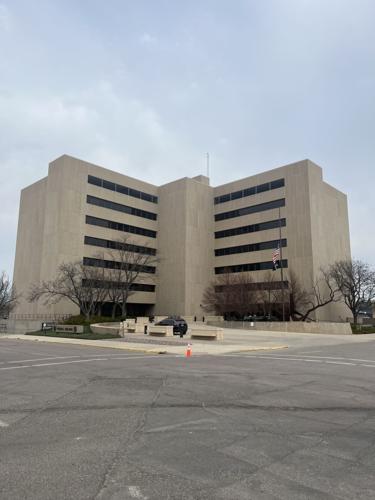
The federal building in Aberdeen, South Dakota, pictured here in May 2023, houses some personnel from the Bureau of Indian Affairs' Office of Justice Services.
In February 2023, Lee Enterprises Public Service Journalism Team filed an open records request with the BIA’s Office of Justice Services, seeking six years of individual or group use-of-force reports as well as reviews, summaries, “findings of policy violations or training deficiencies,” disciplinary actions and criminal investigative reports of incidents of use of force.
Justice Services funds and oversees law enforcement on Rosebud and other tribal lands.
Nearly a year and a half later, the Lee Enterprises request for records remains pending.
The Public Service Journalism Team also requested a copy of what the OJS handbook describes as an “annual summary report of use of force incidents.” In response, the Internal Affairs Division said that it “did not locate records responsive to your request,” suggesting no such summary report has been produced.
The team also sought relevant tribal records, but Rosebud Sioux Tribal Law Enforcement did not respond to a records request for citizen complaints; investigations and reviews of officer misconduct; and allegations of excessive force and civil rights violations made against law enforcement.
While he remains adamant that there are “some good officers” in the department, Waln argues what tribal police are doing at Rosebud is “highly unethical.”
“You can't arrest a girl and then add her on social media when she gets out of jail and be with her,” he said. “You can't sit there and say, ‘Well, I found a little bit of meth on you, but I'll let you go if you perform oral sex on me or have sex with me.’”

Calvin "Hawkeye" Waln, a former Rosebud tribal law enforcement officer photographed on May 13, 2023, says he witnessed a variety of police misconduct during his time in the department.
Waln said he heard such allegations from multiple women in 2021, after he was no longer part of tribal law enforcement. He said he encouraged the women to report their experiences but noted that they were “absolutely afraid.”
“They have the mentality that because they have an addiction, nobody’s going to believe them,” Waln said. “And second of all, they’re afraid that there’s going to be retaliation against them by law enforcement. That’s their biggest fear.”
Waln first went public with his concerns about Rosebud police in 2012, when he told CNN about alleged civil rights violations and excessive use of force. The remarks came as part of a story that reported the Rosebud tribal council had “fired two police chiefs amid corruption charges,” that years of police files were “missing or destroyed,” and that Rosebud tribal police were targeting residents.
Waln said that his efforts to expose such “internal corruption” within the department led police to target him.
Rosebud police officials did not respond to requests seeking comment about allegations of police misconduct from Waln and others.
He said he was fired just before the CNN story appeared, then returned to the force in 2016. He left again in 2018. After an FBI investigation into bad checks he had written, Waln was charged with wire fraud in 2019 and pleaded guilty a year later.
Court documents allege Waln fraudulently passed nine checks totalling $2,525 after inheriting — and depleting — his mother’s more than $8,000 life-insurance policy. While Waln called the incident “an absolute innocent mistake,” he also acknowledged that “the law is the law, so I accept” the conviction.
Travis Leading Cloud spent 12 years working for the Rosebud tribe’s correctional services department, supervising jail staff and working to help open a new correctional facility on the reservation.
During that time, Leading Cloud said, he not only saw but also reported a wide variety of police misconduct.

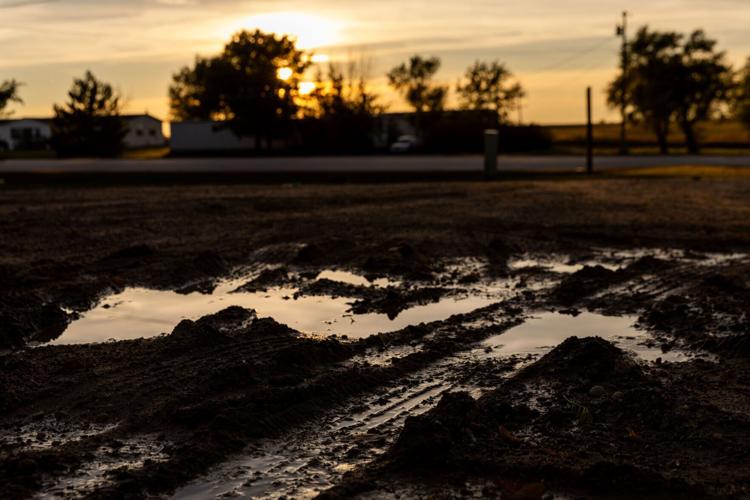
A mud puddle reflects the sunset on the Rosebud Indian Reservation in South Dakota on Monday, Oct. 16, 2023.
He said he saw inmates detained without being charged with any crime, in violation of their civil rights. He said he reported a police officer who “slammed” a handcuffed man’s face into a wall in the jail’s booking area, leaving him with “fractured bones in his face.” He said he reported an officer for carrying out extramarital affairs while on duty. And he said he knew of multiple officers — including some still employed with the department — who were on what’s known as a Giglio or Brady list, which means they have a track record of not being truthful and should not be called as witnesses in criminal trials.
Kevin Swalley, a former chief of the Rosebud police and the current safety and security coordinator for the school district that encompasses the reservation, doesn’t mince words when it comes to the conduct of his former department.
Led until recently by a chief without law enforcement experience, the department lacks cohesion, direction and discipline, he said, and officers are prone to “bullying” and other misapplications of power.
“Right now they have no leadership,” Swalley says. “So they're running amok.”
“This is abuse of power,” he added. “This is gangster. … This is a mafia.”

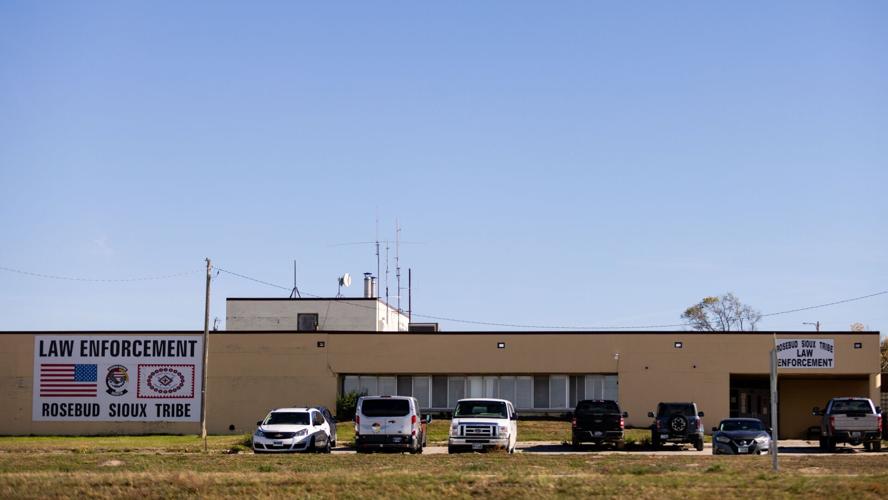
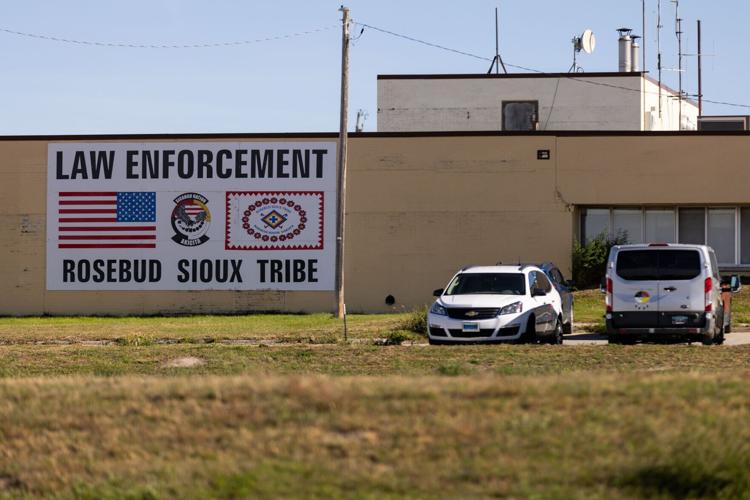
The Rosebud Sioux Tribe Law Enforcement Building on the Rosebud Indian Reservation in South Dakota on Tuesday, Oct. 17, 2023.
Swalley claims he attempted to root out bad cops while he was still the chief, even opening “a couple of cases on a few officers.”
He said he took those cases to the FBI’s Northern Plains Drug Task Force in 2015. Among Swalley's allegations, he said, was a criminal investigator's involvement in “distribution of methamphetamine.”
FBI Public Affairs Specialist Diana Freedman declined to answer questions about whether the agency has investigated or substantiated reports of misconduct among Rosebud law enforcement. The “FBI's longstanding policy is to neither confirm nor deny if we are conducting an investigation,” she wrote in an email.
As for closed investigations, Freedman said that if “no charges are filed, the existence of an investigation will not be made public, unless through the standard Freedom of Information Act process.”
But in response to a FOIA request for documentation related to Swalley’s assertion that he reported allegations of misconduct to the FBI, the bureau said it could “neither confirm nor deny the existence of such records” because they pertained to “one or more third party individuals.”
Bordeaux, however, said he heard these kinds of allegations during his 10-year stint as Rosebud tribal president — and that he finds them credible.
“When you have someone like Hawkeye (Waln) or someone else like that saying that it's happening, it is,” he said. “It’s not news out here in Indian Country.
“But who's going to investigate? Well, they have someone come down from the FBI to check you out or someone from the Internal Affairs Department of the BIA come down, and next thing you know, they don't do nothing. Nothing happens.”

‘Bad reputation’
While accusations of police threats and misconduct may sound extreme, they aren’t unusual on the Rosebud Indian Reservation.
After Weldon Poor Bear’s son Adam was killed by tribal police in 2018, he alleged, the police stalked, intimidated and “harassed” him and his family.
“If I would go to Rosebud for groceries, they would tailgate me all the way down there, and then when I come back,” Poor Bear said. “And then they'd be waiting, and they’d be sitting out here, out by my house, like watching me that whole month.”
Even at his son’s wake, Poor Bear said, officers were "parked there, like watching us."
The intimidation continued at his son’s funeral, Poor Bear said, when the police started “pulling cars over” as everyone was leaving.
“And I got mad about that,” Poor Bear said. “I told the tribal president, I said, ‘Why are they pulling people over from a funeral?’”

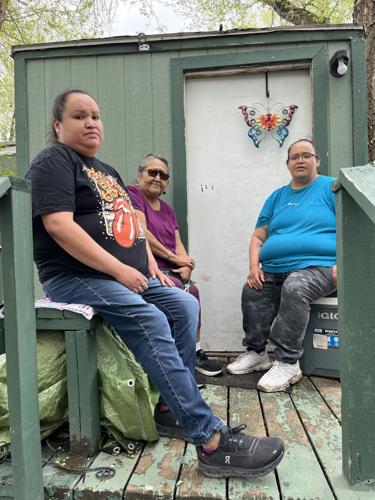
After Matthew Haukaas was found dead on Dec. 3, 2021, near where he was pulled over by tribal police, Sara Haukaas, Leta Brandis and Julie Haukaas, from left, have questioned if his death was truly accidental. Their suspicions mounted after they say police began harassing them. They are shown in Mission, South Dakota, on May 13, 2023.
After Matthew Haukaas was found dead near the site of his past traffic stop, his sisters Julie, Sara and Addie Haukaas all say the police harassed them, repeatedly driving by their home, pulling them over for minor infractions and even showing up at the cemetery when they where visiting their brother’s grave, which Julie filmed.
Their mother, Leta Brandis, said that “because of how outspoken these girls were, concerning what happened with my son, (the Rosebud police) really watched us after that.”
Brandis recalled the time Addie called to tell her she was being pulled over by a tribal officer and was afraid. Brandis left her job at the Todd County School District, where she works as a community liaison for the public schools on the reservation, and went to help.
“I drove and I pulled up and I just asked (the officer), ‘What's going on?’” Brandis said. “He had my daughter bent over on the car hood, and he was trying to get her phone.

The Rosebud Indian Reservation in on Tuesday, Oct. 17, 2023.
“I told him that he needed to treat us better,” Brandis said. “Because I told him, I said, ‘Behind that badge,’ I said, ‘you're nothing but a man.’ You know, ‘Why are you doing this?’ And I told that girl officer that was with him — I said, ‘You know, you cops have a bad reputation.’”
Ultimately, Brandis said, the police released her daughter at the scene. Rosebud police haven't responded to Lee Public Service Team inquiries regarding alleged police misconduct.
The erosion of trust in law enforcement can be felt across the Rosebud reservation.
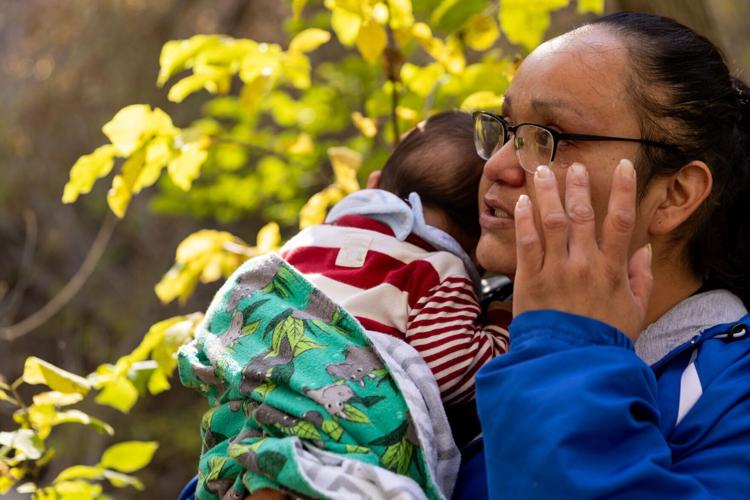
On a recent morning, Julie Haukaas carried her infant son to the ravine where her brother Matthew’s body was found — the same ravine where Jacob Archambault’s body was found — and lamented how she too, like all the other families, had to live with so many unanswered questions and suspicions.

Julie Haukaas wipes away tears while holding her infant son, whom she named after her brother, Matthew Haukaas, whose body was found in December 2021, nine days after he was pulled over by tribal police.
“That FBI, I really do think they’re covering it up for them,” she said. “Whether it’s them covering up my brother’s (death) or even Jake (Archambault)’s.”
Freedman, the FBI public affairs specialist, pushed back on such claims.
“The FBI remains steadfast in our commitment to conducting thorough investigations,” Freedman wrote in an email response to questions. “Each case is treated with the utmost seriousness, and our agents and other personnel spare no effort in establishing the facts.”
But Julie Haukaas said that, absent the information and answers her family has sought, something else has filled the vacuum: rumors and fear.
“I constantly live in that not feeling safe,” she said. “It’s really, I guess, messed with me mentally a lot. My anxiety, the thought of death. … The fear of dying, but also the fear of not being saved.”

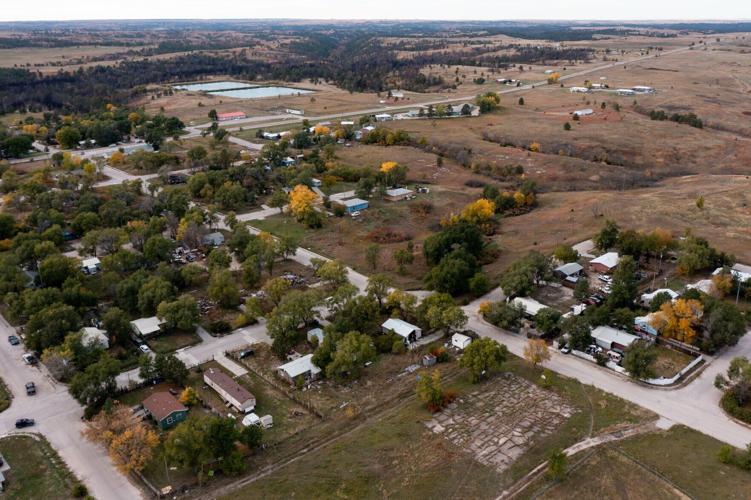
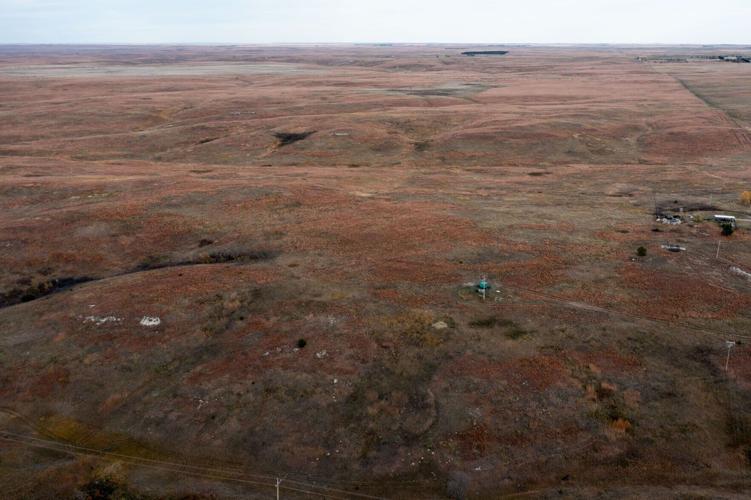
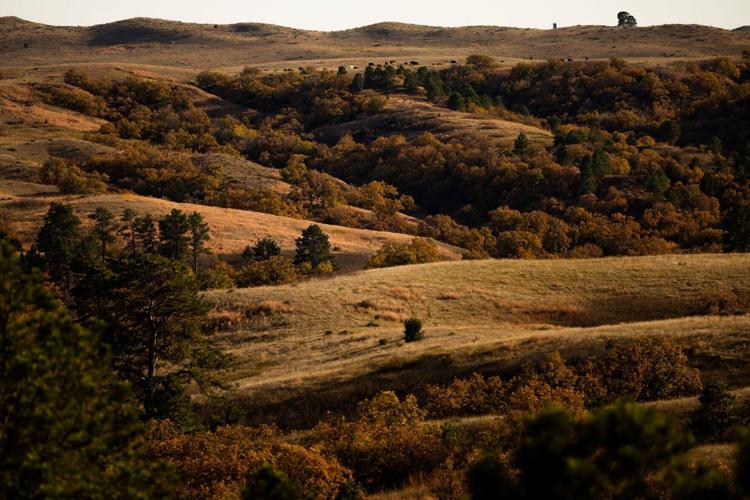
The Rosebud Indian Reservation spans an area of more than a million square acres in south-central South Dakota.

The Rosebud Indian Reservation spans an area of more than a million square acres in south-central South Dakota.

The Rosebud Sioux Tribe Law Enforcement Building is photographed on Tuesday, Oct. 17, 2023.