Recent killings show how quickly an encounter with federal immigration authorities can turn deadly.
Immigration and Customs Enforcement officers shot and killed a driver July 13 in Maine, Reuters reported. Almost 12 hours after the fact, the Department of Homeland Security said an ICE officer, "fearing for public safety," opened fire on the man when he attempted to flee agents as they tried to stop his vehicle.

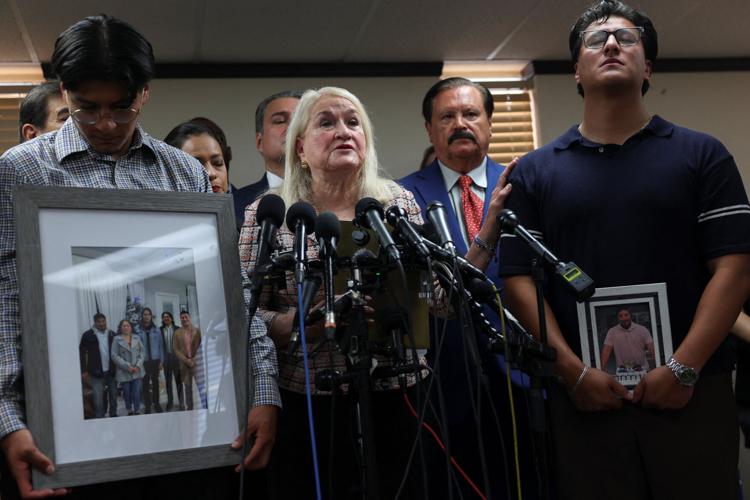
Family members attend a July 8 news conference after an Immigration and Customs Enforcement agent shot and killed Mexican motorist Lorenzo Salgado Araujo in Houston, Texas.
That killing came less than a week after an ICE agent shot and killed a man in a traffic stop during a deportation crackdown in Texas.
The circumstances surrounding the July 7 killing of Lorenzo Salgado Araujo in Houston are disputed, with witnesses contradicting key details released by immigration authorities. The death echoes the cases of Renee Good, shot and killed Jan. 7 in Minneapolis, and Silverio Villegas-Gonzalez, killed in Chicago in September.
People are also reading…

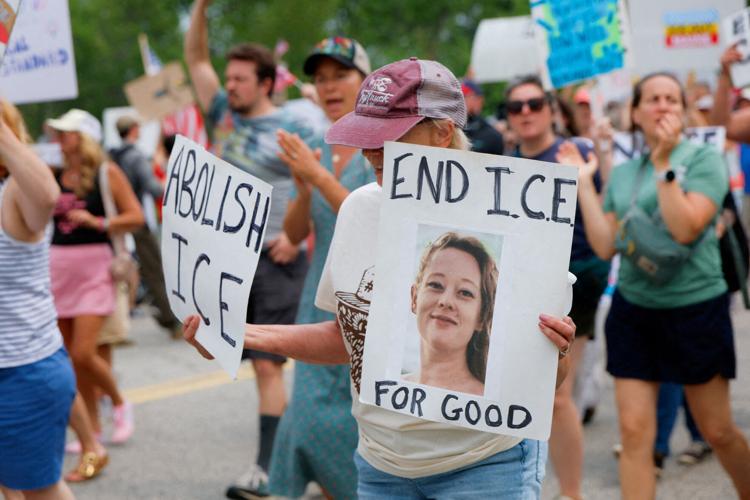
A woman holds a photograph of Renee Good, who was shot and killed by a federal immigration agent on Jan. 7 in Minneapolis, as people protest July 14 outside the U.S. Immigration and Customs Enforcement Enforcement and Removal Operations facility in Scarborough, Maine, a day after ICE agents shot and killed a driver in the nearby town of Biddeford.
While officials say Salgado Araujo, 52, "weaponized" his vehicle and tried to run over an officer, passengers in his van said that was "simply false." Houston Mayor John Whitmire, meanwhile, said Salgado Araujo was "chased by an unmarked vehicle before he could identify himself."
U.S. President Donald Trump directed federal immigration agents to resume traffic stops as an arrest tactic Wednesday, overruling top administration officials after agents fatally shot two drivers in Texas and Maine within days of each other, Reuters reported. The reversal came a day after White House border czar Tom Homan said ICE would suspend most vehicle stops on an indefinite but temporary basis to review procedures and "make sure ICE agents are safe and doing the right thing."
Federal immigration officers play a different role than local police officers, whom you might expect to see conducting traffic stops. According to the advocacy group American Immigration Council, ICE can't stop cars for regular traffic violations but may stop a car if they have reasonable suspicion that a federal law was violated, including if they believe someone in the car is in the United States illegally.
Here is what immigration and civil rights organizations want you to know about being stopped by ICE:

FBI agents work July 13 at the scene of a shooting involving U.S. Immigration and Customs Enforcement in Biddeford, Maine.
What are your rights?
According to the ACLU, if you are pulled over by ICE, there are some things you should do, such as stay calm, tell the truth and be cooperative.
There are some other important things to know that can help you remain safe if you are stopped, including:
You have the right to remain silent. You should say out loud that you are exercising your right to remain silent. Be aware that in some states, you may be required by law to identify yourself to police.
You don't have to consent to be searched, but authorities may pat you down if they suspect you have a weapon.
If you are arrested by police, you have the right to speak with an attorney and to have one appointed to you. If you are arrested by ICE, you still have the right to speak with an attorney, but the government doesn't need to provide one. You can ask for a list of free or low-cost lawyers.
In most cases, you don't have to answer questions about your immigration status, where you were born, or how you entered the U.S. Separate rules might apply at borders or for people on certain non-immigrant visas.
If ICE detains you, you have the right to contact your consulate or have an officer inform the consulate that you were detained.
You do not need to answer questions or sign anything before talking to a lawyer. If you don't understand officers or can't read papers they give you, tell officers you need an interpreter.

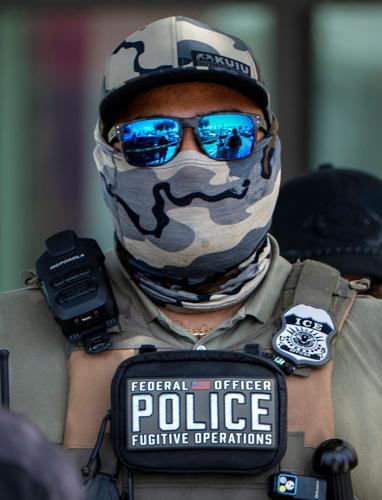
An Immigration and Customs Enforcement agent is seen July 9 in Lake Worth Beach, Fla.
What if you’re at home?
ACLU says immigration officers cannot enter your home without consent or a signed warrant. ICE said it does not need a judicial warrant, but can enter with an administrative warrant signed by ICE officials, a move some experts say flouts the Constitution. The National Immigrant Justice Center's website has sample images to spot the difference between a warrant signed by a judge and an administrative warrant.
Here's what you should do if immigration officers come to your home, according to the ACLU:
Stay calm and keep the door closed. Ask the officers to show you identification or documents by holding them up to a window or sliding them under the door.
You have the right to remain silent, even if the officer has a warrant. The ACLU advises you remain silent until speaking with a lawyer. Don't make false statements or give false documents.
You have the right to refuse to allow an ICE officer inside, unless the officer has a certain kind of warrant.
If officers force their way inside, the ACLU says you should not resist but should state: "I do not consent to your entry or to your search of these premises. I am exercising my right to remain silent. I wish to speak with a lawyer as soon as possible."
Law enforcement officers have the right to enter if they have an arrest warrant naming a person at that address. They may also enter if you are on probation with a condition that you may be searched.