Winston-Salem nurse Johnathan Howard Hayes once said the COVID-19 pandemic taught him always to treat others the way you want to be treated.
That was in the spring of 2021 when Hayes’ was nominated to be a Winston-Salem Journal’s Nurse of Distinction. At the time, his wife, Misty Hayes said Hayes always went the extra mile to ensure his patients would be taken care of.
“He is the type of nurse that makes patients feel like part of his family. He always thinks about if that was him, how would he want to be treated as the patient,” Misty Hayes said then.

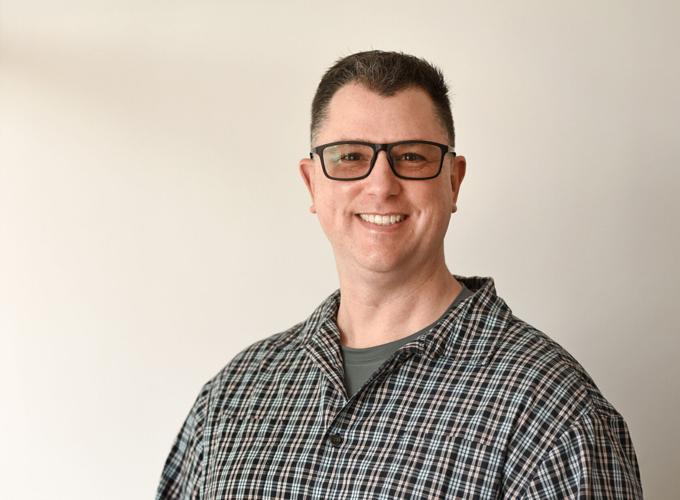
Photo taken of Hayes for a profile for the 2021 Celebrating Nurses of the Triad special section coordinated by the Winston-Salem Journal, News & Record and the N.C. Nurses Association.
Hayes, now 48, was a nurse in North Carolina for over 20 years. He lived on a quiet street with a large yard on the corner of the block with his wife and her two daughters, whom he adopted as adults.
By all appearances, Hayes lived up to his wife’s description of a man who went above and beyond to care for others.
People are also reading…
Now, he stands accused of murder and attempted murder of patients in a hospital where he worked. Hayes is accused of intentionally administering a near-lethal dose of insulin to a patient in the same year he was nominated to be a nurse of distinction.
He is also accused of administering similar lethal doses of insulin to two other patients in early 2022, killing both, according to Winston-Salem police. Hayes was arrested in October 2022, on one count of attempted first-degree murder and two counts of murder.
There’s little insight into Hayes’ potential motivations, but the two-year-old Journal interview, court records and police statements provide a look into the details behind the case and Hayes’ history. Police records indicate Hayes had a history of mismanaging medicine administration and revealed one patient said she was scared of Hayes and described him as sneaky.
Hayes’ court case has had little movement, according to court records.
Hayes’ lawyer Jason Crump said he did not comment on pending cases.
“Any allegation set forth in any filing with the court in any case is merely an allegation which has not yet been proved in the crucible of confrontation and examination,” he said.

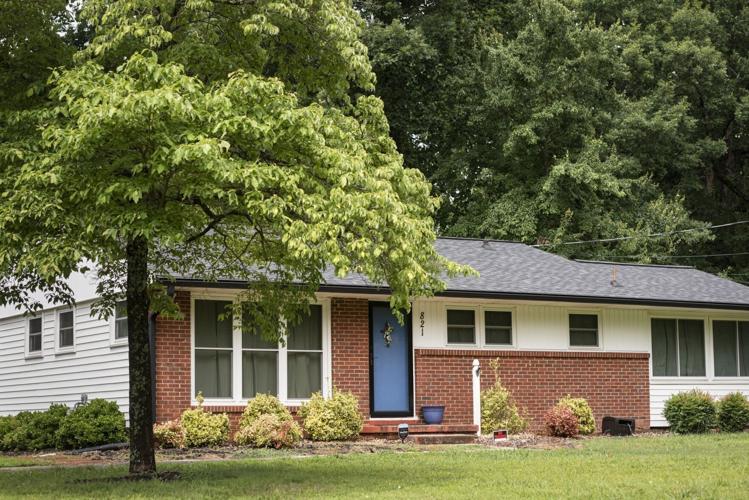
The home of Johnathan Hayes, a nurse charged with killing two women and attempting to kill another woman while working as a nurse at Atrium Wake Forest Baptist Medical Center.
Multiple workplaces, multiple marriages
Hayes spent the majority of his life in the Triad area in North Carolina, according to North Carolina voter registration records.
Hayes went to nursing school at North Carolina A&T University. In 1998, Hayes received a Nurse Aide II license, according to the North Carolina Board of Nursing. The requirements of the license mean Hayes had a Nurse Aide I license and completed a Nurse Aide II program.
Two years later, in 2000, Hayes received a nursing degree from North Carolina A&T University, a school spokeswoman told the Winston-Salem Journal. In June of that year, he received his registered nurse permanent license, according to the NC Board of Nursing. The license is set to expire in May 2024. Hayes has no listed charges or disciplinary actions attached to his license.
In over two decades of working as a nurse, Hayes worked at a handful of hospitals in the central North Carolina area, according to a police warrant released in May. Investigators got his employment information from a resume supplied by Atrium, Detective M.D. Ognosky wrote in an application for a search warrant for Hayes’ home. The warrant details the investigation into Hayes.
Hayes worked at Alamance Regional Medical Center before it became Cone Health Alamance Regional and also worked for Cone Health, according to Cone Health External Communications Manager Doug Allred. Hayes’ last period of employment with Cone Health ended in 2013, Allred said.
Hayes also worked at Iredell Memorial Hospital briefly in 2015, said Meagan Kowalski, public information officer for Iredell Health System. He only worked as a trainee and all medication administration by him was overseen during the training period, she said. The hospital reviewed his work history when the allegations against him were made public, she said.
Hayes also may have worked for High Point Regional Hospital, Novant Health, Davis Regional Medical Center in Statesville and Atrium Health Wake Forest Baptist, where he was working when he was accused of murder, according to his resume, which police reviewed during the investigation. In October 2022, Joe McCloskey, a spokesman for Atrium Health, said Hayes had worked at Wake Forest Baptist at various times over the past 15 years. Hayes was fired on March 18, 2022, after the hospital suspected a link to the patient deaths he is now charged with.
Hayes appears to have changed employers several times. In 2018, he left Novant Health over some issues with medication and continuing education, according to police. Hayes said there was a misunderstanding that included time clock issues and trouble scanning medication on time.
David Wilson, a Scottish criminologist who specialized in serial killers and has done research on nurses who are serial killers in hospitals, spoke about common traits of nurse serial killers he has studied. Hayes has not been convicted, but a link between those Wilson studied was a high turnover in jobs. Often, they are bounced around because they make patients or coworkers uncomfortable, he said.
“And that's a common pattern. They get moved on very quickly. Once they make their colleagues feel uneasy, hospital administrators are just going to give them a reference to get rid of them,” Wilson said.
In his personal life, Hayes has been married at least three times, according to public records. In June 1998, he married Andrea Bachl in Alamance County. The pair divorced in 2004.
On March 31, 2005, Hayes married Christine Dawn Hayes in St. Lucia. The pair divorced in February 2010, after a year of separation. Divorce records showed Hayes admitted to having at least two extramarital affairs during the marriage.
The same year of the divorce, Hayes married his current wife, Misty Dawn Gunter on April 14. Gunter, now Misty Hayes, came from an abusive marriage, according to court documents. She brought two daughters into her marriage with Hayes.
The new family of four lived at Hayes’ home on a corner of Ransom Road in Winston-Salem in a small brick house. The couple bought the home in 2015.
In October and December 2021, Hayes filed to adopt Misty Hayes’ two daughters, who were both over 18 by that time. The sisters had taken Hayes’ last name by then, according to the decree of adult adoption.
A little over a year later, on January 26, 2022, the adoption was finalized, four days after Hayes was accused of allegedly administering a third lethal dose of insulin to a patient at Atrium Health Wake Forest Baptist.
Patient didn’t trust nurse; two died
The first overdose at the hospital happened about two months before that, in December 2021.
Pamela Jean Little, who was 63 at the time, was a patient at Atrium Health Wake Forest Baptist Medical Center. She was under Hayes’ care on Dec. 1, and recalled being scared of a male nurse who was tall, wore glasses and had graying hair, which matches Hayes’ description, according to the Winston-Salem Police’s search warrant application. Little described Hayes as sneaky and said she saw him put a white pill in her IV line, then remove it when another nurse came into the room.
Little, who passed away in May 2022, told investigators that she was diabetic from birth, but rarely took insulin. She had one dose of insulin during his hospital stay, given to her by a female nurse, she said. But on Dec. 1, while under the care of Hayes, Little suffered from a hypoglycemic episode, which is caused by too much insulin. An overdose of insulin causes blood sugar to drop drastically, which can cause a coma and brain death, said Dr. John Buse, an endocrinologist and diabetes expert with the UNC School of Medicine.
Hospital records showed Hayes withdrew insulin for Little, but documented that he did not administer the medicine. Hours later, she suffered through the attack, but health care workers were able to get her blood sugar back where it needed to be with medicine.
Hospital staff weren’t able to do the same for Gwen Zelda Crawford when she had a hypoglycemic attack a month later.
Crawford was a patient at the hospital on Jan. 5 for a condition that could require insulin, but she had not needed insulin medication since late December, according to police. Her blood sugar on Jan. 4 confirmed no external insulin was needed. That information was allegedly passed on to Hayes when he took over Crawford’s care on Jan. 5.
Despite that, Hayes drew up insulin for Crawford. He was seen on camera leaving the secure medication dispensing room with an entire vial of insulin — about 300 units, nearly 25 times the maximum dosage given to patients by nurses, according to the warrant. In a later interview with hospital investigators, Hayes claimed he disposed of the entire vial, but that could not be verified, according to police records. He also said he did not remember pulling the vial.
That day, Crawford had a hypoglycemic episode that sent her to the intensive care unit, where health care staff tried to bring her blood sugar to normal levels to no avail. Three days later, on Jan. 8, 2021, Crawford died. An endocrinologist at the hospital used her blood tests to determine that she had to have been given over 100 units of insulin, the warrant application said. Medical professionals who met with the Winston-Salem Police could not offer any explanation as to why Crawford would have been given that much insulin.
Two weeks later, another patient died.
Vicky Lynne Lingerfelt, 61, was a patient at Atrium Health Wake Forest Baptist when she died due to a hypoglycemic episode. Unlike Little and Crawford, Lingerfelt, who lived in Vale, North Carolina, was not diabetic and did not require any insulin during her stay at the hospital. Despite that, she died on Jan. 28, 2022, due to hypoglycemia caused by the administration of too much insulin, according to her death certificate.
Lingerfelt was a patient at Atrium but Hayes was not her primary nurse, according to the police search warrant. Hayes did help move her from one bed to another on Jan. 22 while Lingerfelt’s primary nurse was away for lunch, a police warrant said.
During that time, Hayes accessed Lingerfelt’s medical records, despite having no need or right to do so, according to police. Within hours, Lingerfelt had a hypoglycemic episode and had to be taken to the ICU.
Hayes was also seen on video during that time removing another full vial of insulin from the medication room.
Lingerfelt, a former director of a women’s shelter, died six days later.
Nearly two months after Lingerfelt’s death, the hospital let Hayes go and contacted the Winston-Salem Police Department with suspicions about Lingerfelt and Crawford’s deaths.

George Nelson Shaw Sr. was killed by a nursing assistant in 2018. When his body was autopsied, four injection sites were found. Tests confirmed he died of insulin doses.
Hayes administered seven times more insulin
Winston-Salem police investigators first met with hospital leaders about the deaths on March 21, 2022, three days after Hayes was let go. In the meeting, hospital representatives laid out what they’d found while looking into the deaths of Crawford and Lingerfelt.
Risk management officials with the hospital led the investigation and found Hayes was a top dispenser of insulin in the hospital, and often incorrectly documented medication administration.
Hospital records showed Hayes administered seven times more insulin than the hospital average, the hospital investigation found. He was the highest user of insulin in all regards for the entire facility over a three-month period.
Hayes also often incorrectly recorded medication administration. For insulin, nurses and other hospital staff are supposed to have a second health care worker verify the amount of medication being given — a dual verification process. There is an option in the hospital system to say the medication was “given by other,” in rare instances when medication is given during an emergency or by someone not in the same hospital area where a patient is located.
The “given by other” label was used only 130 times in the over 33,000 times medicine was administered from Jan. 1, 2022, to the time of the meeting with police in March. Of the 130 instances when the “given by other” label was used for medication administration records, 88 were recorded by Hayes, the warrant said.
The hospital risk management team had a signed statement from Hayes admitting some responsibility for administering insulin to Crawford. He did not admit to giving insulin to Lingerfelt. Hayes was the only staff member present when Crawford, Lingerfelt and Little had hypoglycemia episodes.
With evidence from the hospital in hand, police met with Hayes about a week later, on March 30, 2022.
Hayes told police he did not remember giving any insulin to Crawford, but did say she was very sick and “needed to go.” He told police he meant she needed to go to the ICU after being in the hospital for several weeks.
Later in the interview, he admitted to drawing up insulin for Crawford but said he checked her records and saw she didn’t need any insulin and threw away the insulin he drew up. Hayes said the practice of drawing up medication before checking to see if it is needed was common.
Hayes also said he did not know he needed to have dual verification for insulin, but hospital records showed he previously correctly recorded medication using the dual verification system. He also said the dual verification system was commonly used by nurses, but hospital records dispute that. Police confronted him with the statistics in the interview and Hayes had no explanation, the warrant said.
In the interview, Hayes was told Crawford was likely given over 100 units of insulin.
“He replied that was an incredible amount of insulin and that someone would have had to administer that much intentionally,” the warrant said.
Hayes denied doing so, but also said if the hospital “say(s) I did it, then I did it.”
Hayes did not admit to administering insulin to Lingerfelt and denied taking the vials for him or his family. He said he heard that Lingerfelt’s family may have overdosed her because she argued with her family earlier in the day.
“Hayes stated there was a possibility that he had given Gwen Crawford the insulin he had drawn up, but he would have had to be way ‘off his game,’” the warrant said. “Johnathan Hayes said he may have made a mistake because he had been waking a lot due to the COVID pandemic.”
Hayes denied killing someone or helping anyone kill themselves but admitted he understood why investigators were looking at him.
“Johnathan Hayes stated that poor nursing practices, unaccounted vials of insulin and patients dropping their blood sugar would mean he would be looking straight at him,” the warrant said.
Later, Hayes said, “I guess I gave it to her, that would make sense.” Later, he said, “If it would make it right for these people and their families to have someone to pin it on, he could live with that.” the warrant said.
For the investigation, Lingerfelt and Crawford’s bodies were exhumed and autopsies were performed. The autopsy reports, which are typically public records, were sealed, according to the N.C. Office of the Chief Medical Examiner. Both deaths were ruled homicides due to insulin overdoses, according to their death certificates, signed Oct. 25, 2022, the day a warrant was issued for Hayes’ arrest

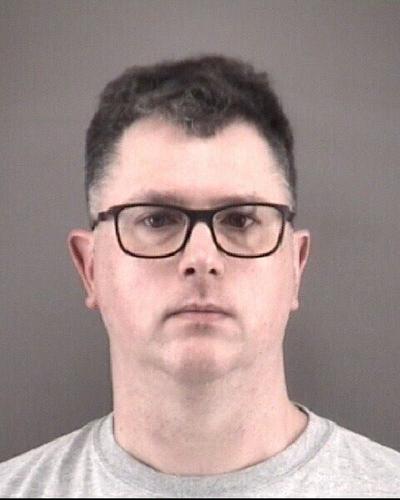
Hayes' mug shot from his arrest on Oct. 25, 2022.
Behind the screens
A search of Hayes’ electronics and files revealed more about the nurse accused of murder.
In April 2021, he sent his wife a picture of a deceased man in a hospital bed and said he said goodbye to an old friend. In December 2021, he sent his wife a picture of a penis and said “he just got the male from the emergency department,” the warrant said. “Hayes said the male was a dirty mess, a diabetic and the smell almost knocked him out.”
In March 2021, Hayes sent his wife a message saying he sent his own fecal matter to be tested for worms under the name of a patient.
Hayes also had 25 pictures of hospital patient wristbands.
The search warrants issued for Hayes’ home and electronics allowed police to search the premises and access any files. The warrant said analysis can take weeks.
The Winston-Salem Police would not comment on the case after a request to comment from Lee Enterprises. The Forsyth County District Attorney’s Office did not respond to requests for comment.
Motivations unclear
Hayes would meet the FBI’s definition of serial killers: those who kill two or more people in separate events, according to a report by the National Center for the Analysis of Violent Crime.
Wilson said women over the age of 60, which includes Little, Crawford and Lingerfelt, are one of the five groups most often targeted by serial killers.
“There's a vulnerability because sometimes people who are over 60 in the hospital,” Wilson said. “Because people are like, ‘You know, they were ill,’ even say, ‘She has a health problem.’ So there's not that much questioning.”
Wilson said it’s difficult to ever determine the motivations of serial killers because they are either unwilling to talk or untrustworthy. In his research on nurses who killed in hospital settings, there were often suggestions that they were “Angels or death,” or mercy killings of patients who were suffering, but Wilson believes it often goes beyond that.
“The specific motivation is probably beyond us,” Wilson said. “I saw a number of the ‘Angels of death,’ and that did suggest motivation. Some would say, for example, it was a mercy killing. … But sometimes the angels of death just like the attention that surrounded them. So the motivation could be peculiar.”
Instead, Wilson focuses on common traits and methods. In his research on nurses who kill in hospital settings, Wilson found they are often seeking control.
“What unites them all is the desire for power and control,” he said. “And they often feel they're entitled to have that power and control, but for whatever reason, they feel it's denied to them in other aspects of their lives.”
Wilson and his fellow researchers also found that most nurses were caught within three months because they made coworkers or patients uneasy.
Hayes’ accusations also match other instances of murders in hospitals in the method. Insulin is often used in these instances because it is easier for nurses to access, Wilson said.
Wilson found that health care was a common job for people with a desire to kill, he said. Recent research found that people with a desire to kill seek out a profession that allows them to do so, and health care was near the top of the list, he said.
“The ultimate form of power and control is to decide who should live and who should die. There’s the godlike quality isn't there?” Wilson said.
People are often fascinated with serial killing cases like the hospital death and Hayes’ arrest because it is difficult to understand the motivation, Wilson said. If serial killers were dysfunctional loners like in movies and TV shows, they would be easier to explain and catch, he said.
“That's not what they're like. They're often very well integrated into the life of a community,” he said. “I think that becomes fascinating for people. How do they kill and still be our next-door neighbor that will help us cut the grass?”
Hayes’ family continues to live in Winston-Salem in their quiet neighborhood. The family refused to comment on this story. One person doing yard work outside the home said the family “has been put through the wringer with reporters.”
The families of the victims did not respond to requests for comment or chose not to comment.
Virginia Annable is a member of the Lee Enterprises Public Service Journalism Team.