Emily Greer's four children know the rules of Greer Academy by heart. Students are expected to love God and others, not complain or argue, be kind and, maybe most importantly, love and respect Mama.
Greer, 41, set and maintains these rules in her homeschool to be followed by her four children: Solomon, 15; Elias, 13; Caleb, 10, and Joy, 5. The homemade sign sits near the couch alongside Greer's curriculum books to serve as a constant reminder.
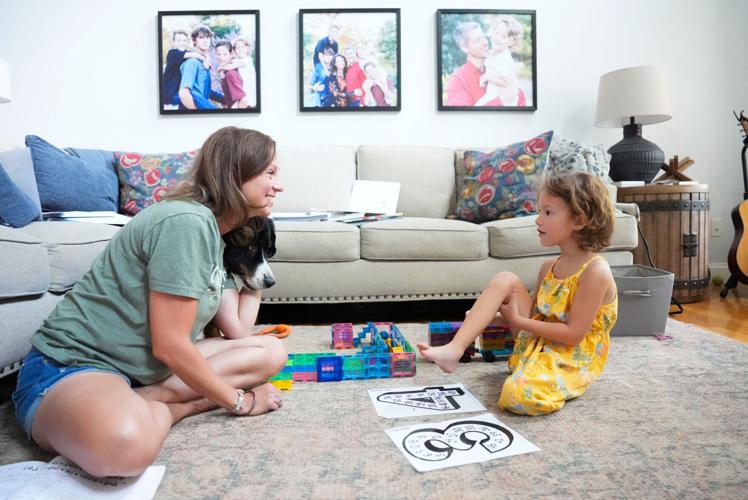
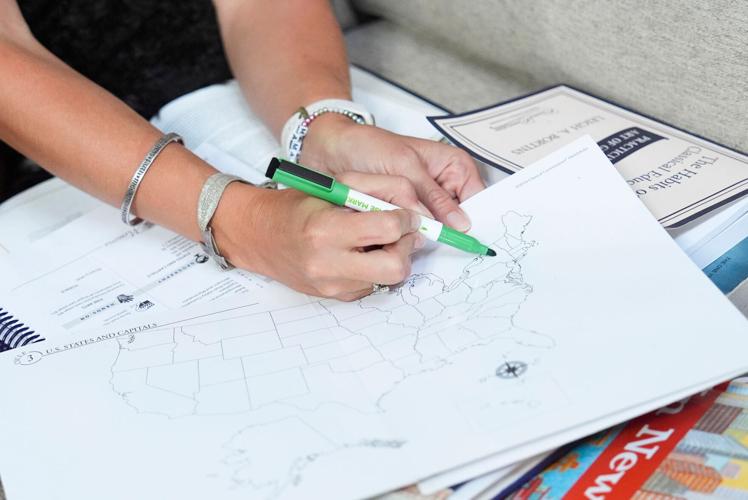
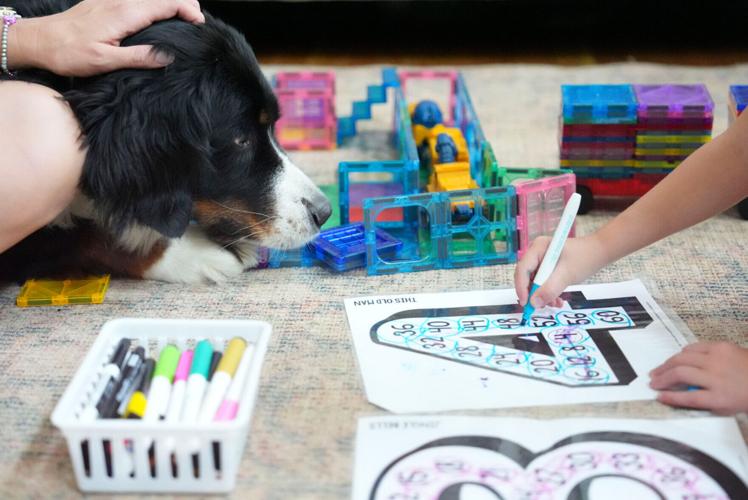
On a normal day in August, Joy plays with Magna-Tiles and trucks on the living room floor next to the family dog, Rose. Greer works with Caleb on state capitals and verbs, occasionally asking Joy to repeat multiplication facts. Elias pores over his Latin and math workbooks at the kitchen counter.
Homeschooling spiked across the United States at the height of the COVID-19 pandemic as families isolated themselves, the U.S. Census Bureau reported.
People are also reading…
Homeschooling increased by 111% from the 2019-20 school year to 2020-21 in Knox County, Tennessee, according to state data. The Greers are part of a growing group of families in the county who made it a long-term choice.

Emily Greer works on counting with her 5-year-old daughter, Joy, at their home in West Knoxville, Tenn.
Making the choice
Families choose homeschooling for any number of reasons, including avoiding bullying or catering to students' medical or social needs, researcher Albert Cheng said.
"A lot of families are (homeschooling) not because they have some ideological or philosophical commitment to it," Cheng, based at Ohio State University, told Knox News. "They're just recognizing it as a means to meet whatever needs happen to be present for that particular child."
Greer was sitting in her high school classroom when she decided she would homeschool her children.
"I was very bored in school," Greer, 41, told Knox News. "I was annoyed at how much time was spent on disciplining other students and not learning, or the busywork."
Her husband, Dave, wasn't immediately sold but, after meeting homeschooling families whose children seemed unusually mature and comfortable with adults, they agreed it was the best path for their family.

Emily Greer quizzes her 10-year-old son, Caleb, on state capitals.
A classical, Christian education was at the heart of their decision, Emily Greer said. Classical Conversations provides the family's curriculum, which takes a Christ-centered approach to each subject.
"We love that we get to center our curriculum around our values and our beliefs," she said, "and teach our children about God throughout the day. Every single subject, it's pointing back to God."
Cheng said families totally dedicated to homeschooling exist but are not in the majority. His 2023 national study revealed 17% of respondents were homeschooled for their entire K-12 career compared to 36% of respondents who homeschooled for a one or two years.
Homeschooling cuts across parents' income and education levels, according to a 2023 National Center for Education Statistics survey. White students were more likely to be homeschooled, but similar rates of Black and Puerto Rican students were homeschooled, the survey showed. Households making between $50,000 and $100,000 were most likely to homeschool, but not at a highly disproportionate rate compared to other socioeconomic groups.

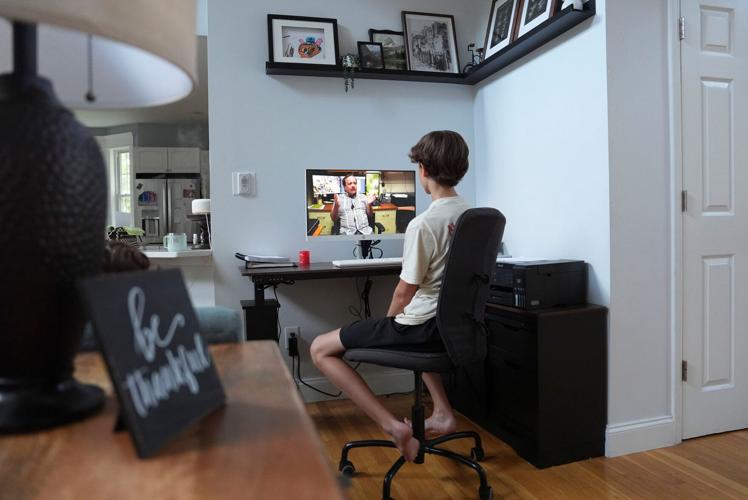
Elias, 13, watches programming for his coursework.
Flexibility built in
In addition to the religious angle, Greer chose the path to have more time with her children and so they can be together. Students in Tennessee spend about 14,000 hours in school over 13 years.
"I love being with my kids. For them to grow a strong sibling bond, that's a huge desire as parents (that) my husband and I have for our kids," she said.
The quartet are together all day, every day. The older children are expected to tutor the younger ones, help them with homework and read to them.
Learning looks different for each child, Greer said. She tailors curriculum to their interests and spends more time on a subject when they struggle. "They don't feel like we're going to just move on when they don't really understand it, whereas in public school, you can just get left behind because they have to keep on their schedule, whether you get it or not," she said.

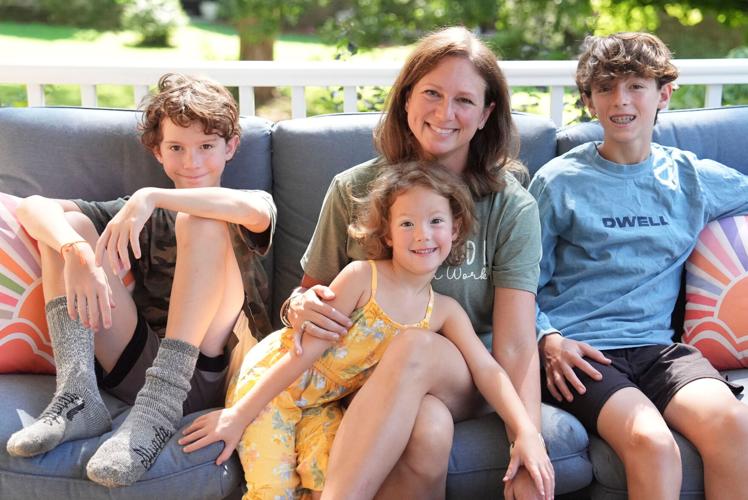
Emily Greer sits on her front porch with her children, Caleb, 10; Joy, 5, and Elias, 13.
Flexibility is central to the homeschooling lifestyle, at least at Greer Academy.
"We could do school on a Saturday if we want to take a day off in the week. If we have things we want to do in the morning, that's fine. We can do school at night," Greer said. "And sometimes that works best."
No two days look the same, but Tennessee requires four hours of instruction each school day.
"It doesn't mean that you're sitting at a desk with a book open the whole four hours," especially when the children are younger, Greer explained. "Kindergarten doesn't take four hours of sitting down with worksheets; we're playing. They're learning through so much play."
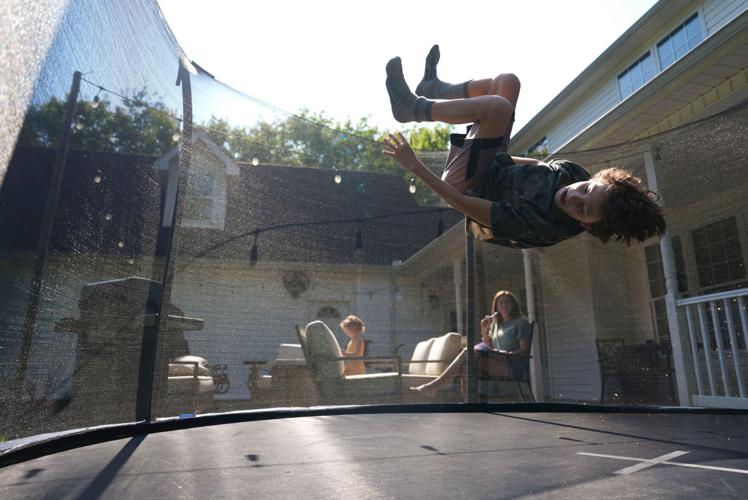
Spelling lessons often take place on the family trampoline. Greer uses a Classical Conversations curriculum book she purchased to call out a word for Caleb to spell as he's flipping around.

Caleb, 10, spells words read out by his mother, Emily, and does a flip after each correct one.
Nontraditional outcomes
Cheng's research found students homeschooled for more than three years were less likely to earn a bachelor's degree than short-term homeschoolers and those who always learned in a classroom.
"They're moving on with their careers in a less traditional way, and that's not surprising if they were nontraditional from the beginning," said Angela Watson, researcher and founder of The Homeschool Hub at Johns Hopkins University.
For example, the Classical Conversations curriculum does not place emphasis on regular testing for children, but encourages families to consider the ACT and SAT for college applications, or its alternative Classical Learning Test. Classical education testing is continuous, and takes the form of essays, memory recall and the Socratic method.

Rose, the Greer family dog, watches as Joy, 5, recalls multiples of three and four.
Students who were homeschooled eventually tend to value hard work over money, have a more positive outlook on life and report less depression and anxiety than non-homeschoolers. Cheng wonders if this should "give us all pause."
Homeschooling grew by 1.4% over the 2025-26 school year across Tennessee, according to a September report by Watson.
More than 1,000 students are learning at home in Knox County as its schools reckon with dipping enrollment. Figures obtained by Knox News show 1,231 students were homeschooled in the 2023-24 school year, 1,172 in 2024-25 and 1,090 in 2025-26. Most of those students would be attending an elementary school, county data from May shows.

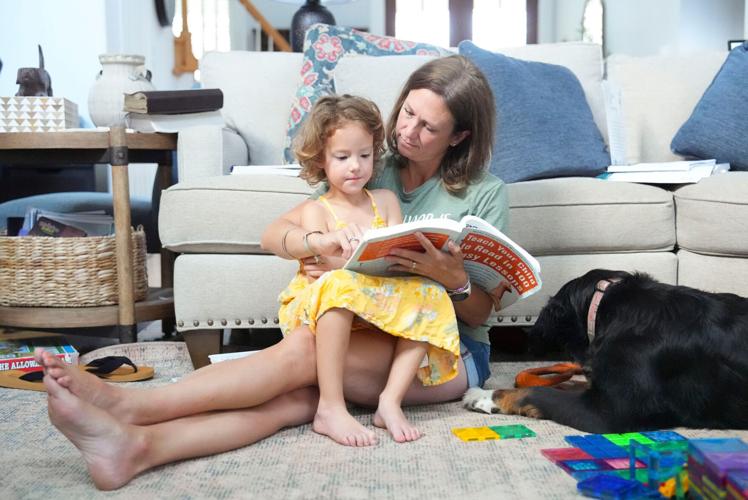
Emily Greer reads with her daughter Joy at their home.
Greer openly shares the benefits she's seen for her kids and herself. She said she's become more patient and fostered deep relationships with her children as their mother and teacher.
"I see what their struggles are, and I know how each one learns. I know how they show love and receive love because we spend this time together," she said as Caleb helped Joy paint in the kitchen. "Having that family time is so precious, and I cannot imagine life without that."