DUBAI — Israel and Hezbollah militants agreed to a ceasefire in Lebanon on Friday after an escalation in fighting there jeopardized the chances that an interim agreement on ending the war in Iran would turn into a lasting Middle East peace deal.
U.S. President Donald Trump's special envoy, Steve Witkoff, was traveling to Switzerland for the first round of talks with Iran on a potential nuclear deal, Axios reported later in the day, citing a U.S. official.
The development came a day after Vice President JD Vance canceled plans to attend the talks, which were called off amid the renewed fighting in Lebanon. That escalation has raised fresh uncertainty over the fate of negotiations critical to reopening the Strait of Hormuz to global shipping.
Trump told NBC News that he spoke with Israel and asked it to agree to the ceasefire.
People are also reading…
"You just gotta calm down sometimes and use your head," Trump was quoted as saying by an NBC reporter on social media, who added the president declined to specify whether he spoke with Israeli Prime Minister Benjamin Netanyahu directly.

A senior U.S. official said the ceasefire took effect about 4 p.m. Lebanon time following an exchange of fire, adding that negotiators for the U.S. and Qataris worked out the agreement with help from Iran.
Two sources from Iran-aligned Hezbollah and a senior Israeli official confirmed the ceasefire to Reuters.
"If Hezbollah does not attack us, then for us it is not a time of war," the Israeli official said, adding Israel would keep its forces in southern Lebanon, where it occupied an area along Israel's northern border.
Two Lebanese security sources said Israel carried out a dozen airstrikes in the first hour of the ceasefire but none were recorded after 5 p.m.
Lebanon's health ministry said Israeli strikes after midnight into Friday killed 47 people and wounded 97, while the Israeli military said four soldiers were killed in an incident in Lebanon, without giving further details.
The conflict in Lebanon could weigh on negotiations because ending fighting there is a condition for the broader U.S.-Iran accord.

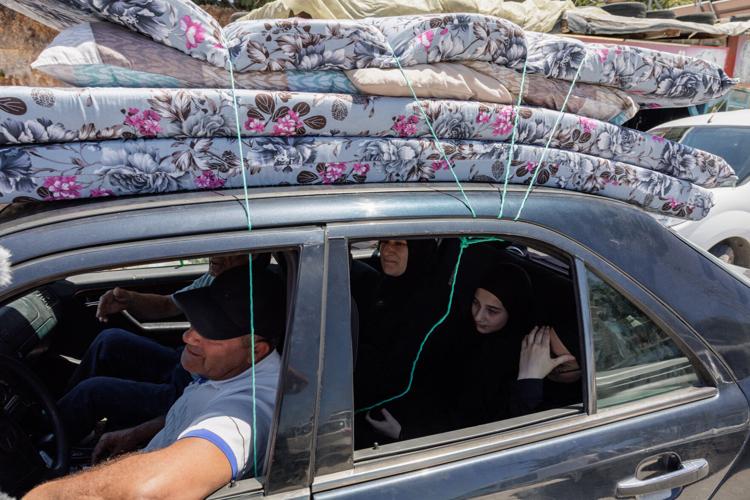
A family with belongings loaded on their car, fleeing southern Lebanon again, heads north on Friday on the outskirts of Tyre, Lebanon, after returning following the U.S.-Iran deal, after fighting between Israeli forces and Hezbollah resumed overnight.
Issues still unresolved
A memorandum of understanding the Iranian and U.S. presidents signed this week left discussion of Iran's nuclear program and other tough issues until later, giving the sides 60 days to reach a lasting agreement or extend the interim deal.
Preparations for technical talks to start in the Swiss mountaintop resort of Buergenstock were far advanced when the White House said Thursday that Vance would not attend.
The Swiss foreign ministry said the talks were postponed and Switzerland remained ready to facilitate them and preparatory work continued.
The broad interim deal requires the United States, Iran and their allies to declare an immediate and permanent termination of military operations on all fronts, including in Lebanon.
Israel, left out of the talks, says it is not party to the deal.
Iran's Foreign Minister Abbas Araghchi, in a phone call with his Pakistani counterpart Friday, said the U.S. would be responsible for violations of its commitments under the deal, including ending the fighting in Lebanon, his ministry said.

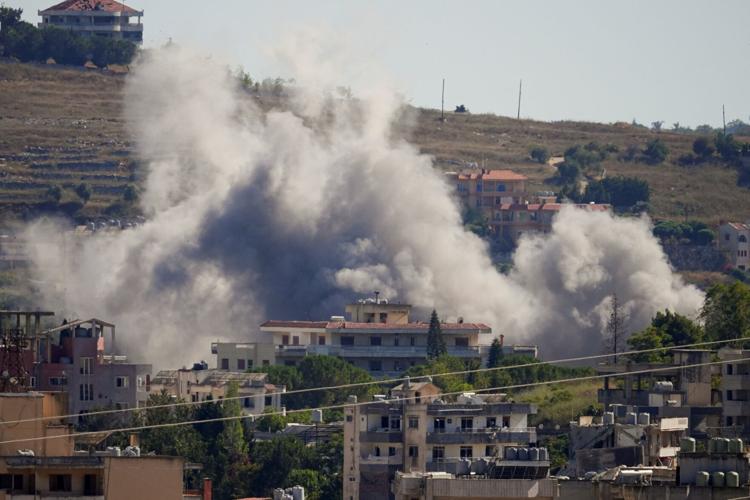
Smoke billows from southern Lebanon following an Israeli strike Friday, seen from Nabatieh, Lebanon.
New round of Israel-Lebanon talks discussed
Lebanon was sucked into the regional war when Hezbollah opened fire at Israel on March 2, prompting Israel to launch an offensive against the group and invade the south of the country.
Lebanese President Joseph Aoun condemned the latest Israeli attacks but said the escalation would not hinder efforts to reach a comprehensive ceasefire.
The U.S. State Department said Secretary of State Marco Rubio spoke to Aoun and reiterated the need to disarm Hezbollah while reaffirming U.S. support for a "fully sovereign" Lebanese state.
It said they also discussed holding a next round of Israel-Lebanon negotiations in Washington next Tuesday through Thursday. The Lebanese presidency said a comprehensive ceasefire was a fundamental pillar for these talks.

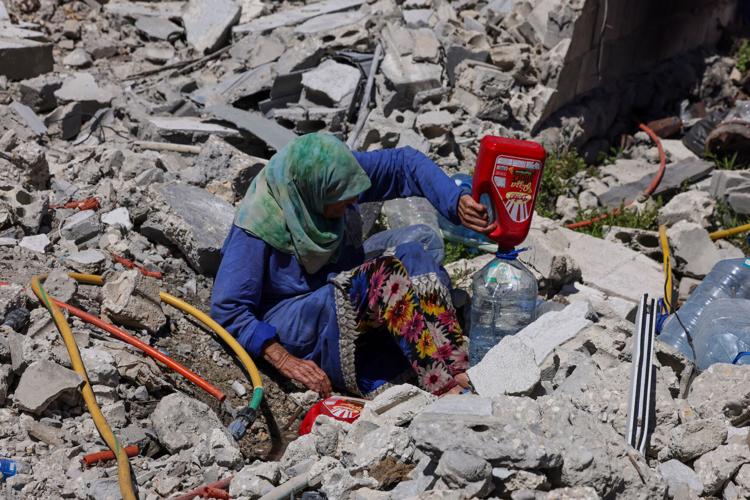
Khadija Amara, whom other residents said had not left her home, fills a jerrycan with water Friday as she sits among the rubble of a house damaged by an Israeli strike in Qlaileh in the Tyre district, southern Lebanon.
Trump defends interim deal
The Iran war, which began Feb. 28 with U.S. and Israeli air attacks on Iran, killed at least 7,000 people, mostly in Iran and Lebanon. It also pushed up energy prices, stoking inflation worldwide.
Oil prices dipped since the interim deal was signed as tankers again moved through the Strait of Hormuz, which carried nearly a fifth of global crude oil and liquefied natural gas supplies before it was blockaded by Iran during the war.
The body set up by Iran to manage the strait said Friday it would waive planned fees to use the waterway during the 60-day negotiation period under the interim deal.

The memorandum signed this week foresees relief for Iran from economic sanctions, the unfreezing of assets worth tens of billions of dollars and immediate U.S. waivers for its exports of oil.
The deal gives negotiators 60 days to agree on the status of Iran's nuclear program, unless the sides agree to an extension, and set up a $300 billion reconstruction fund for Iran and other financial incentives.
Trump again defended the deal after criticism in Washington, including from some of his Republican allies in Congress who question whether he conceded too much to end a war unpopular with most Americans ahead of midterm elections in November.
"The War has diminished Iran!" he wrote in social media posts Friday, adding: "We didn’t meet out of desperation, Iran did. They are FINISHED! We’ll play out the 60 days. They get no money, not ten cents!"