WASHINGTON — The U.S. military attacked Iran on Friday in response to an Iranian drone strike on a cargo ship in the Strait of Hormuz, throwing the fate of the recent interim peace deal between the two countries into question.
U.S. Central Command said aircraft struck missile and drone storage locations and coastal radar sites. Iranian media said a projectile struck an area near a pier in Sirik, a city on the shores of the strategic waterway.
In response, Iran’s Revolutionary Guard said early Saturday it targeted U.S. military positions in the Middle East, though it did not provide details. The U.S. did not immediately respond to Iran’s claim.

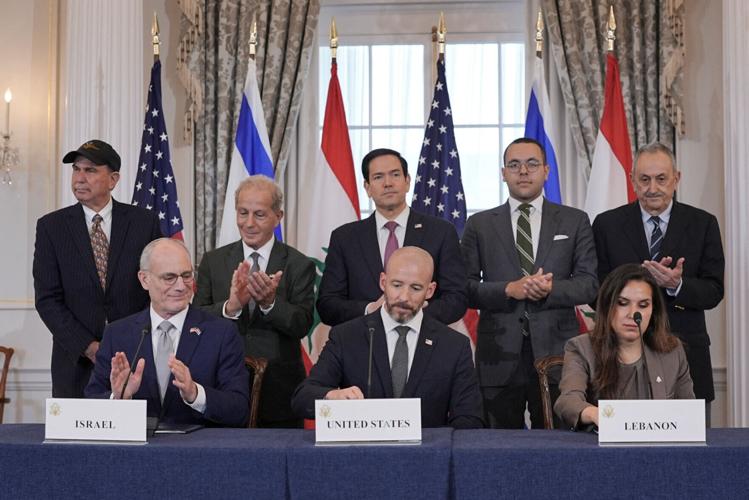
U.S. Secretary of State Marco Rubio and Israel's Ambassador to the U.S. Yechiel Leiter applaud Friday after signing a framework agreement between Israel and Lebanon with State Department Counselor Daniel Holler, and Lebanon's Ambassador to the U.S. Nada Hamadeh, at the State Department in Washington.
Elsewhere there were signs of progress, as Israel and Lebanon signed an agreement to end the fighting between Israel and Iran-backed Hezbollah after days of talks. Both sides framed the deal as an initial step that calls for Hezbollah to disarm and Israel to withdraw troops from Lebanon. It was not clear how it would be enforced; Hezbollah said it would not cooperate.
People are also reading…
Lebanese Ambassador Nada Moawad and her Israeli counterpart Yechiel Leiter signed the trilateral document with the U.S. at the State Department in Washington.
Later, Secretary of State Marco Rubio said the U.S. would facilitate the implementation of the deal through a trilateral "Military Coordination Group for Lebanon" and Washington would commit significant resources, including an immediate $100 million in humanitarian assistance in coordination with the U.N.
He added the U.S. reaffirmed its intent to improve the capabilities of the Lebanese Armed Forces "to more effectively establish sovereignty throughout Lebanese territory" with more than $30 million in funds under existing U.S. authorities and appropriations.
The conflict between Israel and Hezbollah broke out when the armed group fired at Israel on March 2, days after the U.S. and Israel launched strikes on Iran. The Hezbollah attacks triggered Israeli air and ground attacks that killed more than 4,000 people in Lebanon and displaced more than a million.

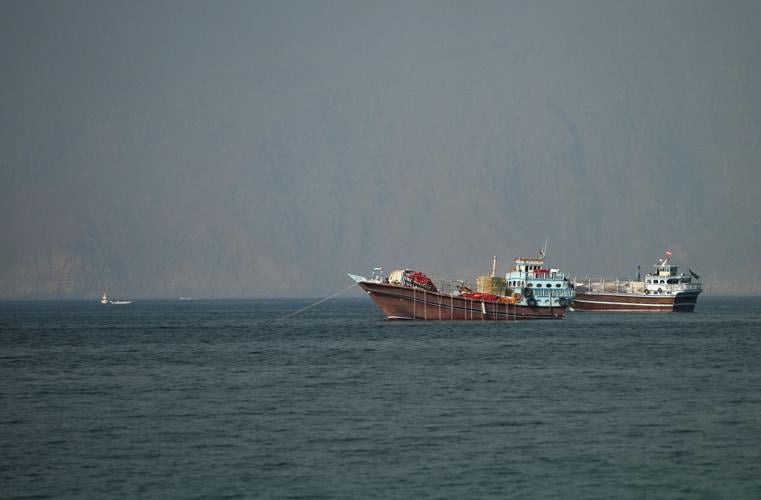
Vessels at the Strait of Hormuz, seen Friday from Musandam, Oman.
Iran chided for ship attack in strait
President Donald Trump blamed Iran on Friday for an attack on a ship the previous day near Oman, which he said violated the U.S.–Iran ceasefire. Two U.S. officials told Reuters on condition of anonymity Thursday that Iran fired on the ship.
Iran expressed anger at what it said was an "interventionist, irresponsible and provocative" statement by the U.S. and six Persian Gulf states that rejected its assertion that it could charge tolls on vessels transiting the strait, through which about a fifth of global oil and liquefied natural gas supplies typically passes.
Iranian state TV said three foreign tankers attempting what it called an "unauthorized passage" of the strait were turned back after a warning from the Revolutionary Guard.
Iranian state media, citing an unnamed military source, later reported the strike at the port of Sirik after an explosion was heard there. The source said several warning shots were fired from Sirik toward vessels that violated Strait of Hormuz regulations about five hours earlier, adding two warning missiles also were launched from the nearby Karpan area toward the strategic waterway.
The Revolutionary Guard said its navy "struck the locations where the terrorist U.S. military is stationed in the region" and warned that further U.S. attacks would be met with a broader response, according to the statement carried on state media. The ceasefire agreement gives Iran control over ship traffic in the strait, the Guard said.
"However, the United States, by provoking various fronts, sought to violate this commitment, and the necessary response was given and will continue to be given. If the aggression is repeated, our response will be broader than this," the Revolutionary Guards said.
"Iran signed a ceasefire agreement. We have honored it," U.S. Vice President JD Vance said on social media. "If they have disagreements about how the (memorandum of understanding) is being applied, they can pick up the phone. But violence will be met with violence."
The U.S. military said it would continue to provide "safe passage coordination and support" to commercial vessels transiting the strait.

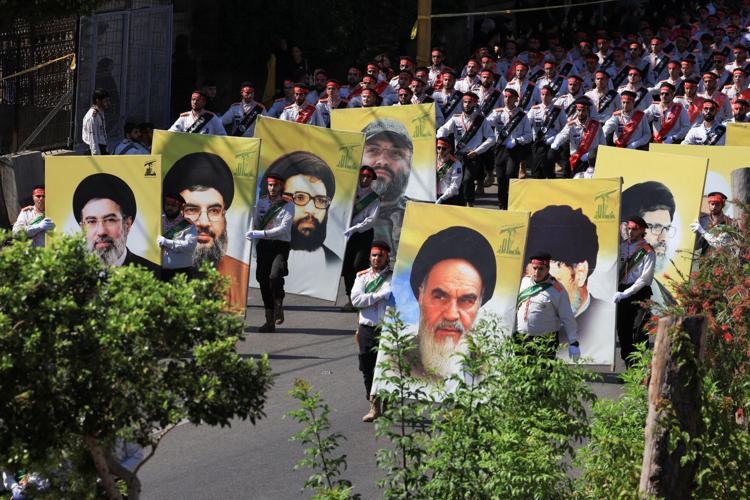
Shi'ite mourners hold placards with pictures of Iran's new Supreme Leader Mojtaba Khamenei, the late leader of the Islamic Revolution, Ayatollah Ruhollah Khomeini, late Hezbollah leader Hassan Nasrallah, assassinated Hezbollah military leader Imad Mughniyeh, assassinated Hezbollah leaders Sayyed Abbas al-Musawi and Hashem Safieddine, as they mark Ashura, the holiest day on the Shi'ite Muslim calendar, on Friday in the southern suburbs of Beirut, Lebanon.
Trilateral deal includes Israeli withdrawals
Israeli Prime Minister Benjamin Netanyahu said Friday's trilateral agreement allows Israeli forces to continue to occupy southern Lebanon if Hezbollah does not disarm.
He said it also would allow the Lebanese army "to begin organizing to take control of territory," starting with what he described as two "pilot zones" from which Israeli troops would withdraw from land they occupied during the war. Israel describes that territory as a "security zone" or "buffer zone" where its troops can thwart Hezbollah attacks on northern Israel.
Lebanese President Joseph Aoun said the agreement should allow Lebanese to return to "fully liberated" land and rebuilt homes with "no partner" in its sovereignty.

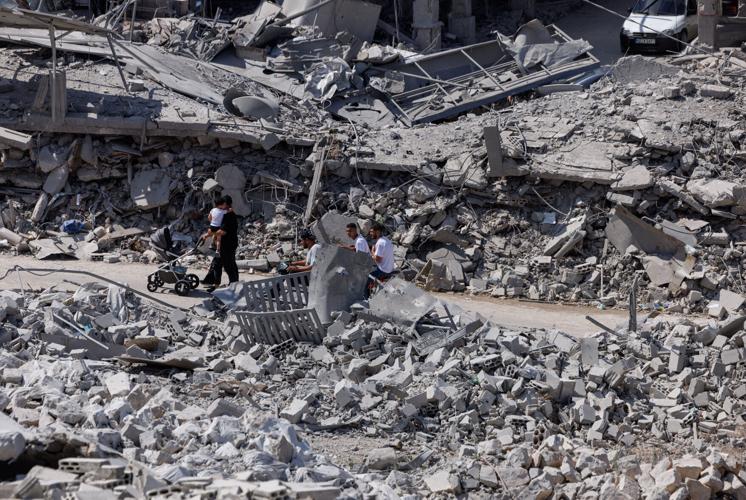
People move past buildings destroyed by an Israeli airstrike during the interim period following the U.S.-Iran deal, in Nabatieh, southern Lebanon, June 26, 2026. REUTERS/Zohra Bensemra
Before the talks resumed this week, Israel and Hezbollah agreed to halt fire even as Israel kept troops in southern Lebanon.
Violence persisted since the ceasefire, with Israel saying Friday its troops struck and killed what the military described as seven Hezbollah members operating near the territory it occupies. Reuters could not confirm this.
Hezbollah lawmaker Hassan Fadlallah said Lebanese authorities would not be able to enforce the agreement unless, with U.S. support, "they go to civil war," pro-Iranian broadcaster Al Mayadeen reported.