BOSTON — The U.S. National Park Service removed at least 51 exhibits from 37 sites to carry out President Donald Trump's executive order targeting displays that "inappropriately disparage Americans past or living," a court-ordered inventory showed.

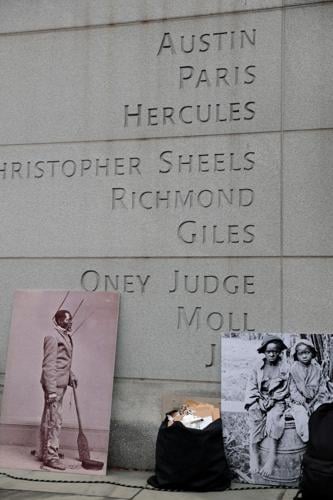
Names of enslaved people from a slavery exhibit at the President's House, reinstalled by National Park Service workers after a U.S. judge's order, are seen Feb. 19 in Philadelphia, Pa.
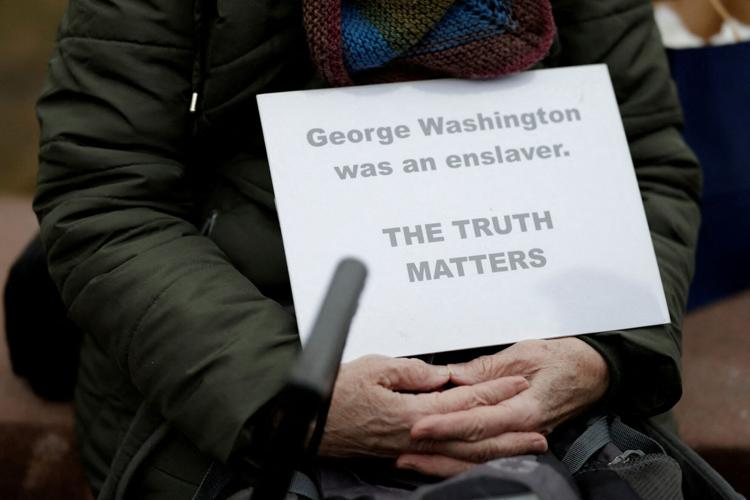
The examples revealed in a Trump administration filing Wednesday span a variety of national parks and monuments including Philadelphia's Independence National Historical Park, where an exhibit describing the ownership of enslaved people by George Washington, the first U.S. president, was removed.
The administration turned over the list at the direction of Boston-based U.S. District Judge Angel Kelley, who ruled last Friday that the government engaged in an unlawful effort to "rewrite the nation's history with a white-out pen."
Kelley's ruling came after groups representing national park conservationists, historians and scientists challenged the administration's actions. They accused the administration of violating laws governing National Park Service actions.
People are also reading…

The administration in another filing called the judge's order requiring it to reinstall the exhibits by July 3, the day before the country marks the 250th anniversary of its founding, a "herculean and unmanageable task." It asked for the order to be put on hold while the administration appeals her decision blocking Interior Secretary Doug Burgum's implementation of the Republican president's March 2025 directive.
Trump's order targeted what he called a "revisionist movement" that portrayed the United States as "inherently racist, sexist, oppressive or otherwise irredeemably flawed," and directed the Interior Department to make changes to parks nationwide.
Critics accused Trump of trying to erase aspects of American history to fit his own false narratives about the nation.


A person holds a sign after National Park Service workers reinstalled a slavery exhibit Feb. 19 at the President's House in Philadelphia, Pa., following a U.S. judge's order.
To evaluate the administration's request to pause her decision, Kelley said she needed more information to evaluate the scale of the exhibit changes; she ordered the production of a list of items that were removed.
Among the sites listed on the spreadsheet were Fort Sumter in South Carolina, the Jamaica Bay Wildlife Refuge at the Gateway National Recreation Area in New York and Acadia National Park in Maine.
At all three parks, materials describing climate change were removed, according to June 12 court ruling. The inventory said the items were discarded because they were unrelated to the "beauty, abundance, and grandeur of the natural landscape."
A National Park Service official in an accompanying court filing said the inventory was likely just a partial list and not every item identified for removal was taken down yet.

Kelley — appointed by Trump's predecessor, Democratic President Joe Biden — noted in her ruling that an internal National Park Service database leaked by anonymous civil servants in March listed more than 500 items that were identified for review for potential removal.
The agency said as a matter of transparency, the list it filed also included six items removed from a 38th national park pursuant to a different executive order by Trump.
Lawyers for the plaintiffs did not immediately respond to requests for comment.