7 Day Forecast
Was summer hot enough for you? How does all-time record hottest sound?
The United States’ scorching summer of 2026 — which is still lingering for some folks across the nation's southern tier — was a record-breaker, scientists from the National Oceanic and Atmospheric Administration announced Sept. 9.
"The average temperature for meteorological summer (June-August) 2026 was the warmest for the contiguous United States in the 132-year record, exceeding the previous records, set in 1936 and 2021, by 0.4 degrees," NOAA said in a statement. U.S. climate records go back to 1895.
A USA Today analysis of the data released found many states broke their own records, too.
Meteorological summer encompasses the three

A woman swims Aug. 19 in the Davis Center Pool in Central Park, New York City.
warmest months of the year — June, July and August — while astronomical summer ends with the autumnal equinox Sept. 22.
People are also reading…
The average temperature for June-August was 74.4°F, which was 3.0°F above average.
Overall, NOAA said that summer saw widespread above-average temperatures practically nationwide. In addition, much-above-average nighttime minimum temperatures spanned most of the continental United States.

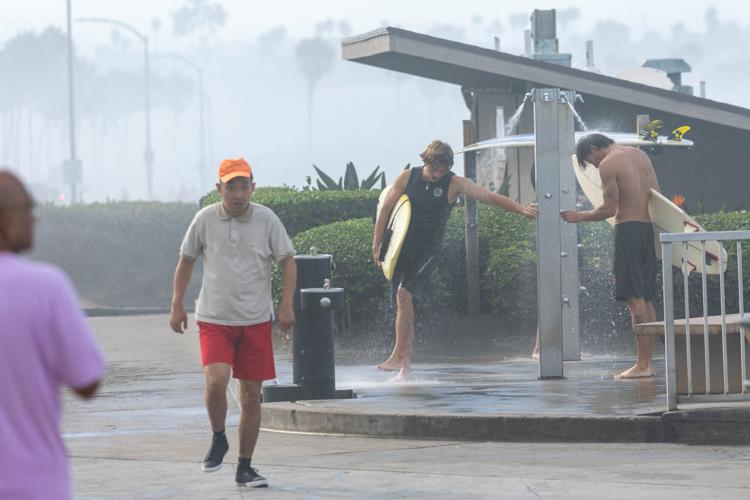
Surfers shower after an early morning surf Sept. 8 before the heat of the day in Carlsbad, Calif.
July 4 heat dome
The heat dome that scorched much of the eastern United States during the July 4 holiday was probably the most newsworthy heat wave of the summer, as it affected the highly populated East Coast and Midwest. The heat dome brought temperatures above 100 degrees in many locations, with dangerous heat indices exceeding 110 degrees in some areas.
Holiday events, parades and fireworks celebrations were canceled across parts of the Mid-Atlantic because of the extreme heat, USA Today previously reported.
Other July heat waves included ones that sent temperatures soaring in Montana to 116 degrees and one in the Southwest and Rockies in which more than 1,000 daily heat records were set.
Other heat waves in July helped push the average temperature for the continental U.S. in July to 76.9 degrees — 3.3 degrees above the 20th-century average. It was the warmest July — and warmest month — in the 132-year record, 0.1 to 0.2 degrees warmer than July 1936 and July 2012, NOAA said.

A man uses a towel to wipe his sweat July 3 as temperatures reached 100 degrees F in New York City.
State records
A USA Today analysis of the data found four states broke their own records for average summer temperatures: Colorado, Utah, Arizona (which tied its hottest summer) and New Mexico.
These states are part of the Colorado River Basin, which also experienced an unusually warm and dry winter. In August, the two largest water reservoirs in the country, Lake Powell and Lake Mead, reached record-low levels amid a worsening drought in the region.
While only a few states broke their summer records, the average U.S. temperature surged as every single state in the lower 48 had a season hotter than its historical average. Those ranged from Indiana, where it was 0.6 degrees hotter than in the 20th century, to Utah, where it was 5.4 degrees warmer than usual.
During many of the heat waves this year, part of the threat was not only how high temperatures got, but also how they stayed high through the night. This trend is evident in the data, as even more states set records for average minimum temperatures through the summer, with a total of 17, including ties, according to the analysis.