

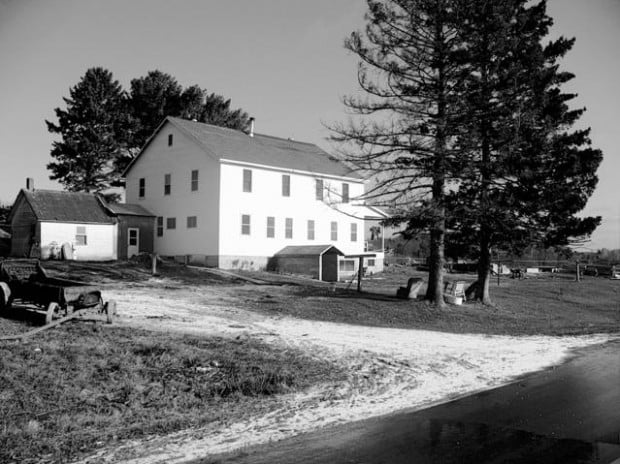
TOWN OF FRANKLIN, Wis. — Daniel Borntreger's home looks like hundreds of other Wisconsin farmhouses: two-story, porch, clothes on the line.
But his home may yet cost him thousands of dollars in fines. Borntreger, an Amish farmer, built the house himself according to Amish tradition — but without a building permit.
His case is among at least 18 legal actions brought against Amish residents in Wisconsin and New York in the past year and a half for building without proper permits, according to court records, attorneys and advocates for the Amish.
The cases have sparked local debates about where religion ends and government begins.
Amish advocates — the Amish religion precludes them from defending themselves physically or legally — argue the Amish belief that they must live apart from the world trumps local regulations.
People are also reading…
"The permit itself might not be so bad, but to change your lifestyle to have to get one, that's against our convictions," Borntreger said as he sat in his kitchen with his wife, Ruth.
But local authorities say the Amish must obey the law.
"They just go ahead and don't listen to any of the laws that are affecting anybody else. It's quite a problem when you got people next door required to get permits and the Amish don't have to get them," said Gary Olson, a county supervisor in west-central Wisconsin's Jackson County, where Borntreger lives.
The Amish emigrated from central Europe to Pennsylvania in the early 1700s. Also known as the "Plain People," the Amish believe they must live a simple life. Many reject electricity, indoor plumbing and cars.
In Pennsylvania, home to a large Amish population, more liberal-leaning congregations have lobbied successfully for exemptions in the state building code, including permission to forgo electricity and quality-graded lumber, said Frank Howe, chairman of the board of supervisors in Leacock Township in the state's southeastern Lancaster County.
Officials try to keep the Amish informed about what they can and can't do, and most conform, Howe said. He didn't believe his board had ever taken an Amish resident to court over building violations.
"You try to work with both sides," Howe said. "(We tell them) this is what we need you to do, so everyone can go home and relax."
The Amish population has nearly doubled in the United States over the last 15 years, growing to 227,000 this year, according to estimates from Elizabethtown College's Young Center for Anabaptist and Pietist Studies.
As the Amish look for new farmland, conservative congregations have migrated into states that haven't seen them before, said Karen Johnson-Weiner, an Amish expert at the State University of New York at Potsdam.
That sets up conflict between building officials with little experience dealing with their beliefs and conservative Amish who aren't familiar with the codes or don't want to compromise, Johnson-Weiner said.
Municipal attorneys in Hammond, a town of about 300 people in upstate New York, cited Joseph Swartzentruber and Henry Mast in August for building houses without a permit. That case is pending.
In Morristown, N.Y., a town of about 450 people just north of Hammond, town attorney Andrew Silver has brought 13 actions against the Amish for not abiding by building codes. They're pending, too.
Silver declined comment except to say the town is treating the Amish as it would any homeowner who violates building codes.
In Wisconsin, authorities in Black River Falls, a town of 3,600 people about 130 miles northwest of Madison, have filed at least four cases against Amish involving permit violations.
One action ended in April when a judge fined Samuel S. Stoltzfus $9,450 for building a house and driveway without permits. In July, the same judge levied a $10,600 fine against Borntreger. Another pending action accuses Stolzfus of building two houses without permits.
Stoltzfus believed signing a permit would amount to lying because he would ignore parts of the code that violate his religion, said Robert Greene, an attorney with the National Committee for Amish Religious Freedom, who is defending him.
Custom-built homes are allowed in Wisconsin as long as the plans meet code standards, but apparently the Amish don't understand that, said Paul Millis, the attorney suing the Amish in Jackson County. The town of Albion, where Stolzfus lives, waived a requirement that permits be signed so the Amish could avoid violating their religious beliefs, but they still won't comply, he said.
On StarNet: For more coverage of faith and values issues, visit azstarnet.com/faith


