

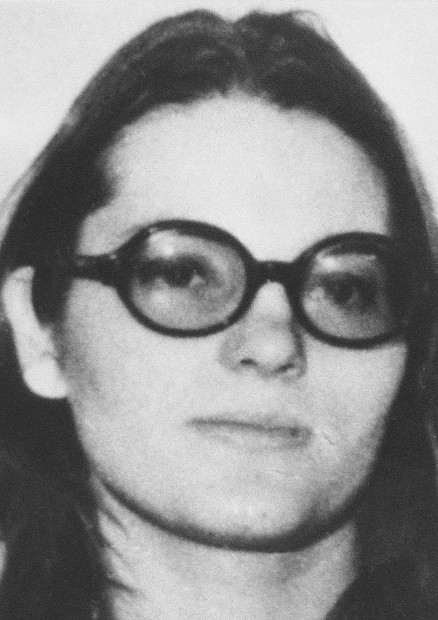
NEW YORK - Marilyn Buck, a violent leftist incarcerated 25 years for her role in some of the most notorious radical acts of the 1980s, including the bombing of the U.S. Capitol and a deadly Brink's armored-car heist, died Tuesday in Brooklyn.
She was 62, and had been paroled July 15 from a federal prison hospital in Fort Worth, Texas. Friends and supporters wrote that the cause of death was uterine cancer. Her death was confirmed by federal probation and parole agencies.
Buck belonged to a clique of anti-war and civil-rights activists who took up arms in the 1970s and became involved in a series of politically motivated attacks on government and corporate targets.
On Oct. 20, 1981, she was part of a group of Weather Underground and Black Liberation Army members who ambushed a Brink's armored car carrying $1.6 million at a mall in Nanuet, N.Y.
People are also reading…
One guard was killed at the scene. A second was badly wounded. Two police officers were subsequently killed after they pulled over one of the getaway cars.
Buck accidentally shot herself in the leg during the gunbattle with police, but escaped and remained free for another four years.
During that time she was involved in a series of bombings that included a 1983 nighttime blast at the Capitol that didn't hurt anyone, but damaged Senate offices. The bomb was purportedly placed to protest the U.S. invasion of Grenada.
After her 1985 capture in Dobbs Ferry, N.Y., she was convicted in the Brink's robbery and a string of other crimes.
Prosecutors said she helped Black Liberation Army leader Joanne Chesimard, who had been convicted of killing a New Jersey state trooper, escape from prison and flee to Cuba in 1979. Buck also was implicated in another armored-car robbery in 1981 in which a guard was killed.
She pleaded guilty to playing a role in Capitol bombing in 1988, though she later said she took the deal only to spare fellow radicals from lengthy prison terms.
Other bombings covered by her plea agreement included attacks on a federal building, a police union and the South African Consulate in New York City; and at the National War College and the Washington Navy Yard in Washington, D.C.


