

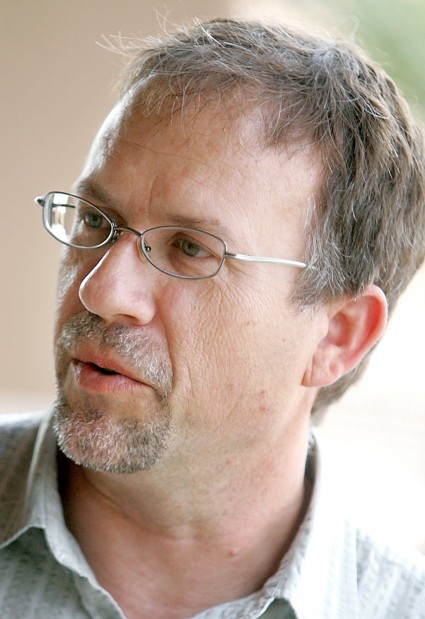
Craig Ivanyi, who joined the Arizona-Sonora Desert Museum as a volunteer while still in college, became its executive director July 1.
Ivanyi, a herpetologist, has held 10 posts at the museum in his 26 years there. He spoke recently about the museum's role in the community and the region.
What is your vision for the museum?
The founding vision of this organization was the right one - to inspire people to care about the Sonoran Desert and to have a voice about the conservation of this region. Our primary function is conservation education.
How do you keep that vision personally?
I just walk the grounds. Long ago, one of my mentors said, "You never want to forget what this place is all about." Especially when you're in management, you want that constant reminder of the beauty of this area. Having been here 26 years, I walk around the grounds and see these decades of development. That's the '50s and the '60s and so on.
People are also reading…
I think it all makes a good marriage of a zoo, a botanical garden and a natural history museum all rolled into one.
What is the museum's scientific role?
We have found a niche in research that is in natural history. In higher education, at the universities, they are going toward genetics and molecular biology. That's all valuable work but we're not set up for that. We're looking at the natural history of this region.
Give some examples of that.
Analyzing the venom of Western diamondback rattlesnakes. We're not set up to do that research, but our collaborators at the University of Arizona are. We keep the animals and extract the venom. They find out venom varies from baby to adult, captive to wild, and that helps them potentially modify antivenin use.
We have had a long-term commitment to migratory pollinators. Publications produced from those projects looked at several different species, ranging from butterflies and moths to hummingbirds and bats.
As I said, our primary function is conservation education and one of the neat things about applied conservation is you see the full loop going from research and then sharing that with the public through exhibitory and symposia, as well as publications.
How does your job experience here influence your management strategy?
Because I came to this job as a volunteer, I see the enormous value of that. We have about 500 volunteers - people think mostly of the docents but we have 300 volunteers behind the scenes. It's an enormous value for us.
Do you see the Desert Museum as an ark?
Zoos used to tout themselves as arks. That's not all that attractive to me, to say, "Here is all the stuff you'll never see again."
I prefer a more hopeful approach where you hold species for a while, try to breed them in captivity while at the same time you're trying to figure out what's going on out in the world. That's buying time and looking to a better future.
We have projects in applied conservation with small populations of a variety of small vertebrates, primarily reptiles and amphibians that we've maintained and bred like the reintroduced Tarahumara frog and the threatened Chiricahua leopard frog. We have a (leopard frog) population breeding in captivity and the progeny will go back to the wild.
Contact reporter Tom Beal at 573-4158 or tbeal@azstarnet.com


